
Industrial Buildings · 21 August 2026
How operational efficiency shapes industrial building design
An industrial building is set by how production, service and site movement will work — not by how it first appears.
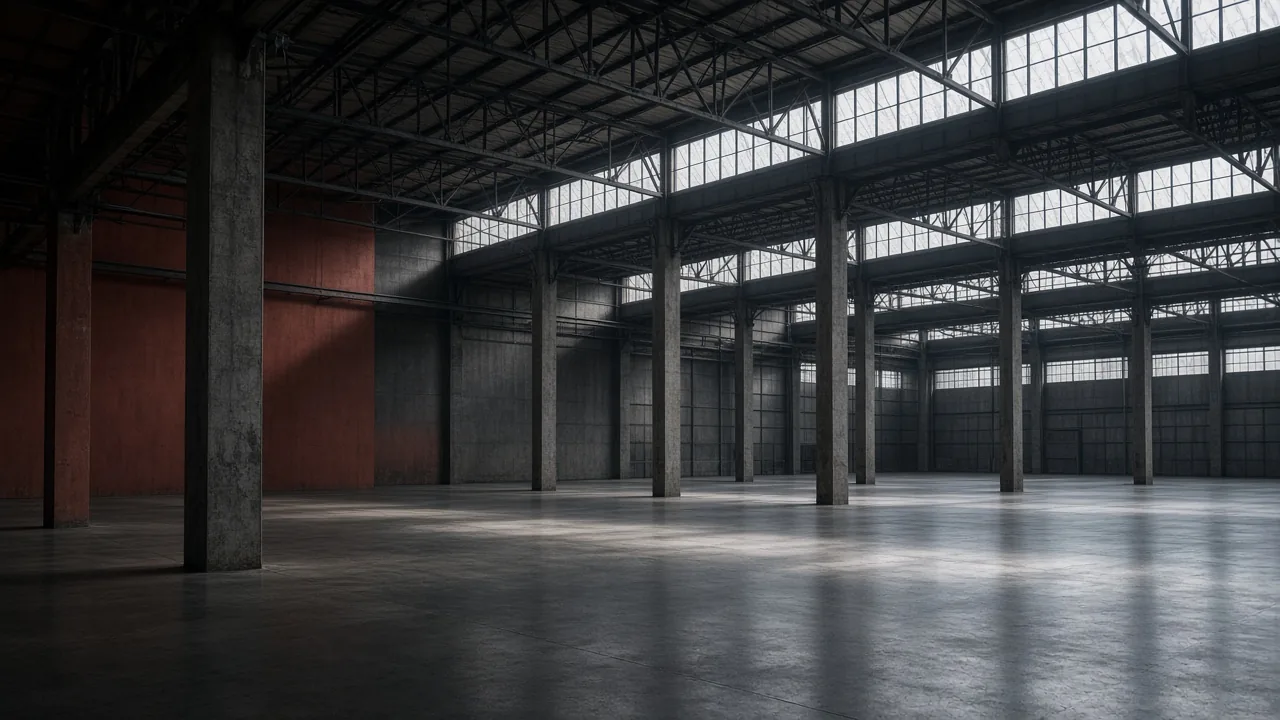
Operations first
When a plant is designed as an empty volume, operations become a layer added later. TEMREN Infrastructure & Construction reads the line, the service and the site movement as one decision from the start. The building has to stand clearly enough to carry the pace of production.
Efficiency here is not a claim of speed. It is the cutting of needless turns, broken service lines and technical volumes patched on afterwards. A well-set plant shows itself in the day.
Volume and movement
When production volume and technical service are planned apart, the site tires. Material movement, access for care and the loading line should be read from the same spine. That spine comes before the facade.
How the site works, where stock stands and how service is tied to the building are part of performance after handover. An industrial building is therefore an order of work, not a shell.
A long working life
A plant lives longer than its first production period. The decision therefore has to carry later change as well as today’s line. Flexibility is not an empty field left over; it is an order set from the start.
Operational efficiency is not written at the edge of the design. Why the building stands in that form is tied to the reason for the work inside. The aim is to leave a plant that can keep working.