
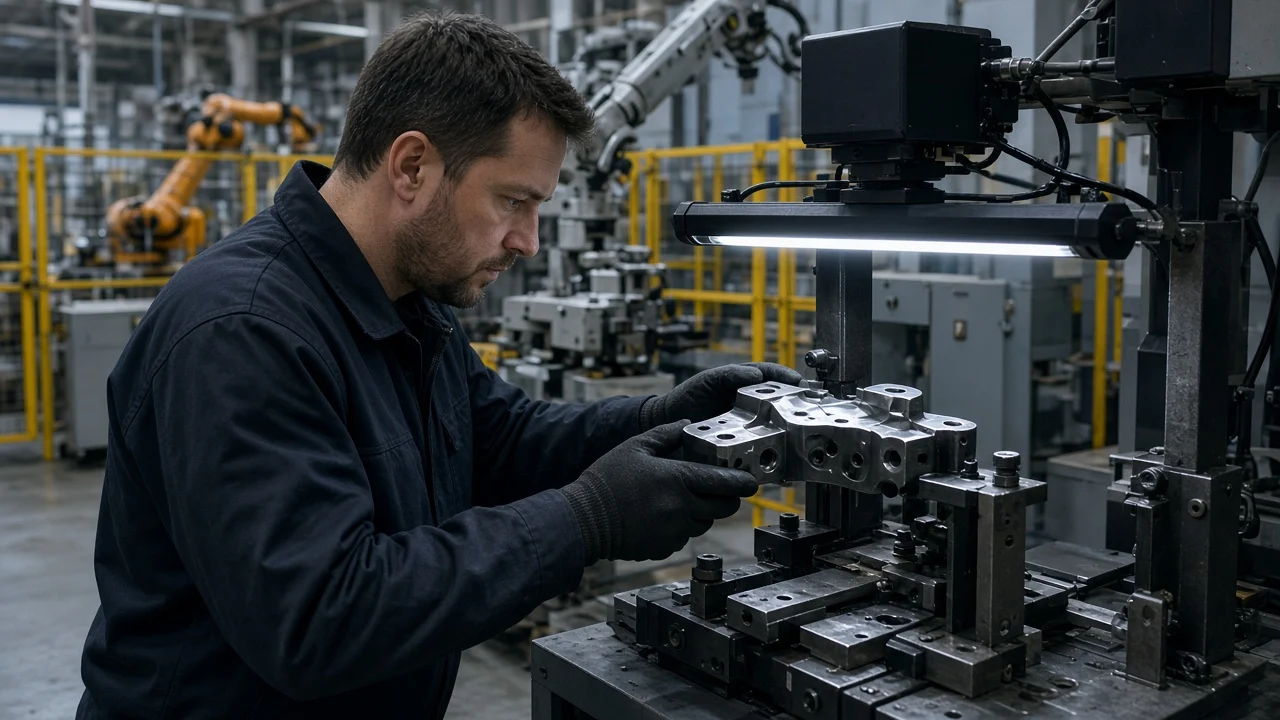
Quality
Quality is handed over
when the process closes.
We do not invent a badge or a document number. Intake, line, measurement, record, and the first shift share one lock.
Our quality approach
Quality locks before the handover sheet.
The job is not unfinished because a certificate is not on the wall; the job is unfinished if I/O, safety, and line rhythm have not closed. We do not invent a badge.
At SENKRA, quality is the cell and the line speaking the same tag language. The decision stays at the station. The record is not a report cut away from the screen.
01
Process, not a badge
Quality is not a document on the wall. The job is not done until the I/O list, safety lock, and first shift close.
02
Decision at line speed
Threshold, trigger, and accept / reject are set at the station. A defect is not hunted in the next cell or at the customer.
03
Readable trace
Recipe, stoppage, and quality decision sit in the same tag language. The night shift does not look at a separate notebook.
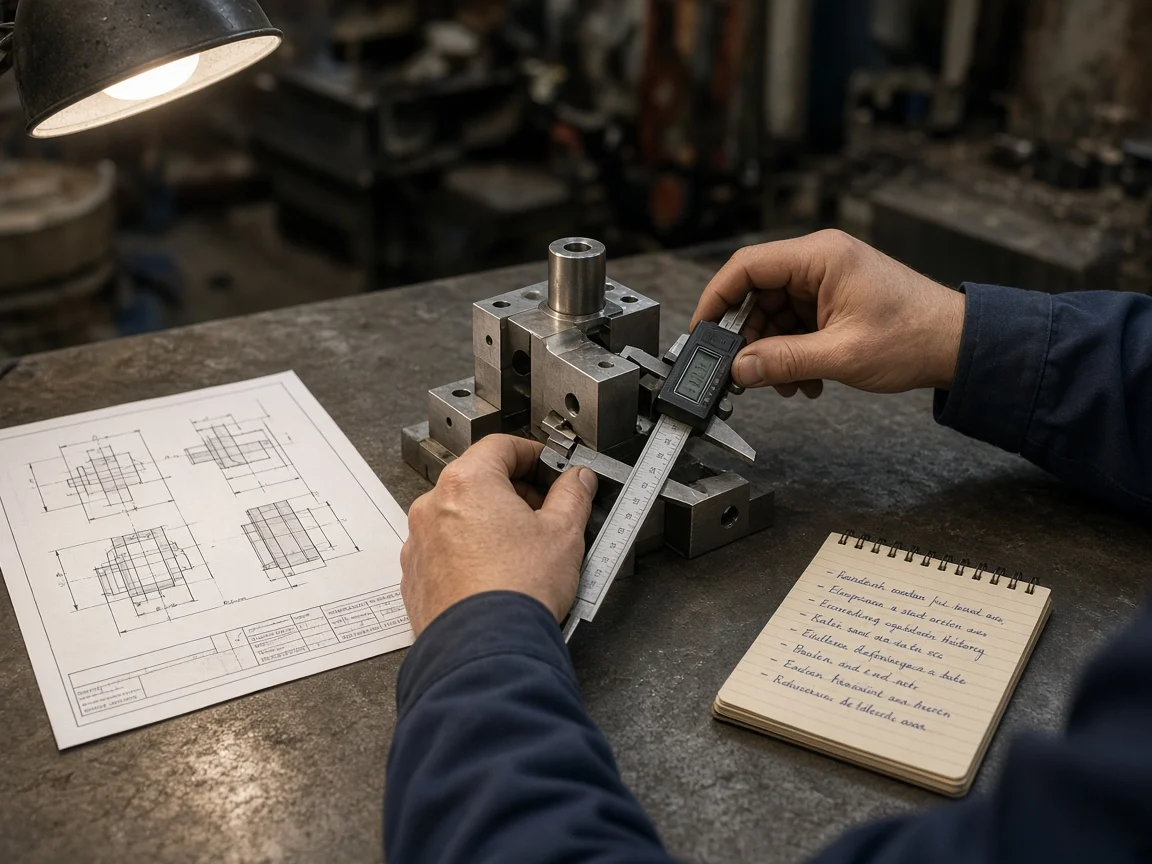
Intake / requirement
Software does not open before the line is read.
Intake is not only part acceptance. Cycle, safety, interface, and the decision rule lock at the same table.
Scope lock
Cycle, safety envelope, and operator habit are read on site. A default template is not draped on.
Interface and I/O
Software does not open until neighboring line, transfer handshake, and cabinet boundaries are drawn.
Part and tool
Fixture, gripper, and drop position are measured. A robot brochure is not an input.
Decision rule
Vision threshold, recipe, and traceable field are written from the start. There is no later “we’ll add a screen.”
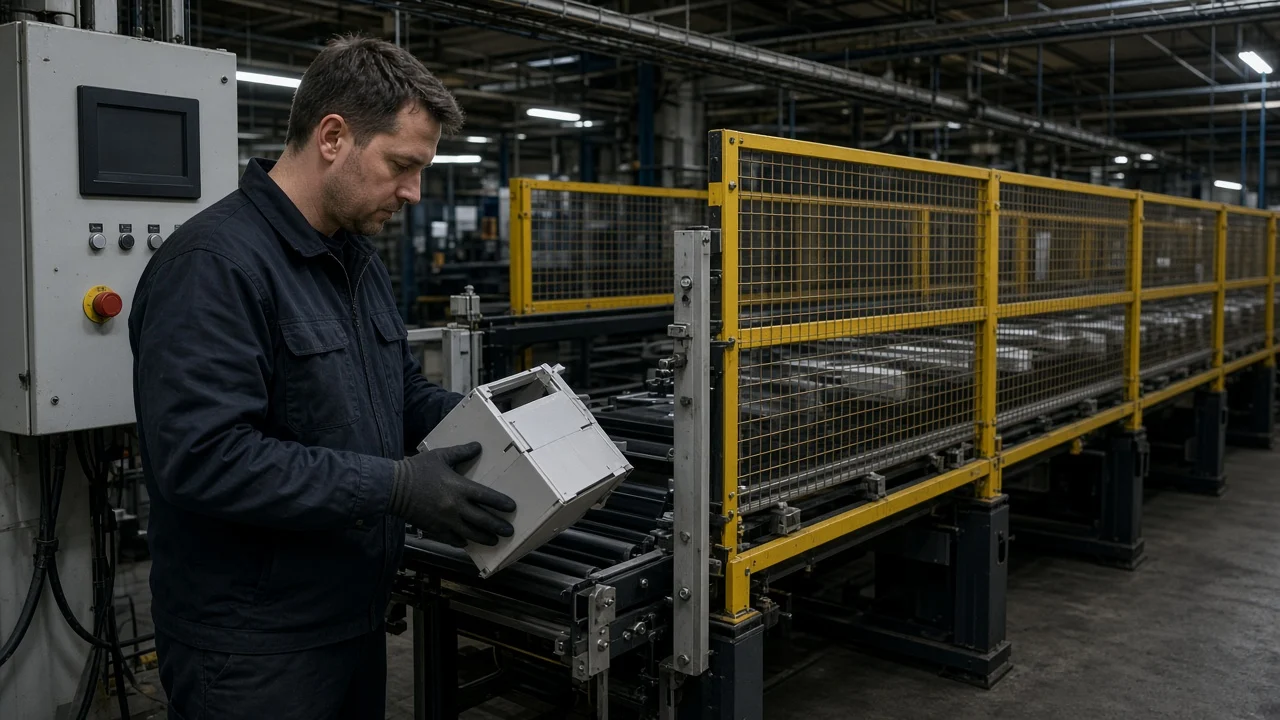
During application
Control stands beside the line.
Application quality does not finish in a lab corner. The first part, the first reset, and the first transfer are watched beside the cell.
Station lock
Gate, reset, and transfer sit in the same sequence. If the cell looks “good” on its own and the line still waits, control is incomplete.
Path and tempo
When the tool changes, tempo is not left to a different person. First parts are watched on the line, next to the operator.
Reject stays here
The part does not go to the next buffer until vision or the lock says yes.
Measurement / test
A guess does not close. The list closes.
A test is not a showcase measurement. I/O, safety, vision threshold, and line handshake are proven in one package.
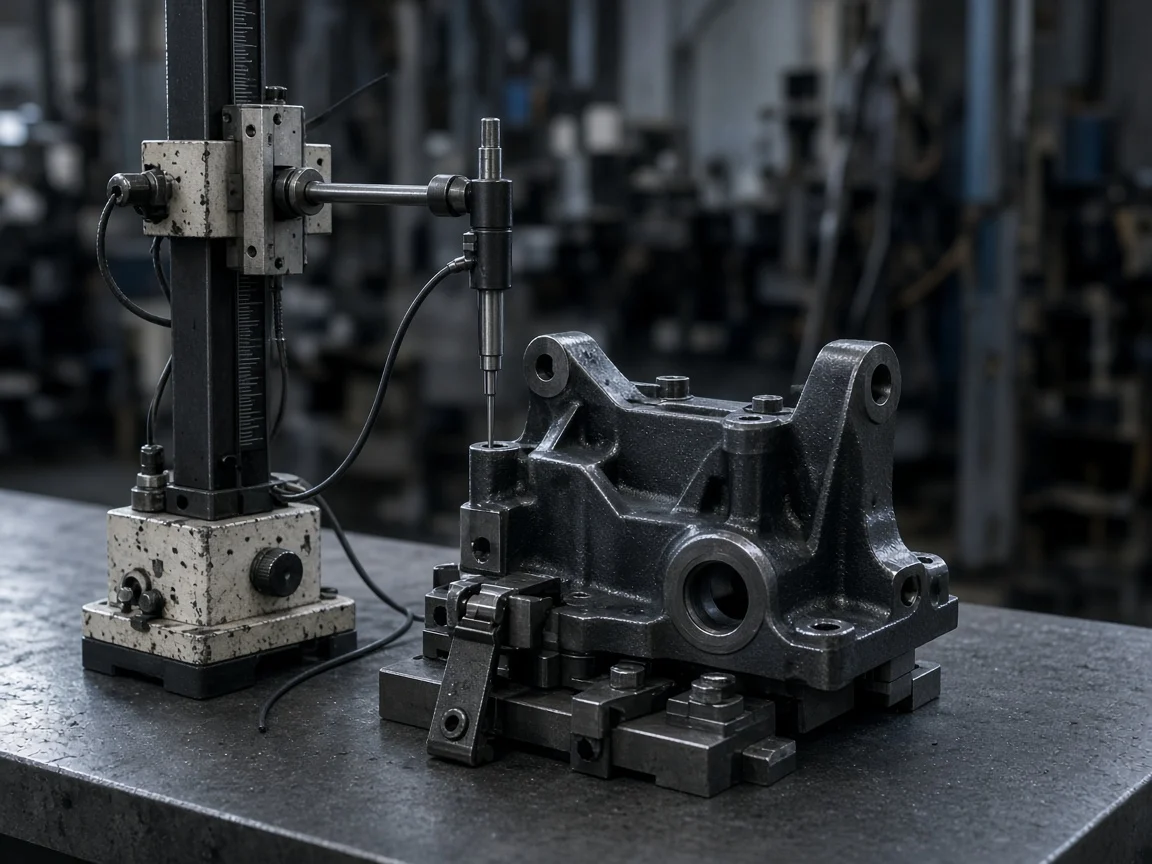
IO
I/O and safety
Terminal, gate, e-stop, and reset list close one by one. “It works” is not said on a guess.
VS
Vision and threshold
Lighting, trigger, and position are verified at the same station. A decision is a measurement, not an observation.
MV
Motion and drop
Path, gripper, and assembly position lock on the part.
HT
Line handshake
Neighboring transfer reads the cell’s reset in its own language. An island test is not enough.
Documentation
The record carries the shift, not the author.
A document is not a certificate number. Tag language, the FAT list, and the recipe stay on the same lock.
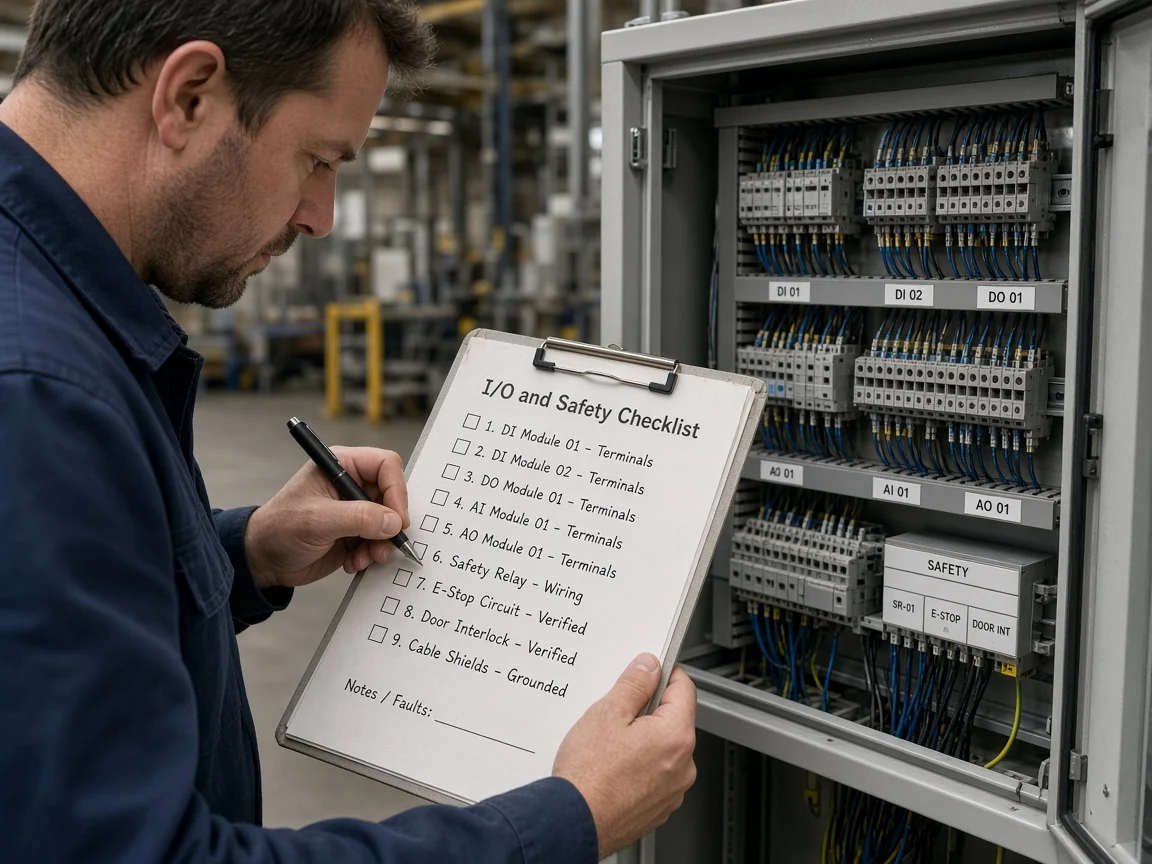
Tag language
PLC, HMI, and alarm speak the same name. The next shift does not hunt for who wrote it.
FAT list
The cell is not counted “done” until I/O, safety, and recipe items close.
Recipe record
Product change sits on the HMI. Threshold and path are not written in a separate notebook.
Traceability
A decision is read where it broke.
Decision trace
Accept / reject is clear: which station, which rule.
Stoppage trace
Gate, reset, and transfer wait are read from the same control layer.
Lot bind
On food and electronics lines, the record is not a report island cut loose from the screen.
Pre-handover verification
FAT closes. SAT walks the line.
Handover is not a “it works” sentence. Cabinet and cell first, then line rhythm, then the first shift.
01
FAT
Cabinet, I/O, safety, and cell are verified in their own language. No handover while the list is open.
02
SAT
Line rhythm, neighboring transfer, and operator habit are watched on the production floor.
03
First shift
The day after sign-off is still part of the job. First stoppages are read together.
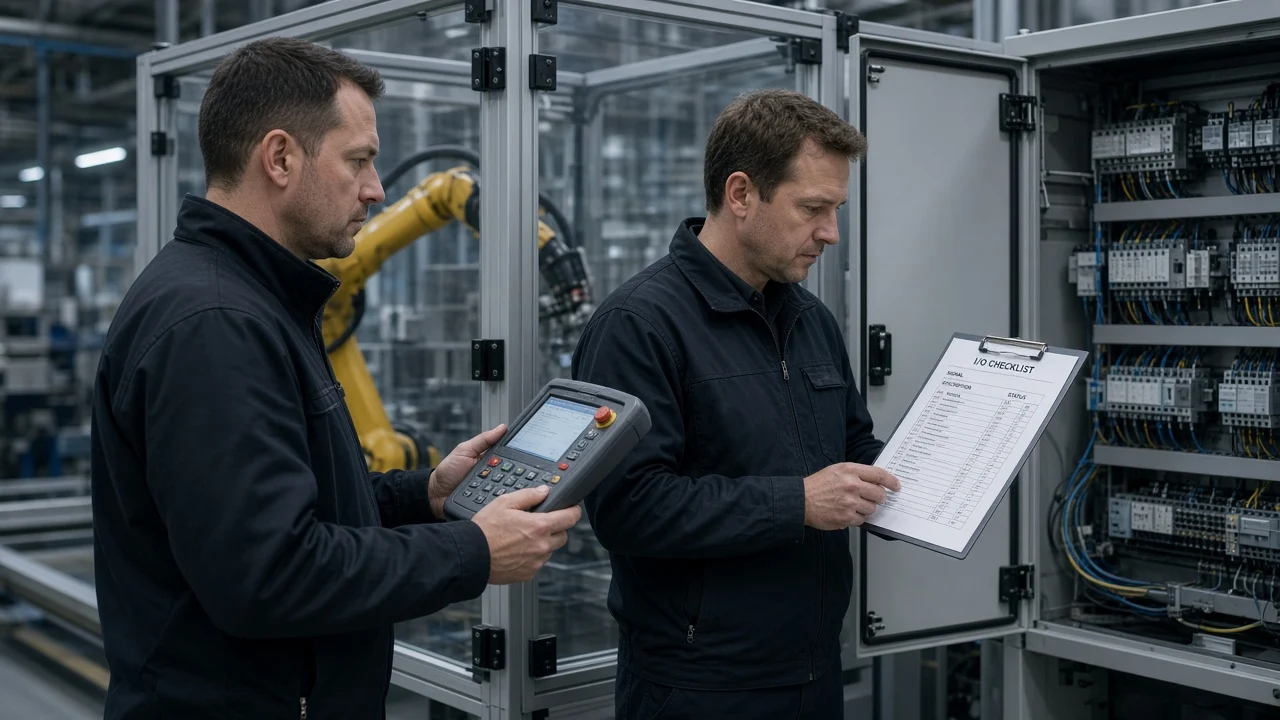
FAT · SAT · first shift
The cell is not handed over while the list is open.
Continuous improvement
The first stoppage is part of handover.
Improvement is not a slogan or a percentage target. Alarm, recipe drift, and intervention are corrected in the same tag language.
01
First stoppage
An alarm flood or lock conflict is not left as “your problem” after handover.
02
Recipe drift
If threshold or sequence breaks when the product changes, the path is not a separate work order; it returns to the same lock.
03
Readable intervention
The fix is not hidden in software that belongs to one person. Tags and HMI are updated.
Quality scope
Let’s build the verification list together.
A new cell, an existing line, or a retrofit. FAT items, the safety lock, and a traceable record — scope comes from the work sitting on your line.