
Technologies
Control, motion, and data
lock to the same language.
Capability is not an equipment brochure. The line is not built until safety, path, decision, and record speak the same tag language.
Technical approach
Capability is not a brand count in a catalogue.
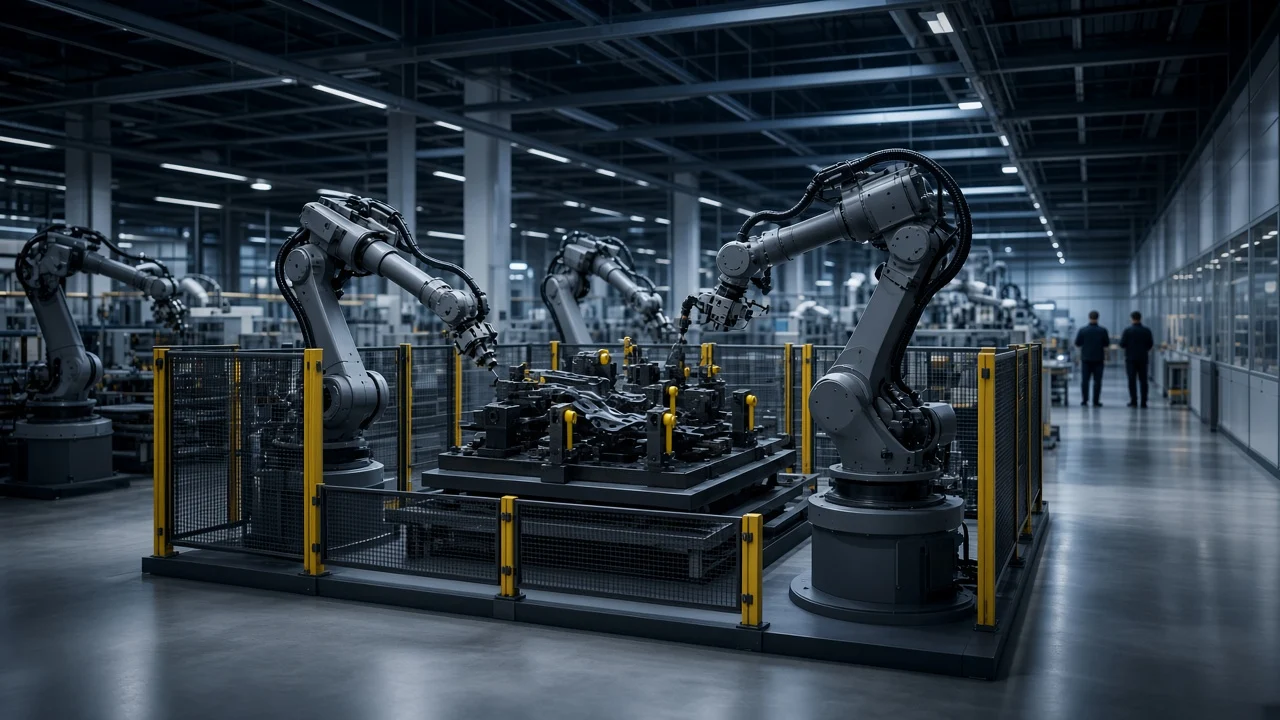
A cell is not built until safety, motion, decision, and record share one lock. If the layers sit like separate supply lines, the line still runs on a guess.
- SF
Safety envelope
Gate, reset, and safety PLC are written in the same lock language. The cell does not stop the line on a guess.
- MV
Motion layer
Robot, servo, and gripper share the path. When the tool changes, tempo is not a separate work order.
- VS
Decision layer
Camera, lighting, and trigger speak at the same station. The threshold sits as a measurement, not an observation.
- DT
Record layer
Stoppage, quality, and recipe do not detach from the control tag. The screen is not a separate report island.
Core capabilities
Six locks. One line language.
Expertise is not an equipment list. It is the cell, line, control, vision, safety, and record speaking the same tag language.
RB
Cell lock
Path, fixture, and safety sit in the same cycle package. The robot is not an island waiting on neighboring transfer.
LN
Line sync
Transfer, buffer, and station order are measured. The bottleneck is hunted in the lock, not in the machine.
CT
Control architecture
PLC, HMI, and alarm hierarchy are written in a tag language the night shift can also read.
VS
Vision decision
Lighting, trigger, and threshold are set at line speed. Reject is not left to the next station.
SF
Safety envelope
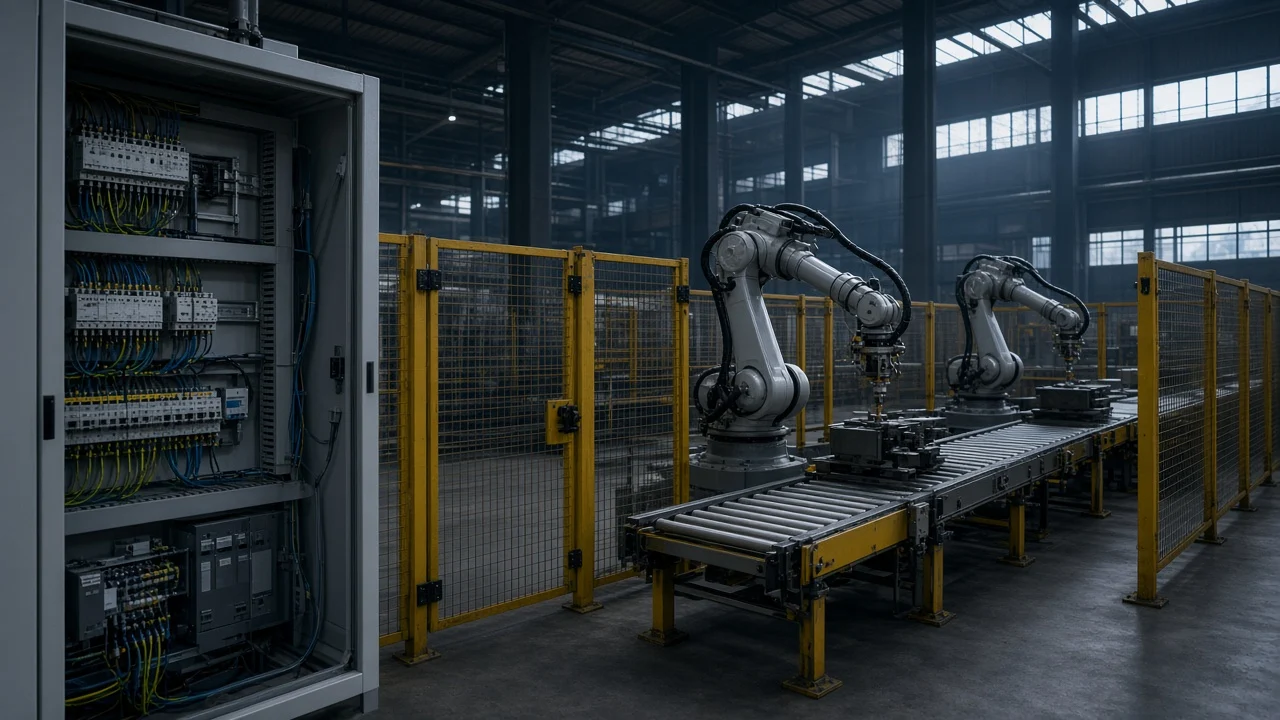
Gate, e-stop, and reset do not sit in a language apart from the path. The cell can be lifted on its own.
DT
Traceable record
Lot, stoppage, and quality decision come from the same control layer. SCADA is not decoration.
Equipment / technology
A group is not a model number.
Robot, cabinet, camera, and transfer do not sit in separate boxes. Which brand arrives is talked through after the line lock.
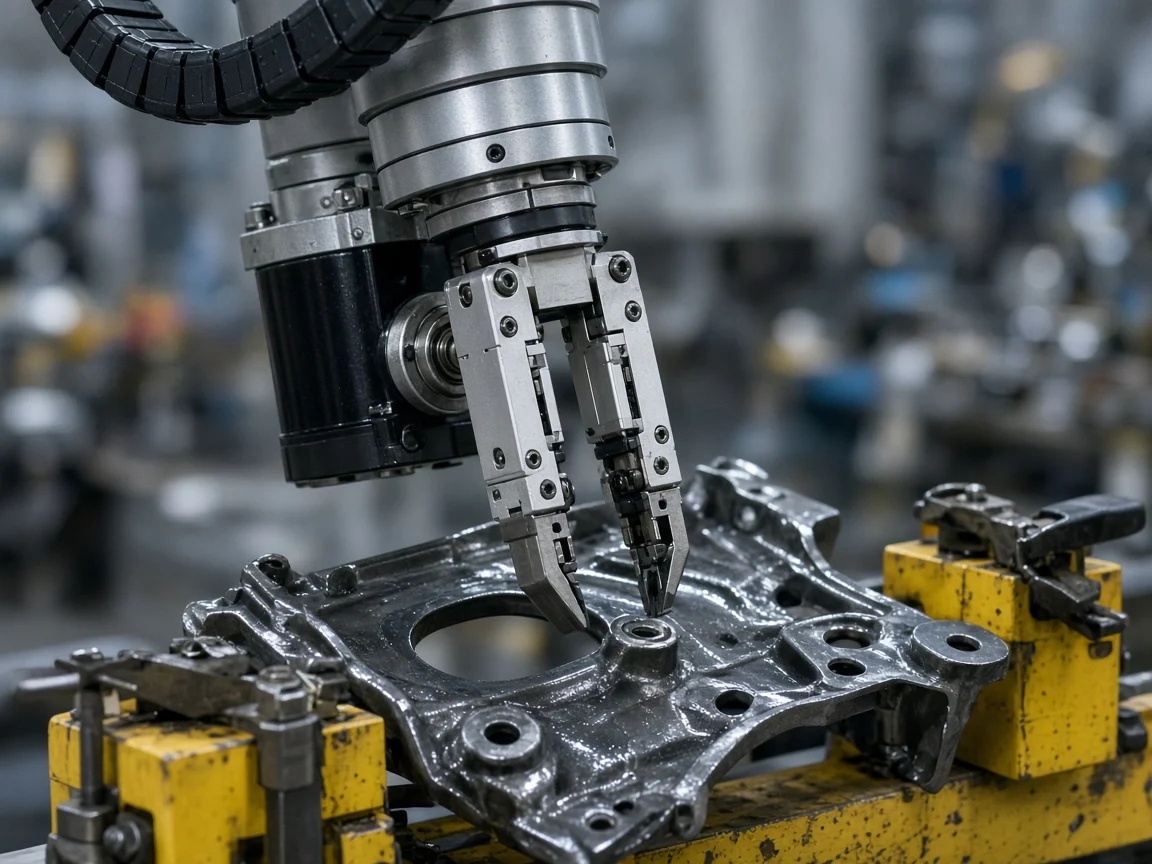
01 / Robot / servo
- Industrial robot and servo
- Gripper, tool, and fixture
- Path and cycle sync
We do not invent models
01 / Robot / servo
Motion
A cell does not end with the axis count on the brochure. Gripper, path, and drop lock on the same drawing.
- Industrial robot and servo
- Gripper, tool, and fixture
- Path and cycle sync
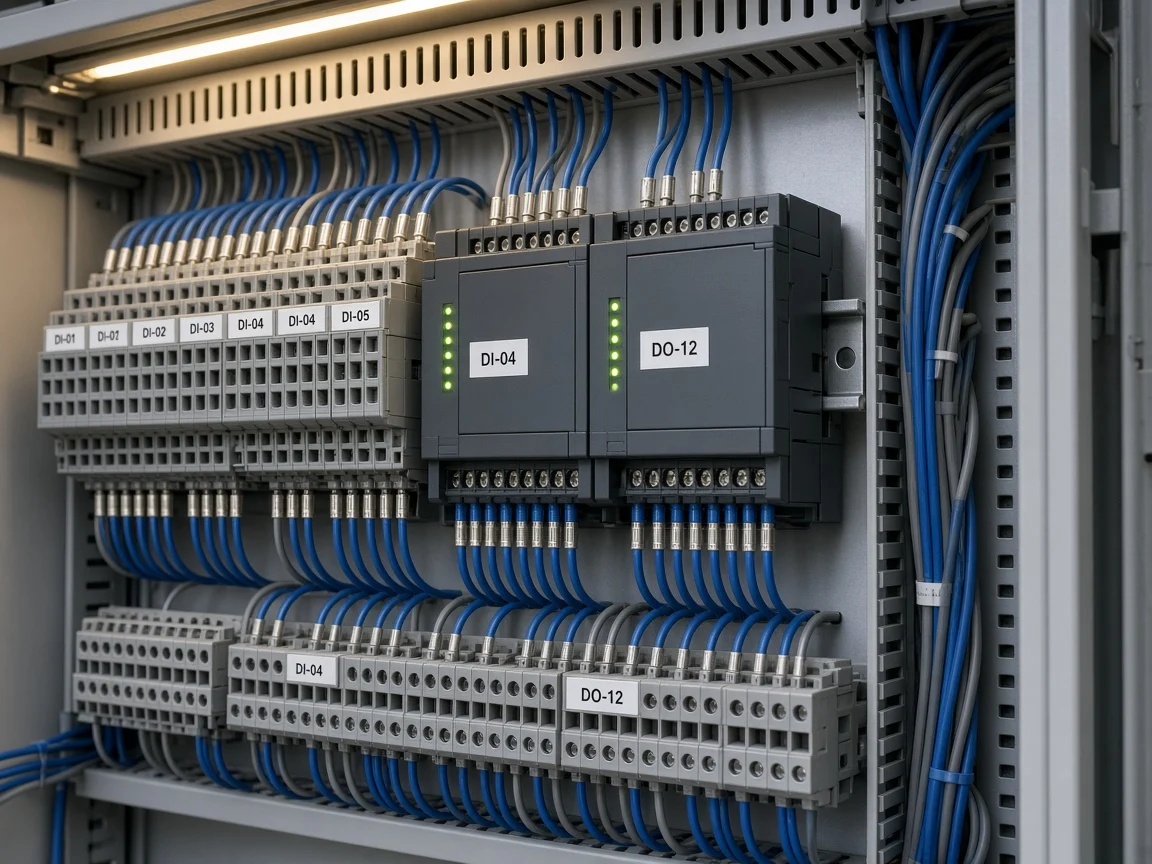
02 / PLC / I/O
Control
A cabinet is not a cable gallery. I/O map, safety, and HMI sit in the same tag language.
- PLC and safety PLC layer
- I/O map and cabinet layout
- HMI, recipe, and alarm sequence
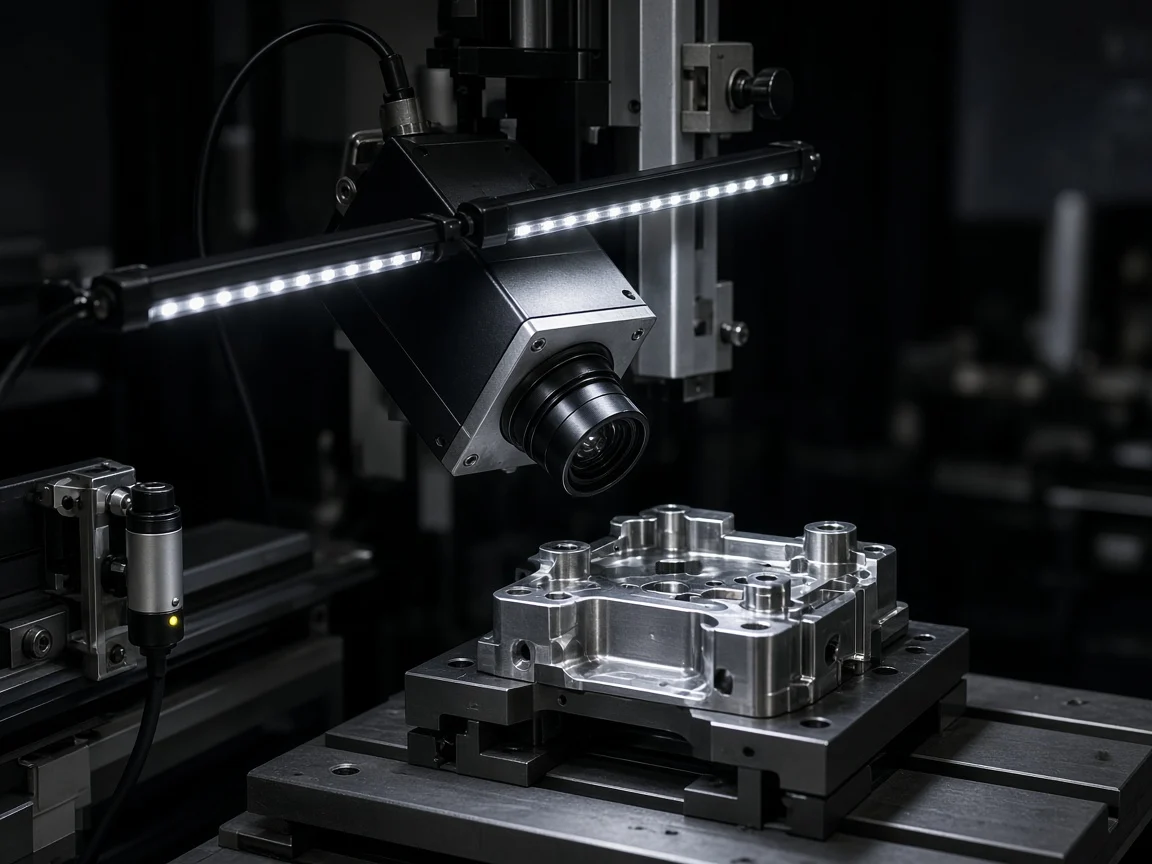
03 / Vision / trigger
Decision
A camera is not a quality system. Once light, trigger, and threshold are built at the same station, the decision stays at line speed.
- Camera and lighting
- Trigger and position verification
- Accept / reject and record
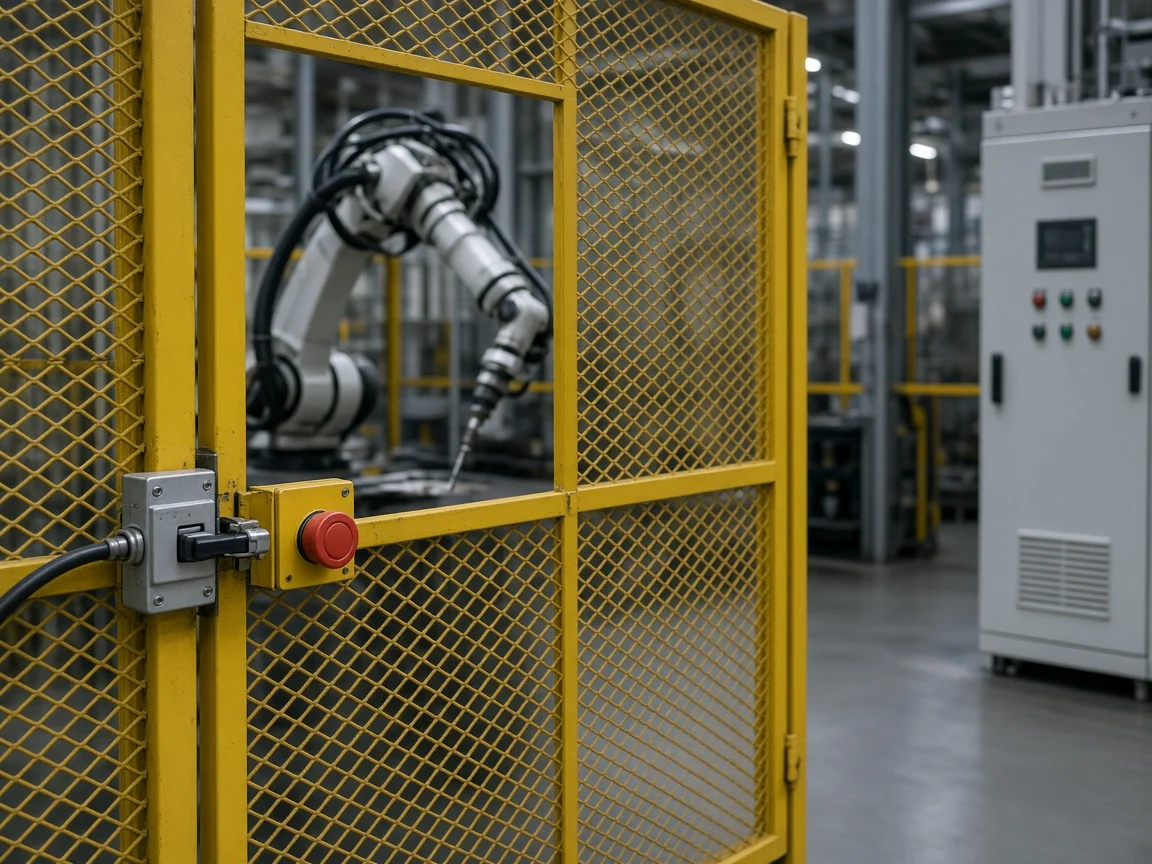
04 / Transfer / lock
Flow
There is no rule that says the line runs if the station runs. Gate, reset, and transfer handshake sit in the same sequence.
- Conveyor and buffer
- Gate, reset, and line lock
- Station order and handshake
Work flow
From reading to integration, five locks.
The method is not a slide. The line is read on site first; tempo is not handed over before FAT and SAT close.
01
Line reading
Cycle, safety, and operator habit are measured on site. Scope is not assumed at a desk.
02
Architecture lock
Electrical, software, and motion are drawn in the same tag language. A lock is designed, not an interface.
03
Integration
Robot, cabinet, vision, and transfer connect on the floor. Simulation does not stay on the desk.
04
FAT / SAT
I/O and safety first, then line rhythm. Tempo is verified on the production floor.
05
First shift
The handover record is not the end of the job. First stoppages are read together.
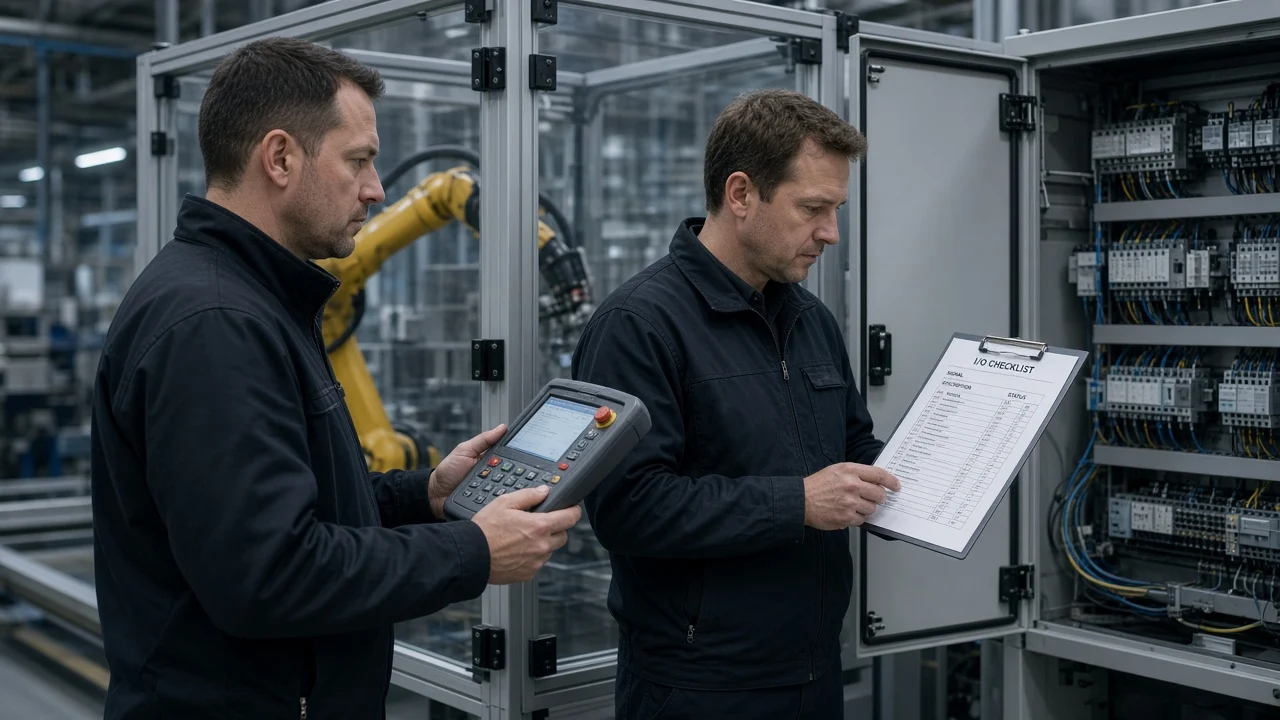
FAT · on the floor
The cell is not “done” until the list closes.
Quality approach
Quality is not a certificate sentence.
We do not invent an unverifiable ISO claim or a scrap percentage. Handover is the I/O list, the safety lock, and the first shift.
Review the quality process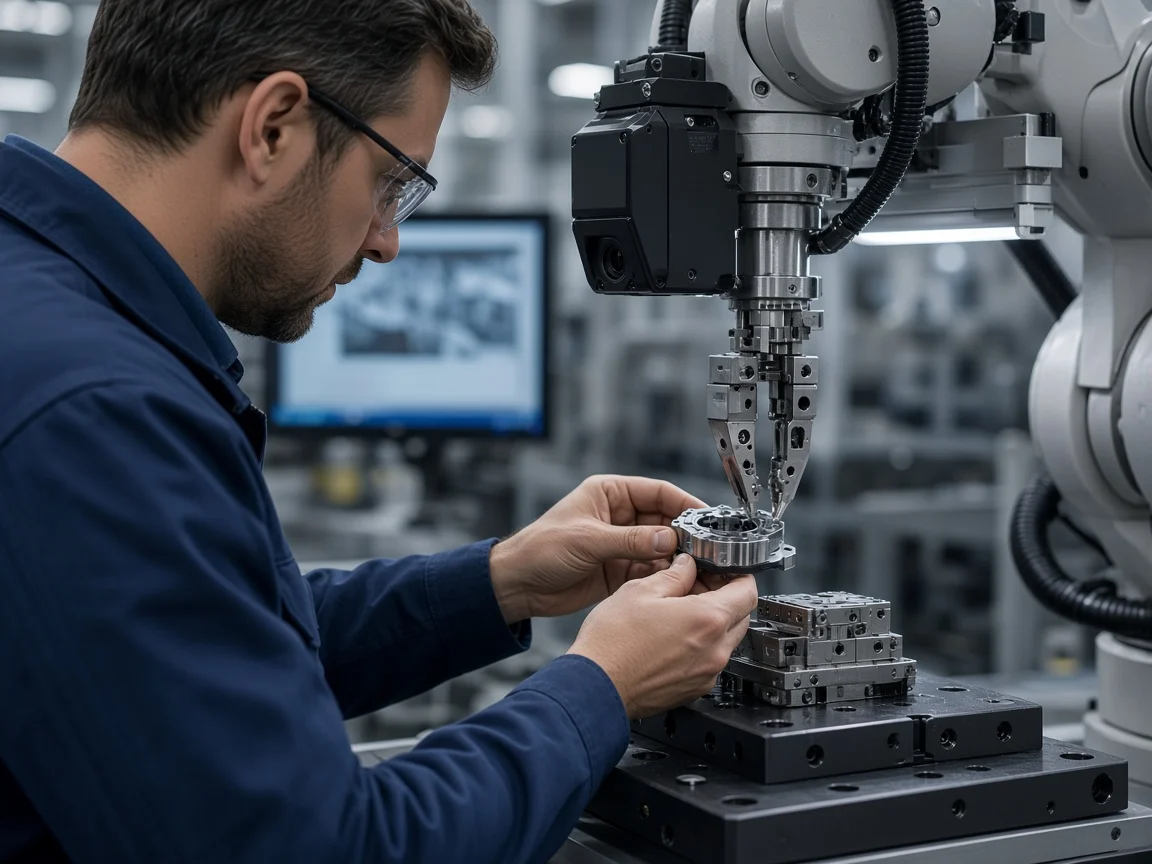
I/O and safety
At FAT, the cell is not counted “done” until the terminal, gate, and reset list close.
Recipe lock
Product change sits on the HMI. Path and threshold are not a notebook that belongs to one person.
SAT rhythm
After controlled exit, the line is watched at production tempo. No rushed handover.
Decision record
Accept / reject and stoppage are not an Excel cut loose from the control layer.
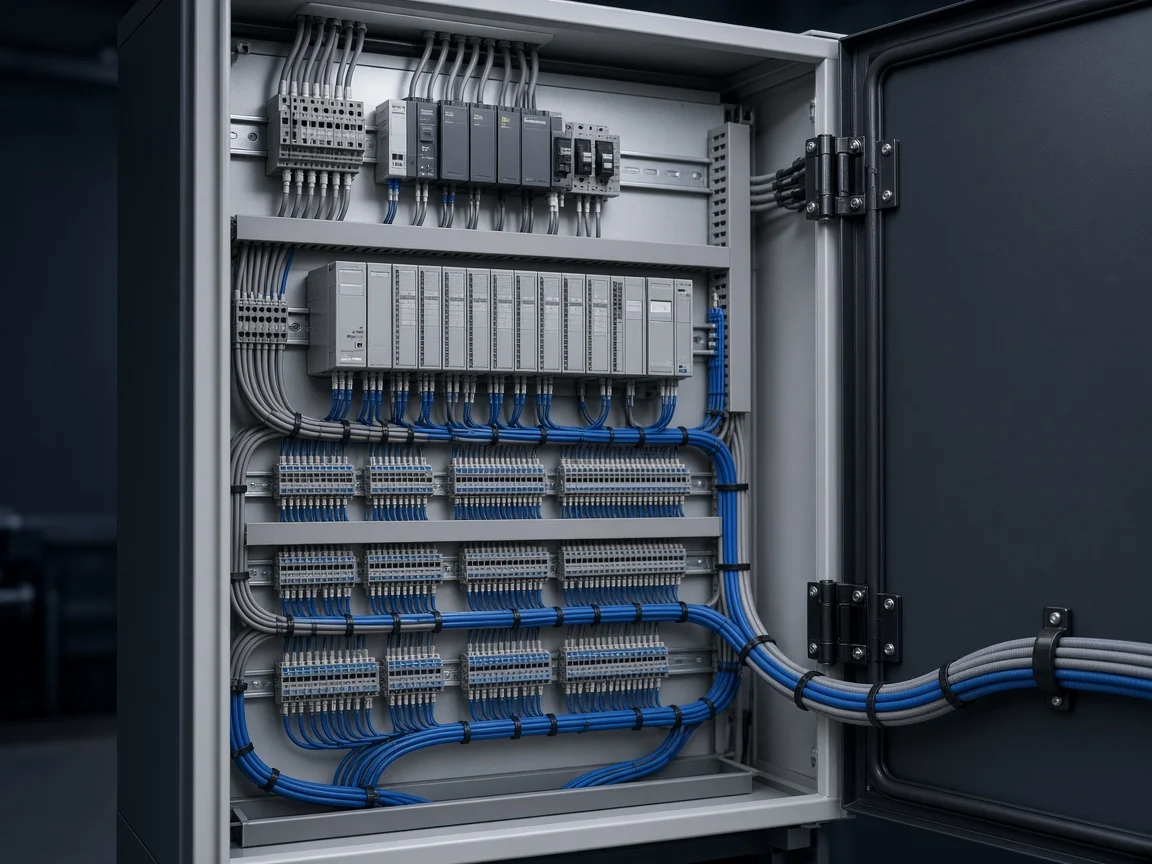
EL / SW / RB / CM / DT
Engineering capability
Five disciplines, one table.
Electrical, software, robotics, commissioning, and data are not separate work orders. The system is not a sum of parts; it is a line that works together.
- EL
Electrical
Cabinet, power distribution, cabling, and safety envelope are built for the floor.
- SW
Software
PLC, HMI, and line software are written in a tag language that can be maintained.
- RB
Robotics
Path, tool, and cell layout are simulated and locked to the cycle.
- CM
Commissioning
At FAT and SAT the line is verified first under control, then at production tempo.
- DT
Data
Machine signal, quality decision, and production record sit in one monitoring layer.
Related services
Capability locks to the service.
- 01Robotic Automation
Cell · A robot is not a cell until it locks to the line rhythm.
- 02Line Automation
Flow · A running station is not a running line.
- 03PLC & SCADA
Control · Control software must belong to the night shift as well.
- 04Machine Vision
Decision · A camera is not a quality system. The station is.
- 05Retrofit
Update · Sound mechanics do not have to be stripped out.
Related industries
The same language, a different rhythm.
Sample applications
Capability locks on the floor.
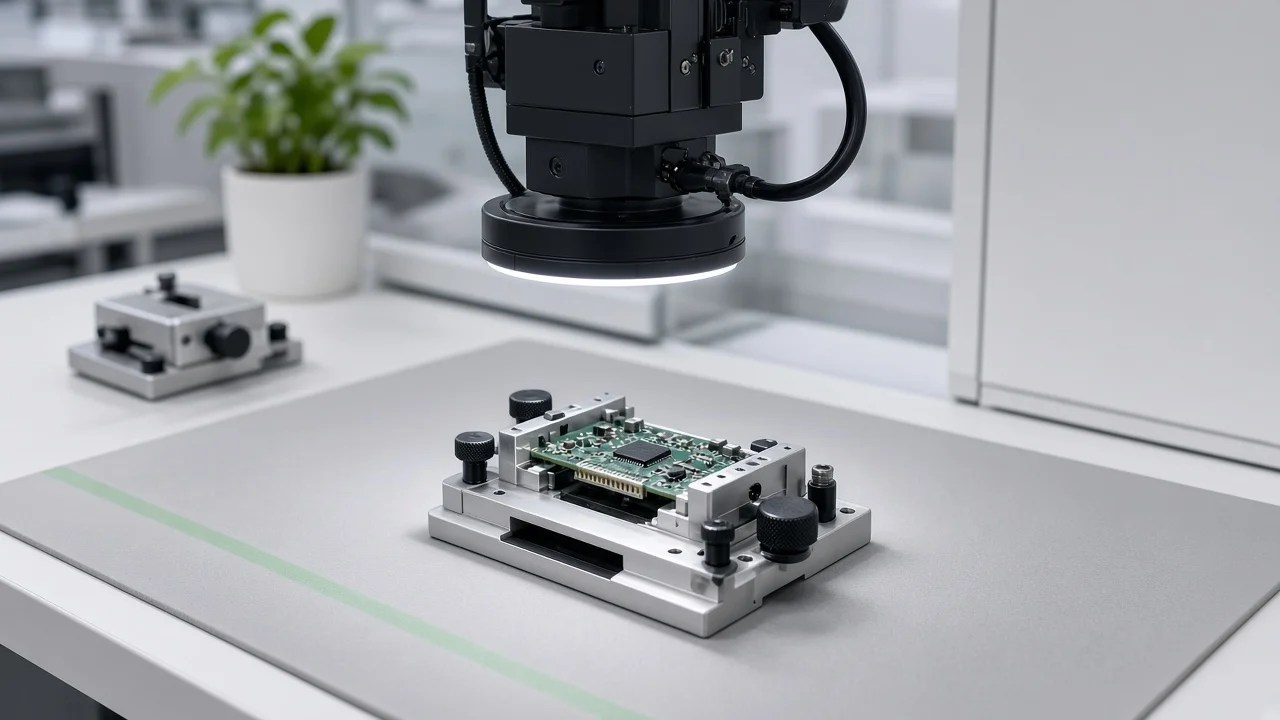
03 / Electronics assembly
Vision Quality Inspection
Surface and position faults missed by eye arriving too late on the line.
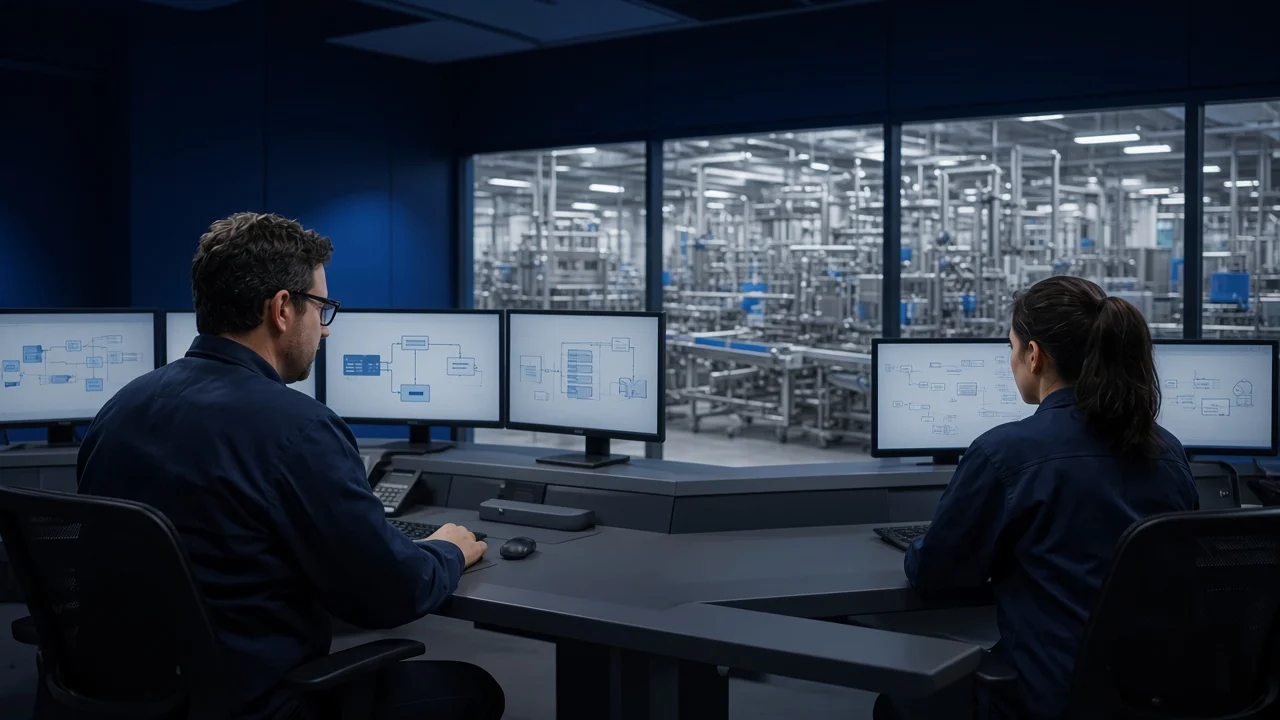
04 / Food production
Production Line SCADA Modernization
Old monitoring screens, scattered alarms, and detached reporting.
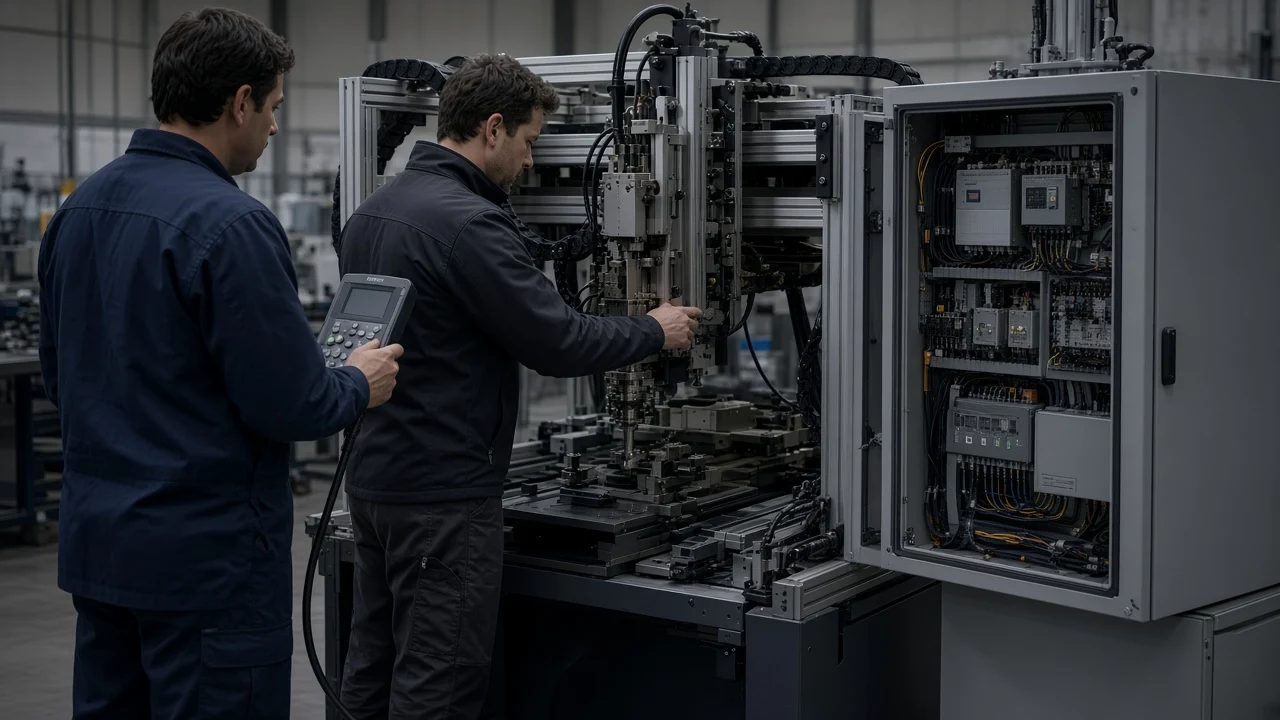
05 / Machinery
Custom Machine Control Retrofit
A controller that could not be spared, software that belonged to one person, and interventions that stretched on every stop.
Technical scope
Let’s read the line lock together.
Cell, cabinet, vision, or an existing line. Scope comes from the work sitting on your line, not from a catalogue.