
Services / Cell
Parking a robot is not enough.
The cell has to lock.
A robot is not a cell until it locks to the line rhythm.
01
Service
A robot is not a cell until it locks to the line rhythm.
A robot on its own is not a cell. If path, tool, fixture, and the safety envelope are not bound to the same cycle package, the station behaves differently on every shift.
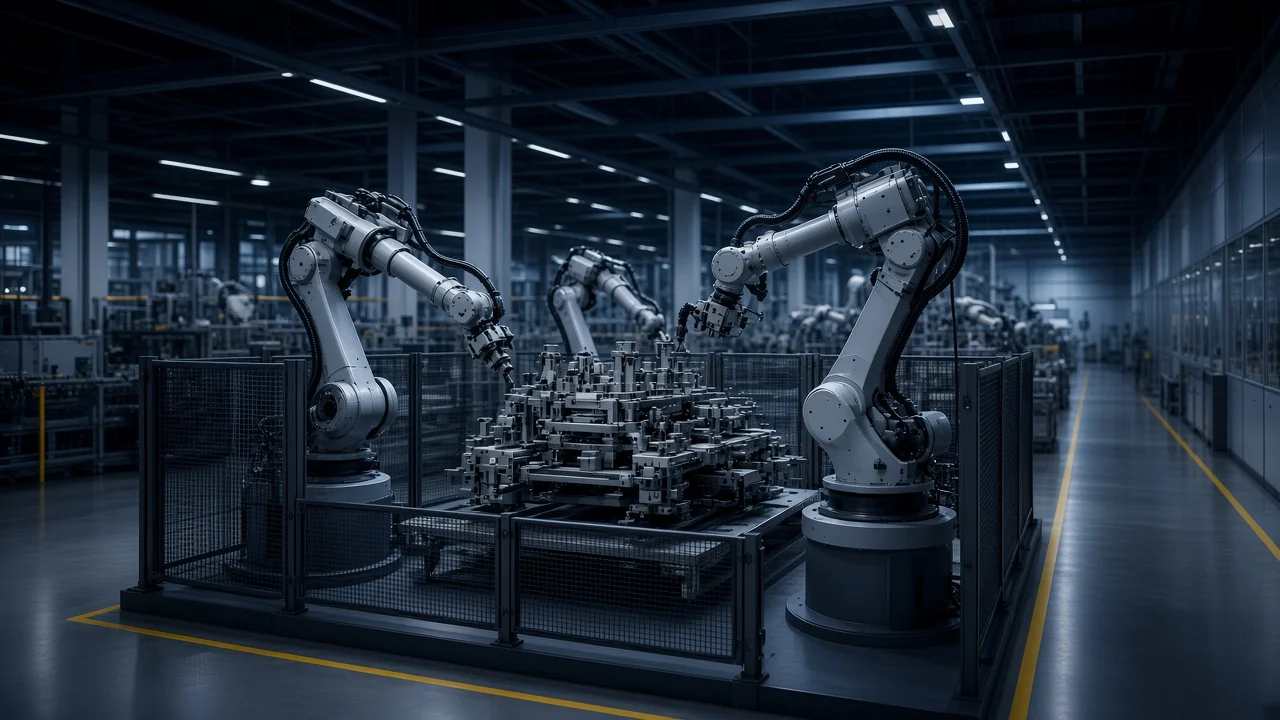
SENKRA builds assembly, welding, machine-tending, and palletizing cells that lock to line rhythm. The aim is not to lean a robot against the line. It is to make the cell speak to transfer and interlock.
The job does not end at the axis count in a catalog. The cell is built when the path holds as the part enters the line, the gripper releases, and the gate opens at the right moment.
Problem
If repeat work stays manual, cycle time drifts.
Cell problems rarely sit in the robot brand. They sit in a package left half-built.
01
Path depends on the shift
A move that holds on the teach pendant drifts the next shift when part tolerance shows up. The simulation stayed on the desk. It was never locked on the floor.
02
The tool is chosen later
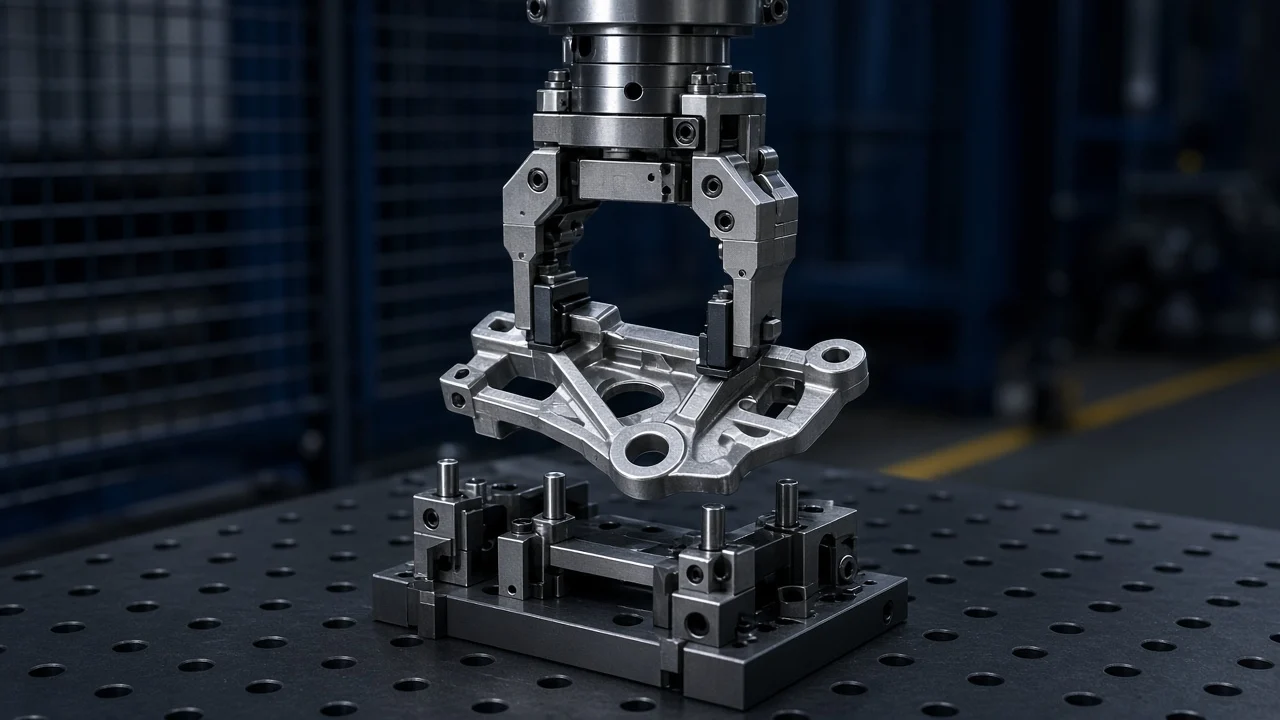
If gripper and fixture are discussed after the robot is ordered, cell safety is added later too. The cycle was never written in the gripper’s language.
03
It does not speak to the line
The cell runs on its own. Transfer waits. Reset and the gate stay in a world apart from the robot program.
Scope
A cell is four locks thrown at once.
Scope is not a robot sale. It is the work that runs in one tag language — from layout to line sync.
- HY
Cell layout
Access, part path, and operator space are drawn together — in assembly, welding, machine-tending, and palletizing cells.
- TK
Tool and fixture
Gripper, vacuum, or clamp is locked against part weight, surface, and release accuracy.
- EM
Safety envelope
Gate, light curtain, area scanner, and interlock are designed with the path. A fence added later is not a cell.
- SN
Cycle and sync
Simulation is proven against line transfer and the PLC interlock. The cell is bound to the neighbouring station’s rhythm.
Approach
Part path first. Axes after.
We do not build the cell around the robot. We build it on the part’s path. Where it arrives, where it stops, how it is released. The path is written after those questions have answers.
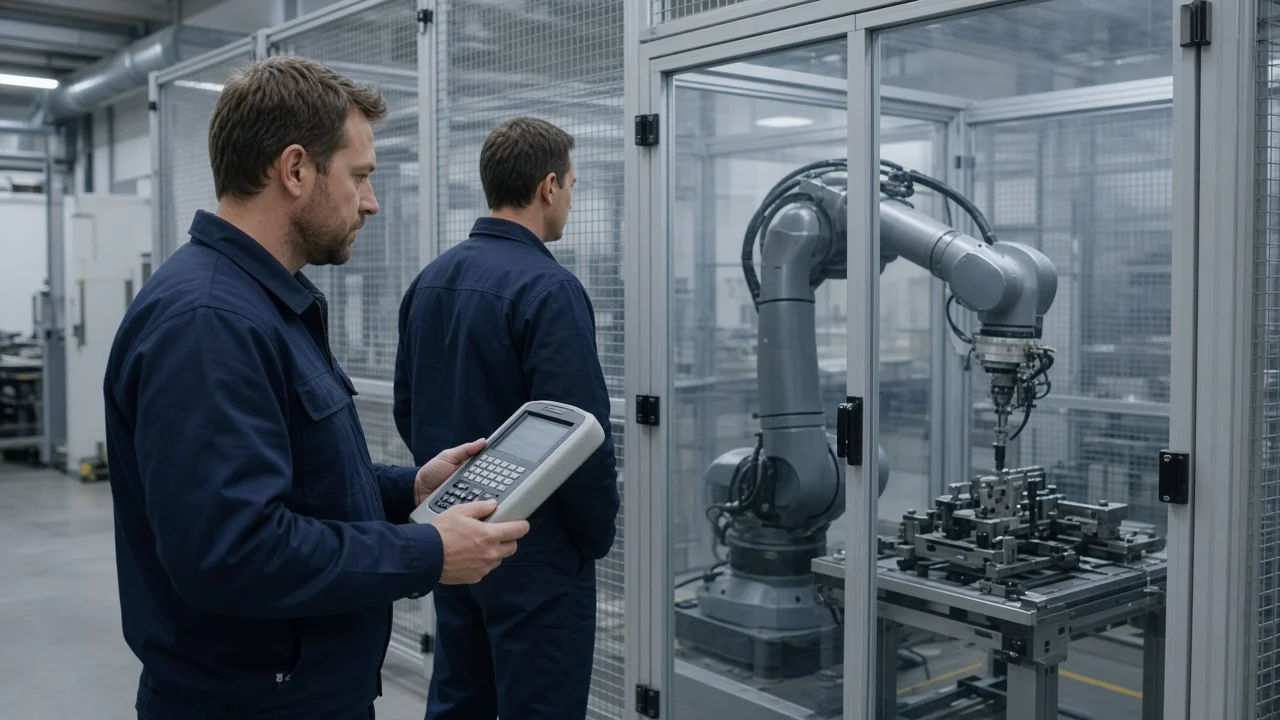
Simulation speeds the desk. The real lock is thrown when the teach pendant and the first part stand together. At that point the safety envelope is not an add-on — it is part of the path.
The same language as the line
If the cell exit does not speak to transfer and reset, the job is half-done. Robotics binds to the same interlock as line automation.
Control stays owned
Cycle and safety are also readable on the PLC layer. The cell is not imprisoned inside the pendant.
Process
Five locks, from layout to exit.
Robotic work does not move as a purchase list. Each step is the precondition of the next.
01
Layout
Part path, access, and operator space are read on site. The cell sits on the line, not in empty floor.
02
Simulation
Path, collision, and cycle are tried in the virtual environment. A move that does not hold on the desk does not reach the floor.
03
Tool
Gripper, fixture, and safety envelope lock in the same package. The gripper is not chosen later.
04
Sync
The cell is bound to transfer and the PLC. Reset, gate, and sequence speak one language.
05
Exit
Tempo is proven in FAT and SAT. The first shift is watched with the teach record.
Application · Automotive supply
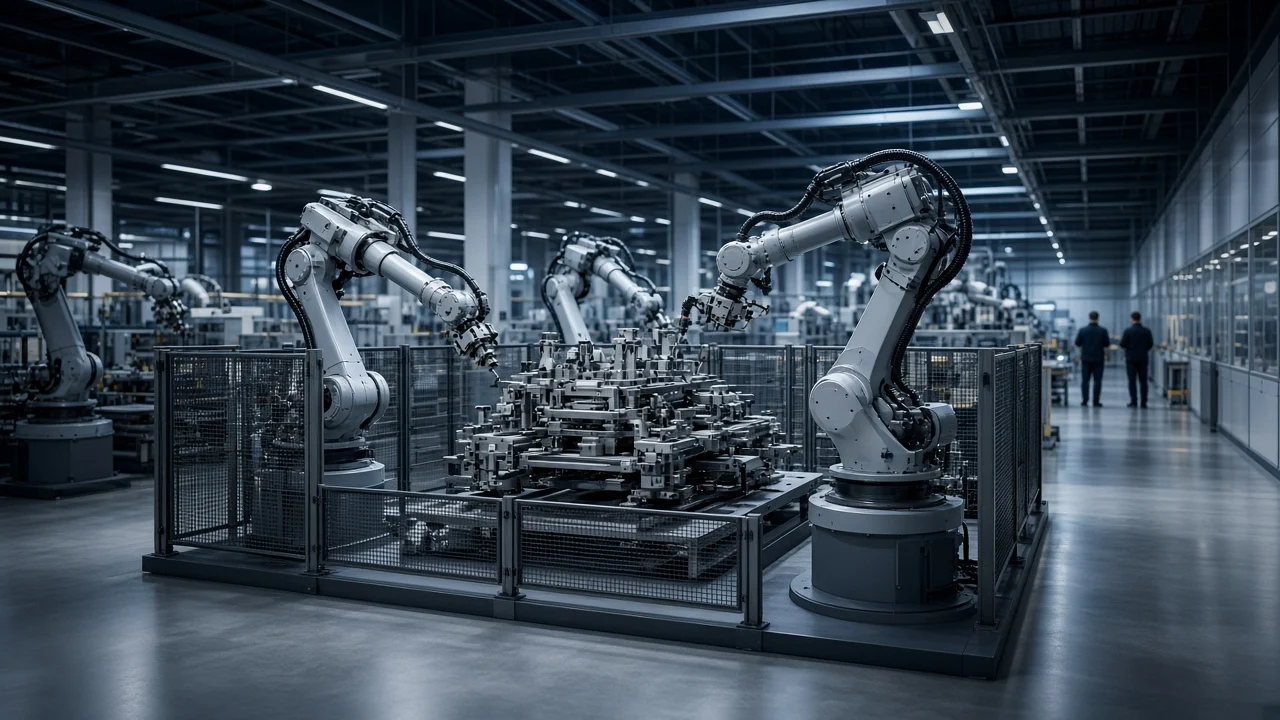
Assembly-line robot cell
Challenge
The line needed repeatable assembly on a tight takt. Work stayed manual. The safety envelope was discussed after the station.
Solution
A four-station cell. Vision positioning, a locked safety envelope, and line transfer in one package. The robot was bound to the neighbouring station’s rhythm.
Industries
The same cell discipline. A different part rhythm.
Robotics is not one template per industry. Weight, hygiene, and cycle rules change the layout.
- Automotive
Repeatable release, tight takt, and a locked safety envelope in assembly and welding cells.
- Packaging
End-of-line palletizing and pattern. When the recipe changes, the path changes with the stretch wrap.
- Electronics
Precision assembly and position. A gripper that speaks to vision wants accuracy before force.
Related services
All servicesServices
Talk through the cell scope
We lock the cell scope together without stopping your current line. Path, tool, and safety are discussed as one package.