
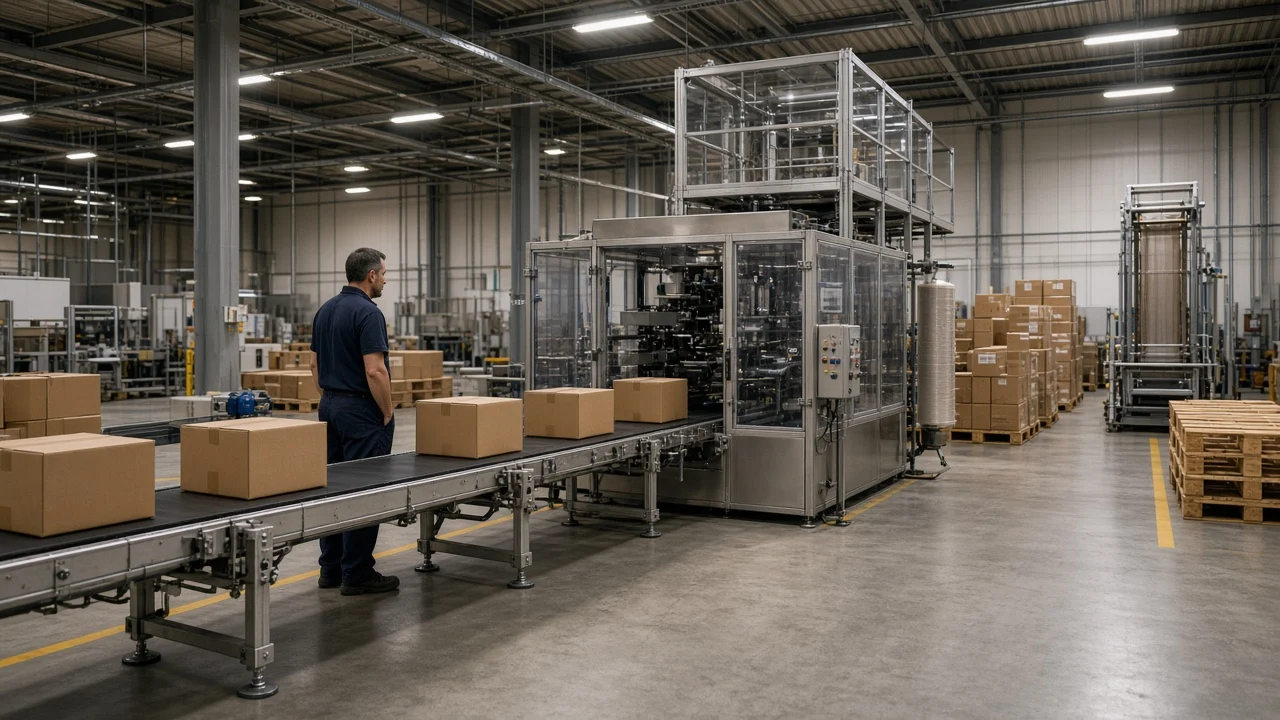
End-of-line packing area with cartons moving on a conveyor

Industries / End of line

The pallet is the line’s
job, not the end’s.

The job does not end when the case is full. The pallet belongs to the line.

Industry

Tempo does not end when the case is full.

Packaging is treated as warehouse work left behind the production lines. If label, pattern, and stretch do not change with the recipe, product piles up at the end of the shift.

SENKRA does not build the end of line as a separate island. Transfer, code decision, and the palletizing cell speak in the same sequence. Pallet quality is tied to station rhythm.

Ordered carton pallet pattern at the end of line

Services

Three services that tie the end of line to the line.

In packaging, robot, flow, and decision do not sit as separate cards. The pallet is the continuation of transfer.

All services
  1. 01

    Robotic Automation

    A recipe palletizing and pattern cell. Gripper and stretch lock in the same package as the line exit.

    Review
  2. 02

    Line Automation

    Case-packing sequence, buffer, and end-of-line transfer. The bottleneck is hunted in the flow, not in the palletizer.

    Review
  3. 04

    Machine Vision

    Code, label, and case integrity decide at line speed. The reject leaves without choking the line.

    Review
Carton conveyor and end-of-line packing

Need

If the end of line is blocked, the stations are not innocent.

The problem often arrives as “a faster palletizer.” The real loss is cut-off transfer and a pattern with no recipe.

  1. Product piles up

    Stations finish; the pallet cannot keep up. The shift ends in irregular stock and a broken stack.

  2. The code arrives late

    Label and barcode appear at the next point — sometimes at the customer. The reject chokes the line.

  3. The recipe is cut off

    When the case changes, the pattern hunts for the person who wrote it. Stretch and sequence stay in separate worlds.

Capability

Four stations, from case to pallet.

Scope is not the sale of a case machine. It is the recipe travelling all the way to the end of line.

  1. 01

    Case

    Case packing and closing are tied to the previous station’s tempo.

  2. 02

    Code

    Label and code reading carry the accept-reject interlock to the PLC.

  3. 03

    Pattern

    A recipe pallet pattern. When the product changes, the path changes with it.

  4. 04

    Exit

    Stretch, buffer, and shipping transfer. The pallet does not stay on an island.

Application

The pallet does not stay behind the stations.

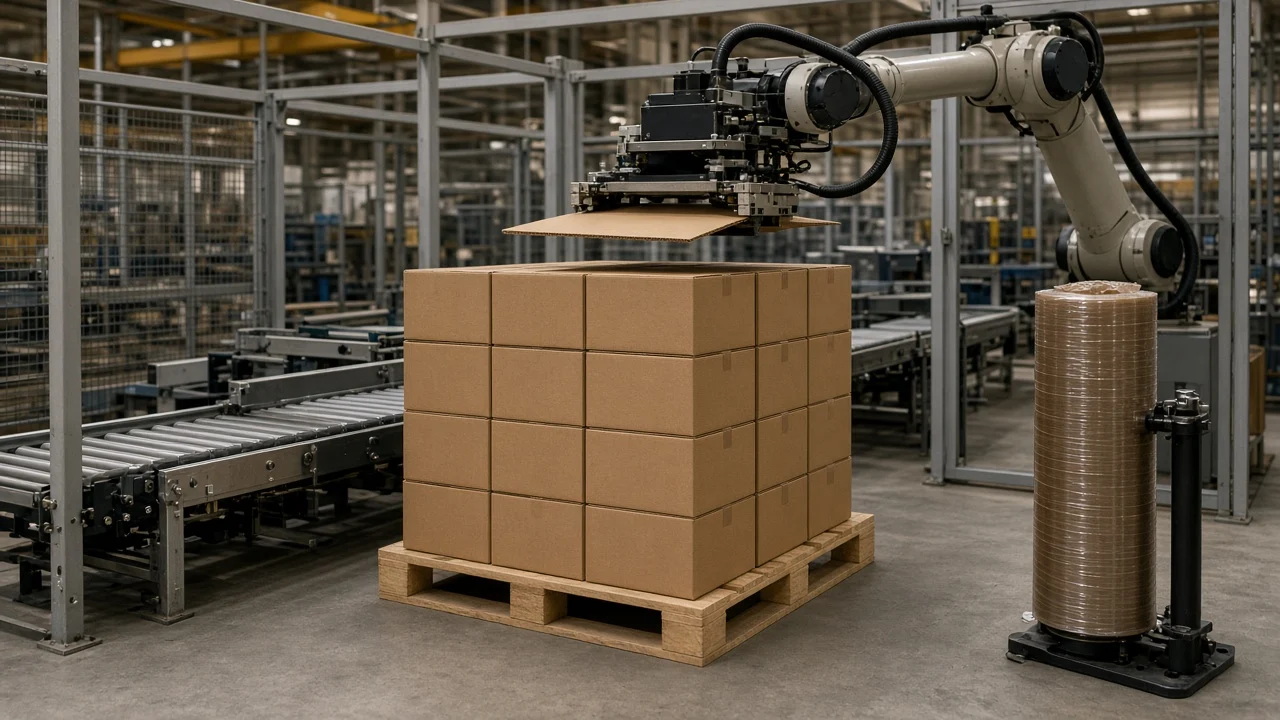
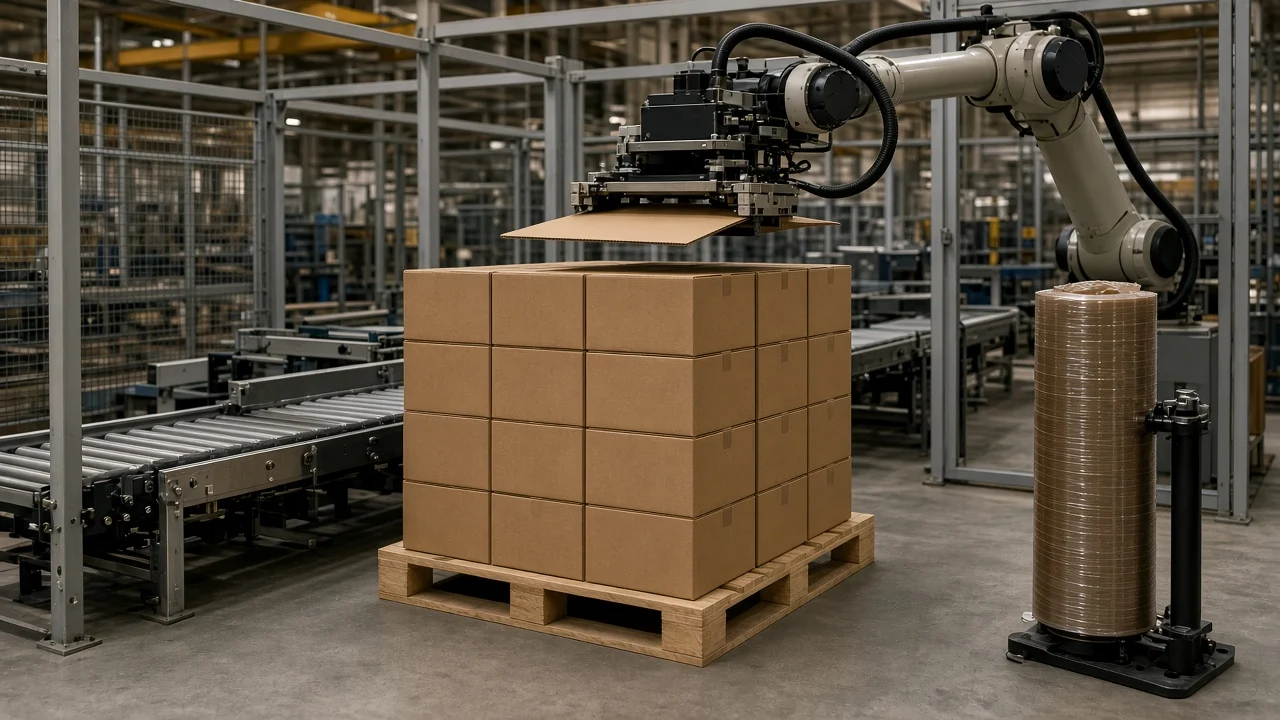
End-of-line robot placing a slip sheet on a carton pallet

Application · Pallet

Palletizing tied to the end of line

Challenge

Product was piling up at the end of the shift, and pallet quality was changing shift to shift.

Solution

Recipe pattern, automatic stretch, and line transfer in the same sequence. The pallet stopped being leftover work.
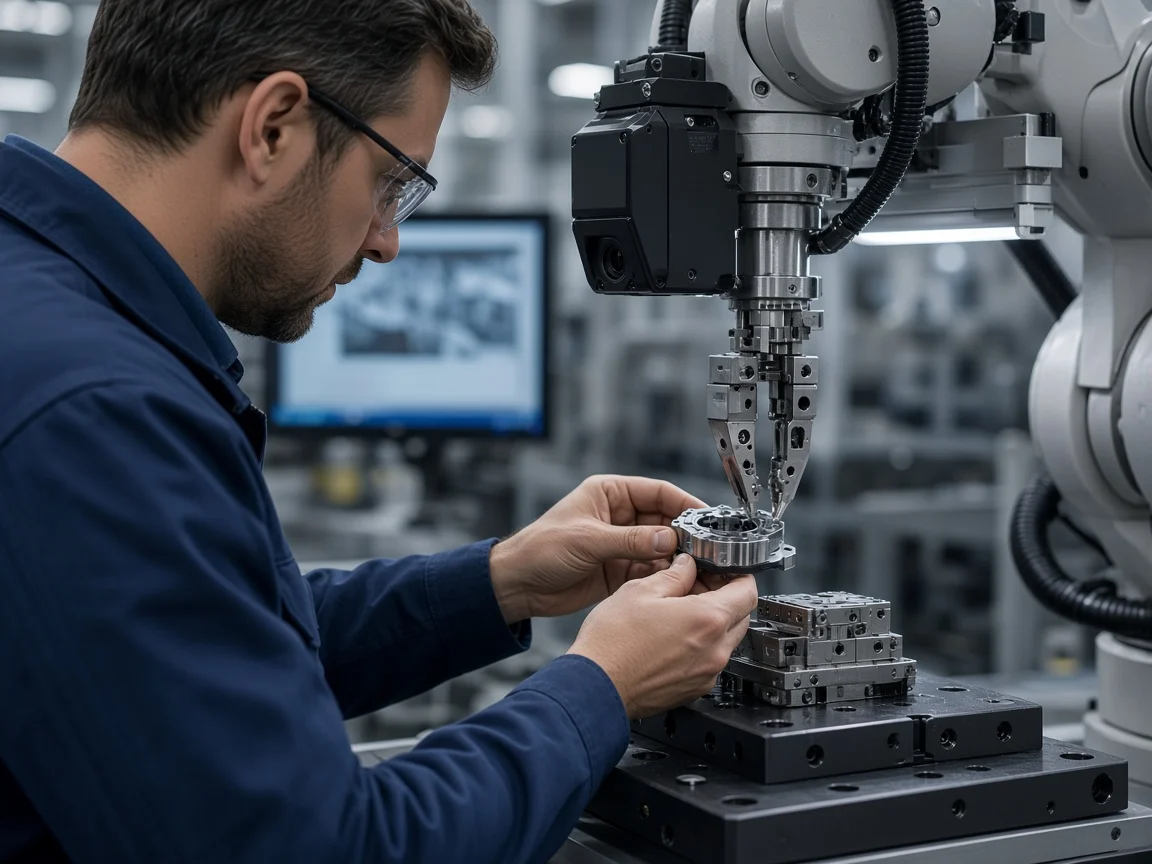
Label and code check on a packaging line

Application · Code

Label and case integrity

Challenge

Code and label were appearing at the next point — sometimes at the customer. The reject was choking the end of line.

Solution

Reading at line speed, a locked threshold, and accept-reject to the PLC. A faulty case leaves without waiting for the pallet.

Projects

Work tied to this rhythm.

Palletizing in the same language as line control.

All projects

Why

We do not leave the end of line as a warehouse.

A packaging customer does not come to us for a case catalogue. They come for an exit that does not pile up at the end of the shift.

  1. The recipe travels the line

    When the case changes, it is not only the palletizer that speaks — code and sequence do too.

  2. The decision does not choke

    A vision reject leaves without locking the end of line.

Neatly patterned carton pallet and an approaching gripper

Industries

Build the end of line together

Case, label, or pallet. Let us read together whether the end of line is leaving the stations behind.

Full request form