
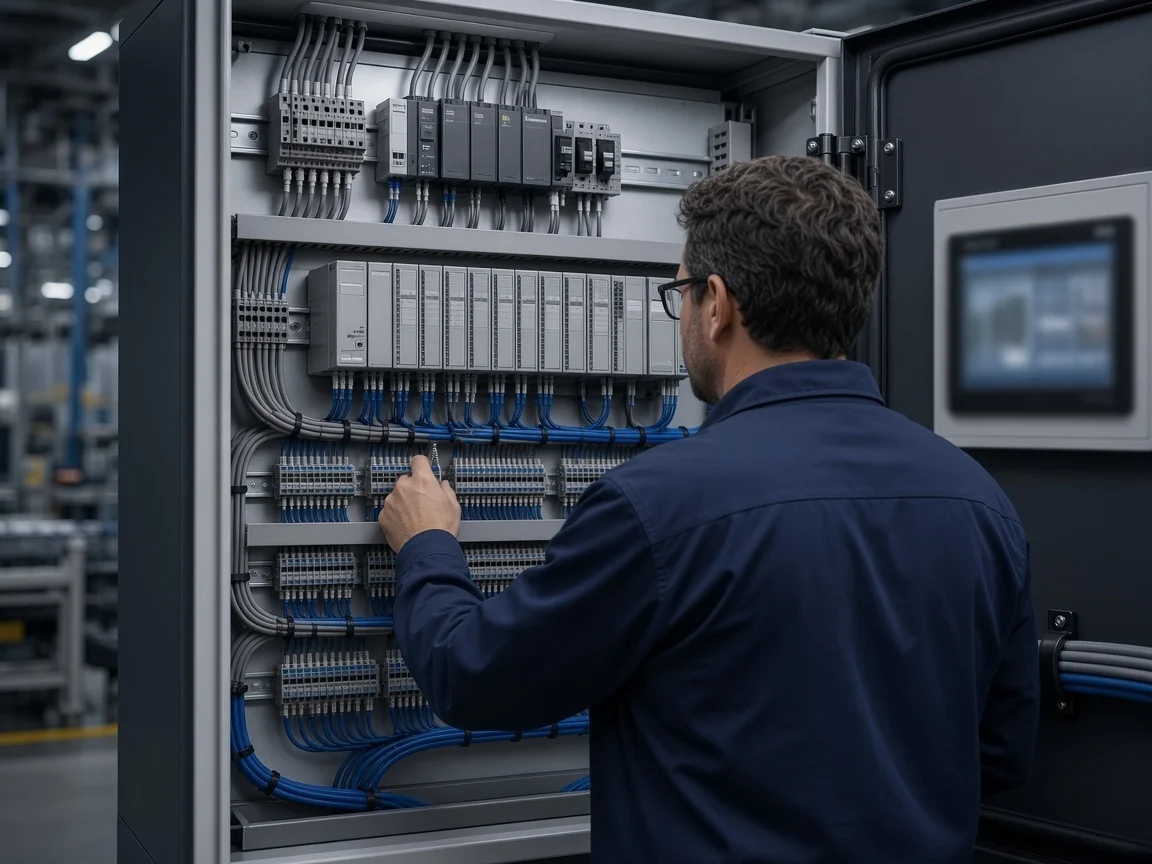
Services / Control
Control is the night
shift’s language.
Control software must belong to the night shift as well.
Service
Control software must belong to the night shift as well.
PLC and SCADA are not a screen-design job. If tags are scattered, alarms flood, and recipes are locked, the software belongs to the person who wrote it — not to the shift.
SENKRA builds systems that can be read — from machine control to plant monitoring. PLC, HMI, alarm hierarchy, and production records are written in one tag language. Stoppage and quality decisions are not hunted in a separate report.
Good control is control the night shift can intervene in. The screen is spare, the interlock is open, the record comes from the line itself.
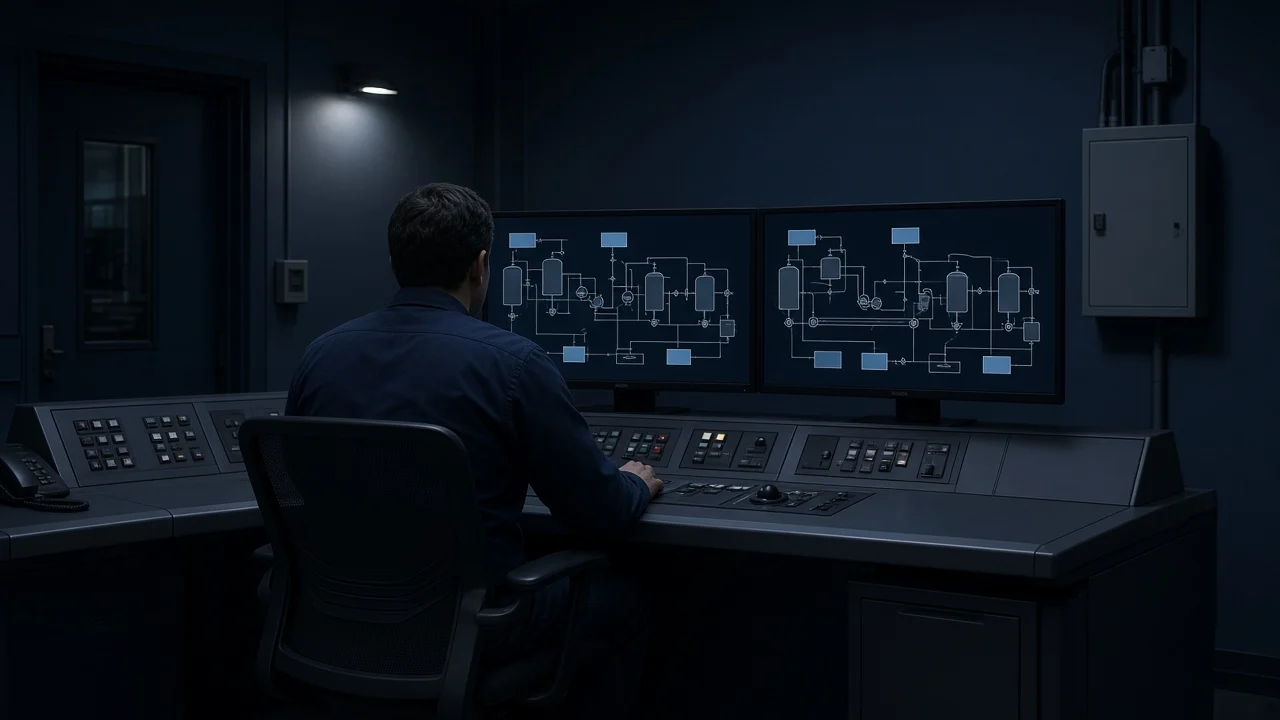
Scope
Four layers. One tag language.
The layers look like separate purchases. Without one dictionary on the floor, none of them is easy to maintain.
I/O
PLC and safety
I/O list, safety PLC layer, and interlock logic. A signal is not an unnamed point. It is a sentence of the line.
HMI
Screen and recipe
A spare HMI the operator can still find at night. Recipe, parameter, and authority in one place, in one language.
ALM
Alarm hierarchy
A structure that names the stop first, then opens the reason. Not every bit carries equal weight on the screen.
REC
Production record
Downtime, cycle, and traceability are not cut loose from the control layer. The report is not draped on afterwards.
Problem
Running software is not a readable line.
Control problems are often closed as “a software fault”. The real break is a scattered language.
01
Alarm flood
If every signal goes red, none of them is read. The operator starts guessing the real stop.
02
The recipe locks
When the product changes, the parameter looks for the person who wrote it. The HMI becomes the engineer’s screen, not the shift’s.
03
The record is detached
OEE and traceability sit in a separate tool. The stop reason does not speak to the tag in the PLC.
Approach
Dictionary first. Screen after.
We do not start software from the screen. First the tag dictionary: which signal belongs to whom, which interlock belongs to which station, which alarm is a real stop. Without a dictionary, SCADA is a shop window.
The architecture also carries line automation and the vision decision. A quality reject does not stay on a separate PC. It is an interlock the PLC knows. On retrofit work, this dictionary is read from the existing cabinet — not invented from scratch.
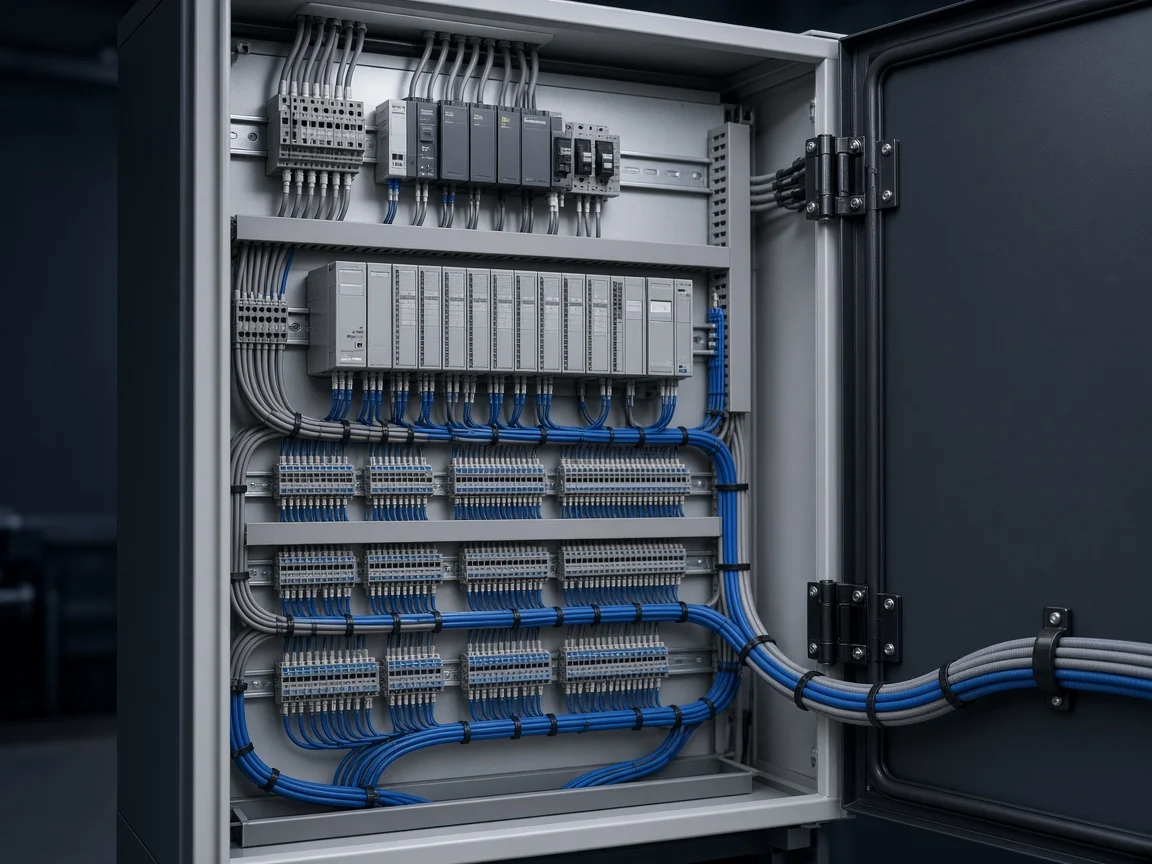
Code that can be maintained
Function, name, and comment stay spare enough for the next engineer to read. “It runs” is not enough.
Shift test
The HMI is proven with the night shift, not with the person who wrote it. A recipe change does not close until it is tried on the floor.
Process
From dictionary to shift.
Control work moves through four locks. The screen is the third step.
01
Dictionary
I/O, interlock, and existing names are read on site. A new tag does not ignore the old cabinet.
02
Architecture
PLC, safety layer, and station handshake are drawn. The design is the interlock, not the interface.
03
Screen
HMI / SCADA and recipe sit on the dictionary. Alarm weights are simplified with the shift.
04
Shift
FAT, SAT, and the first night shift. The record is proven together with the stop reason.
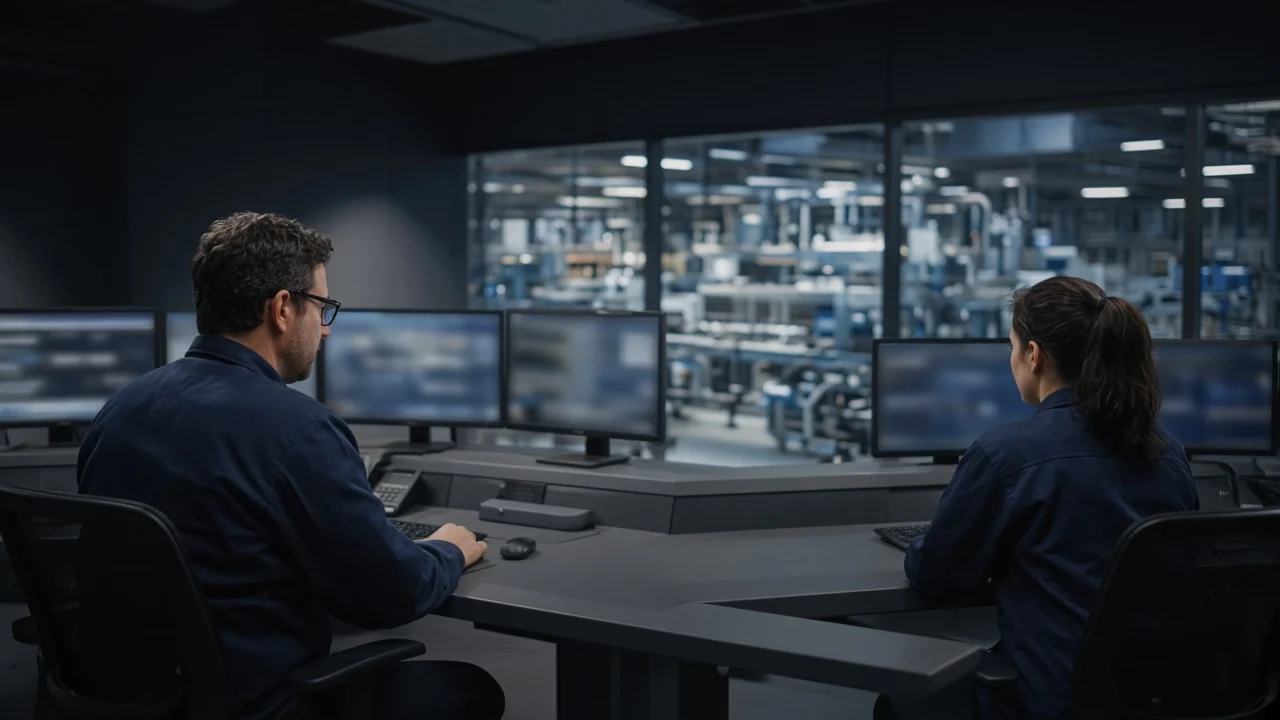
Application · Food production
Production-line SCADA modernization
Challenge
Old monitoring screens, scattered alarms, and detached reporting. The night shift hunted the stop reason on the line, not on the screen.
Solution
A new SCADA layer was built by reading the existing PLC dictionary. Alarm hierarchy was simplified. Shift-based production records bound to the control layer.
Industries
The same control language. A different monitoring need.
Batch record in food, motion in machinery, cycle in automotive — the tag dictionary is built for the industry.
- Food
Recipe, downtime, and batch traceability. The alarm does not confuse cleaning with the fill window.
- Machinery
Special-machine control and motion. Servo and safety are readable in the same cabinet language.
- Automotive
Cell and line interlock. The cycle record arrives with the station stop.
Related services
All servicesServices
Review the control architecture
Do alarm, recipe, and record speak one language. We read the control architecture against your current line.