
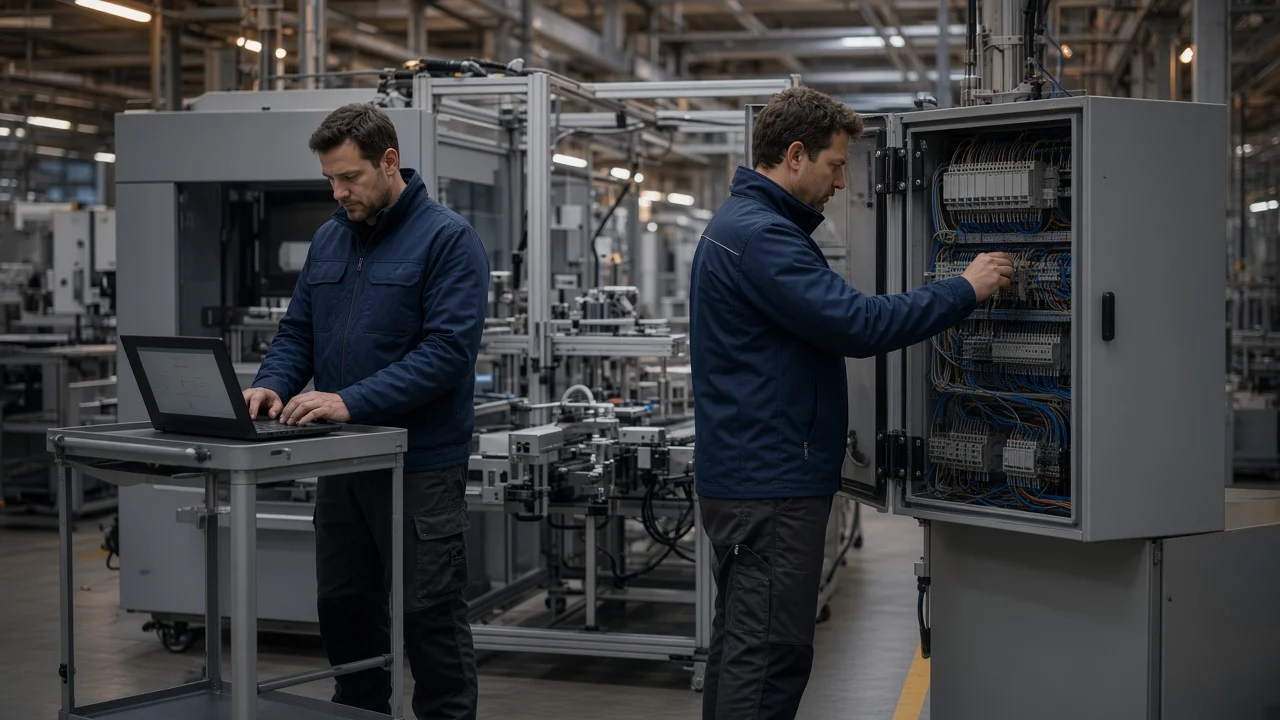
Services / Update
Renew the control
without stripping the mechanics.
Sound mechanics do not have to be stripped out.
Service
Sound mechanics do not have to be stripped out.
Sound mechanics do not have to be stripped out. A controller that is hard to spare, a scattered SCADA, and interventions that stretch on every stop — those are usually the control layer’s job, not the mechanics’.
SENKRA retrofit updates control, servo, and safety by reading the existing cabinet and software on site. The aim is not to scrap the line. It is to leave it in a state the next shift can intervene in.
Approach
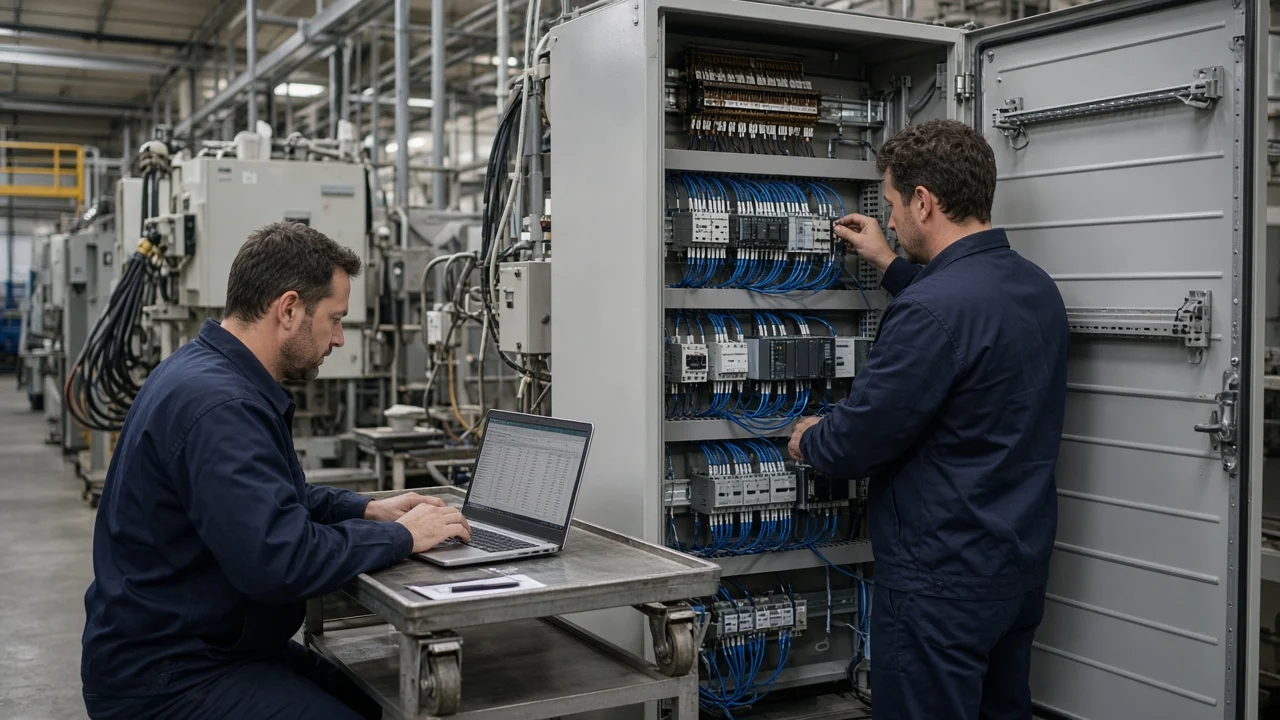
We read the existing language first.
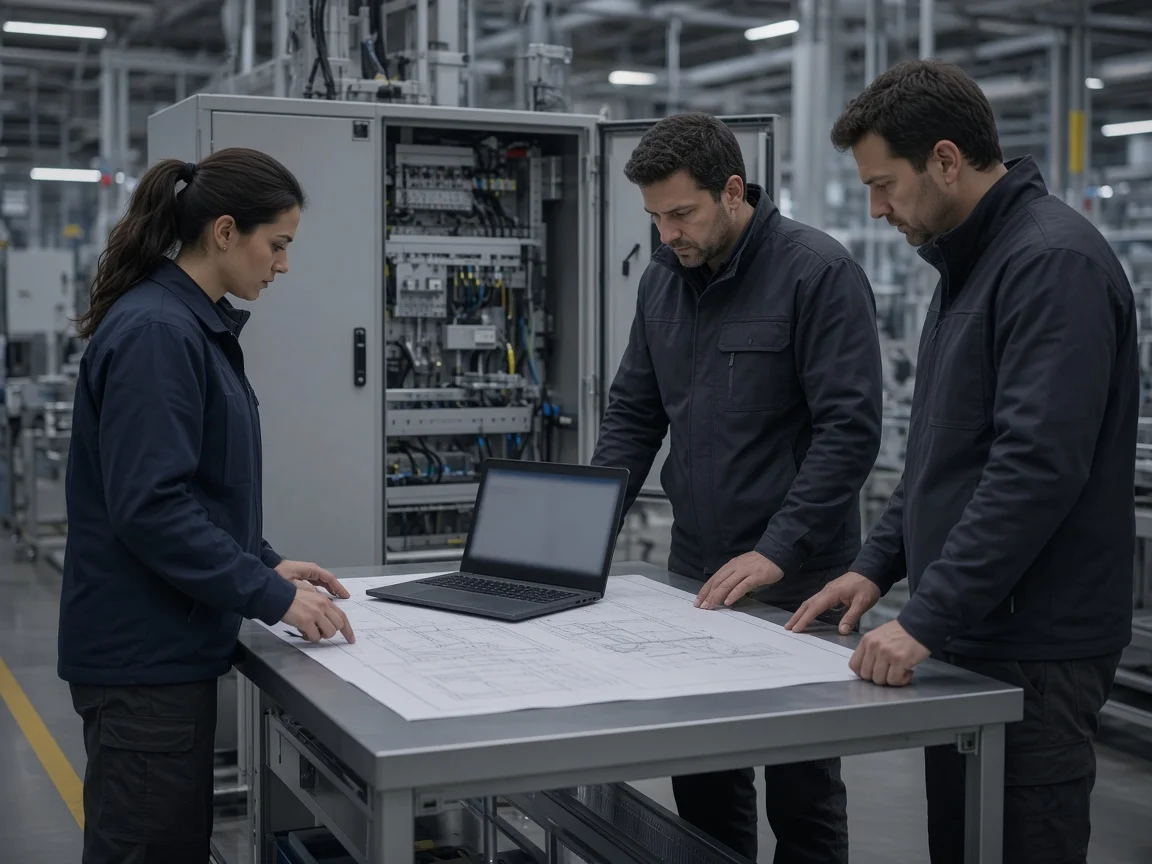
We do not enter a retrofit with a new architecture. First the cabinet door opens. Tags, comments, and the reset the operator actually performs are written down. If the existing language is ignored, the new software will be unreadable soon enough.
Then the translation: which signal stays, which moves to the new dictionary, which station holds at which stage. PLC & SCADA and line automation are not separate jobs here. They are the readable continuation of the existing flow.
Production downtime is planned
A stage is not “we change everything over the weekend”. Which station goes quiet, and when, is locked in advance.
The cell is updated too
If the robot or servo still speaks to the old controller, the path is part of this package too.
Problem
An old line slows because it cannot be read.
A retrofit request often arrives as “a new line”. The real need is to shorten intervention time.
01
The controller cannot be spared
When the card cannot be found, the stop stretches. The mechanics are sound. The brain cannot keep up.
02
The software belongs to one person
No comments, scattered tags, locked recipes. Intervention means waiting for that person.
03
Safety is patched on later
Gates and interlocks were added over the years and do not speak to line sequence. Reset is discovered every time.
Scope
The update is chosen layer by layer.
We do not have to change everything at once. Work that is read first, then staged.
EN
Inventory
Cabinet, I/O, software, and spare status are read on site. Scope comes from the cabinet, not the catalog.
KT
Control and motion
PLC, servo, and HMI update. The mechanics stay. The brain becomes readable.
EM
Safety
Gate, interlock, and the safety PLC layer bind to the existing sequence. The patched envelope is simplified.
KD
Staged exit
The line stays in production as far as possible. Overlapping downtime is discussed against the shift plan.
Process
From inventory to stage.
Retrofit walks through four locks. Strip-out is not the default step.
01
Inventory
Cabinet, software, spare, and risk are read on site. Which layer comes first is decided here.
02
Translation
The old tag moves to the new dictionary. Names the operator already knows are not ignored.
03
Stage
Station by station or layer by layer. Parallel running is kept where it is possible.
04
Exit
Old and new are proven side by side. The first stops are read together. The line is not left without an owner.
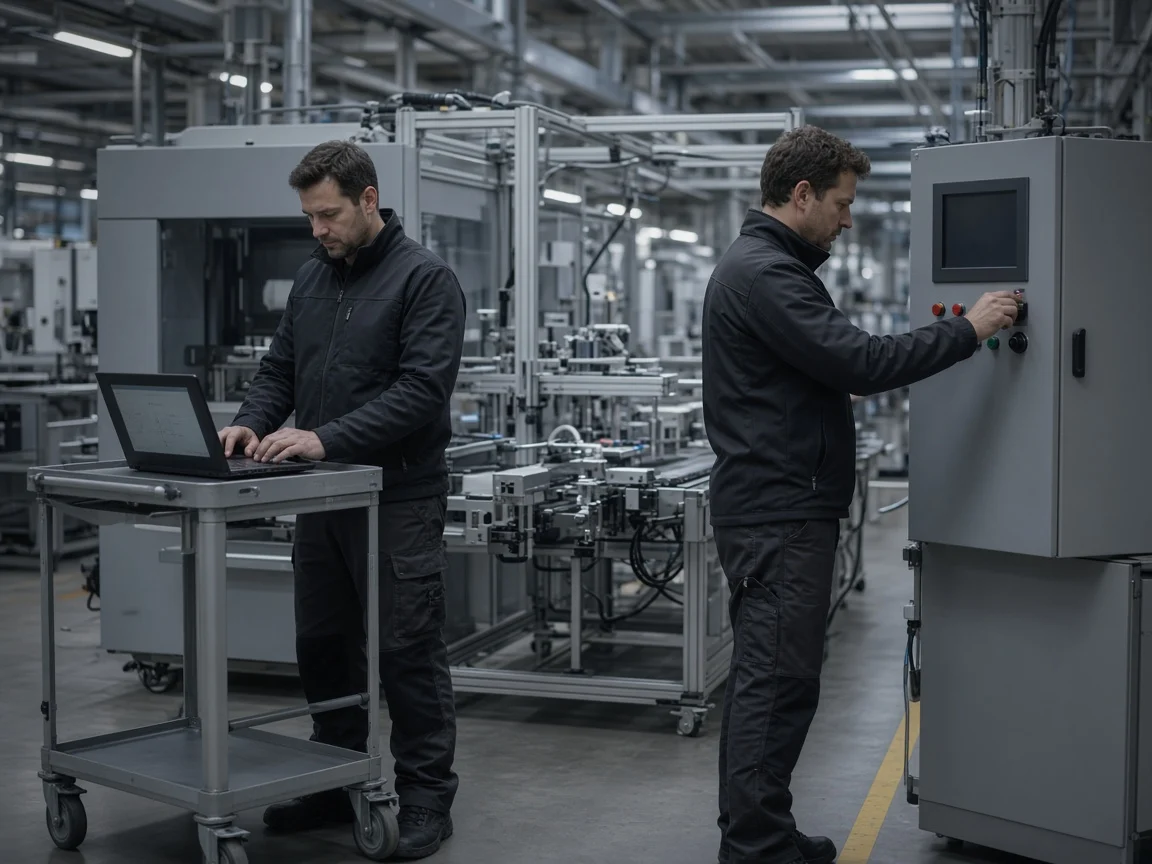
Application · Special machine
Line control updated in place
Challenge
The controller was getting hard to spare. SCADA was scattered. Intervention stretched on every stop. The mechanics were sound. The line did not need to be scrapped.
Solution
The existing cabinet was read on site. Control and safety layers were renewed in stages. The tag dictionary was translated into the operator’s language. The line stayed in production through overlapping stops.
Industries
The same update discipline. A different downtime cost.
A hygiene window in food, takt in automotive, spares in machinery. The stage is built against the industry’s stop.
- Machinery
Sound mechanics on a special machine, aged control. Servo and cabinet are renewed in place.
- Food
Line downtime binds to the cleaning and batch window. SCADA and recipe are read from the existing flow.
- Automotive
Cell and line interlocks update in stages. Cycle is measured on the changeover day as well.
Related services
All servicesServices
Lock the retrofit scope
We lock which layer renews first without stopping the line. Inventory first. Then the stage.