
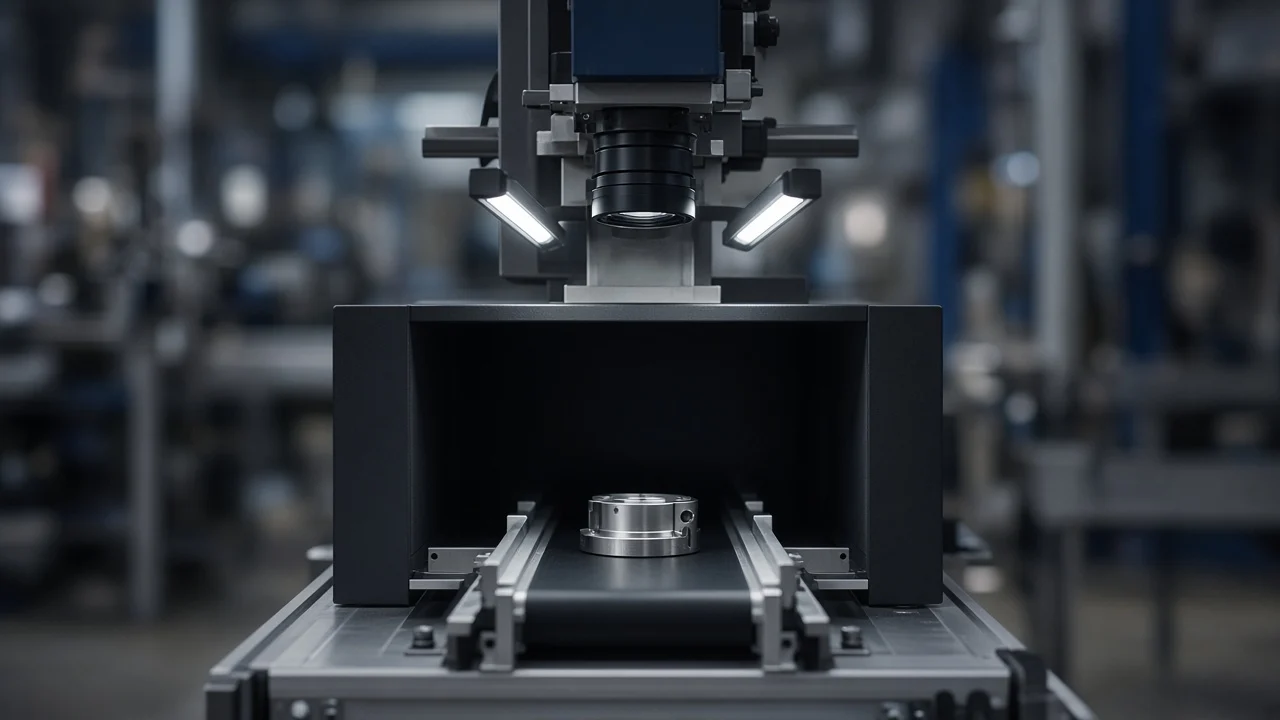
Services / Decision
The camera does not see.
The station decides.
A camera is not a quality system. The station is.
Service
A camera is not a quality system. The station is.
A camera is not a quality system. If lighting, trigger, threshold, and the line’s pass/fail interlock are not built in the same station, the image is a late observation.
SENKRA makes surface, position, presence, and code-reading decisions repeatable at line speed. The decision is not the operator’s “it looked that way”. It is the value the station measured.
Problem
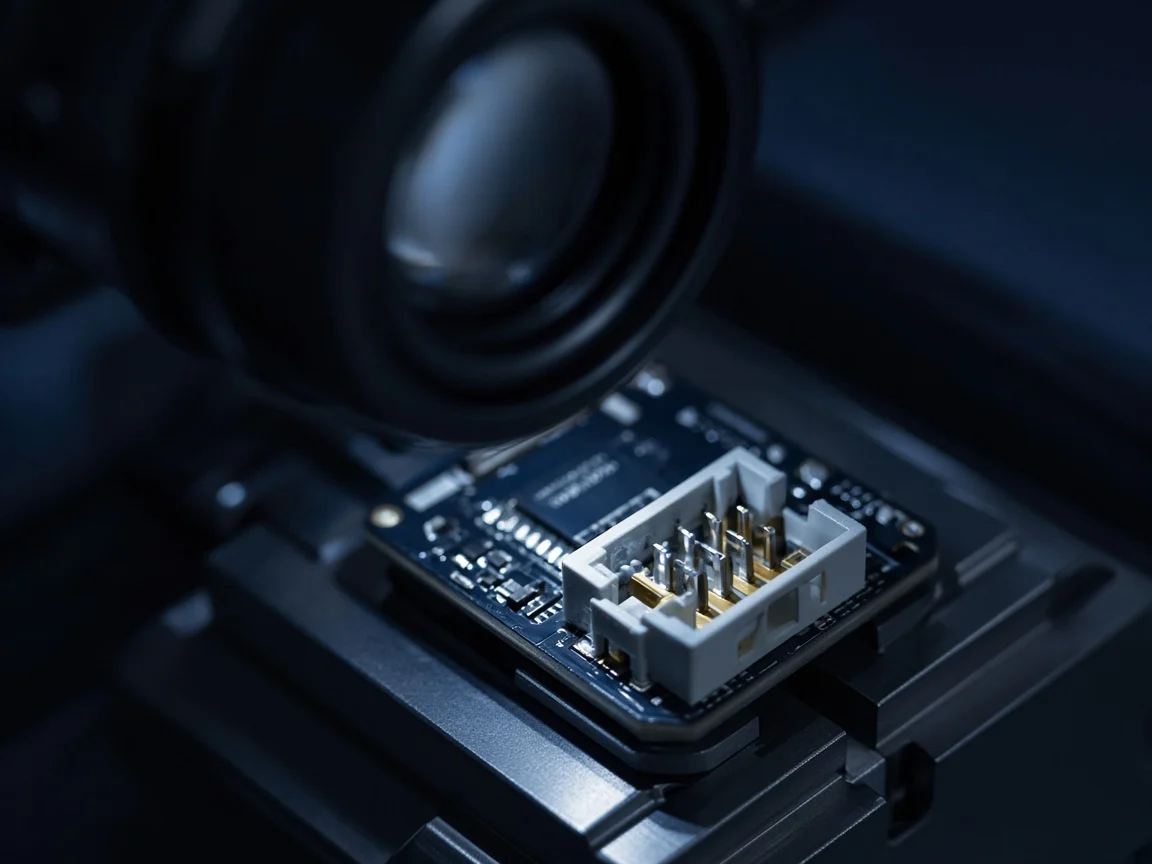
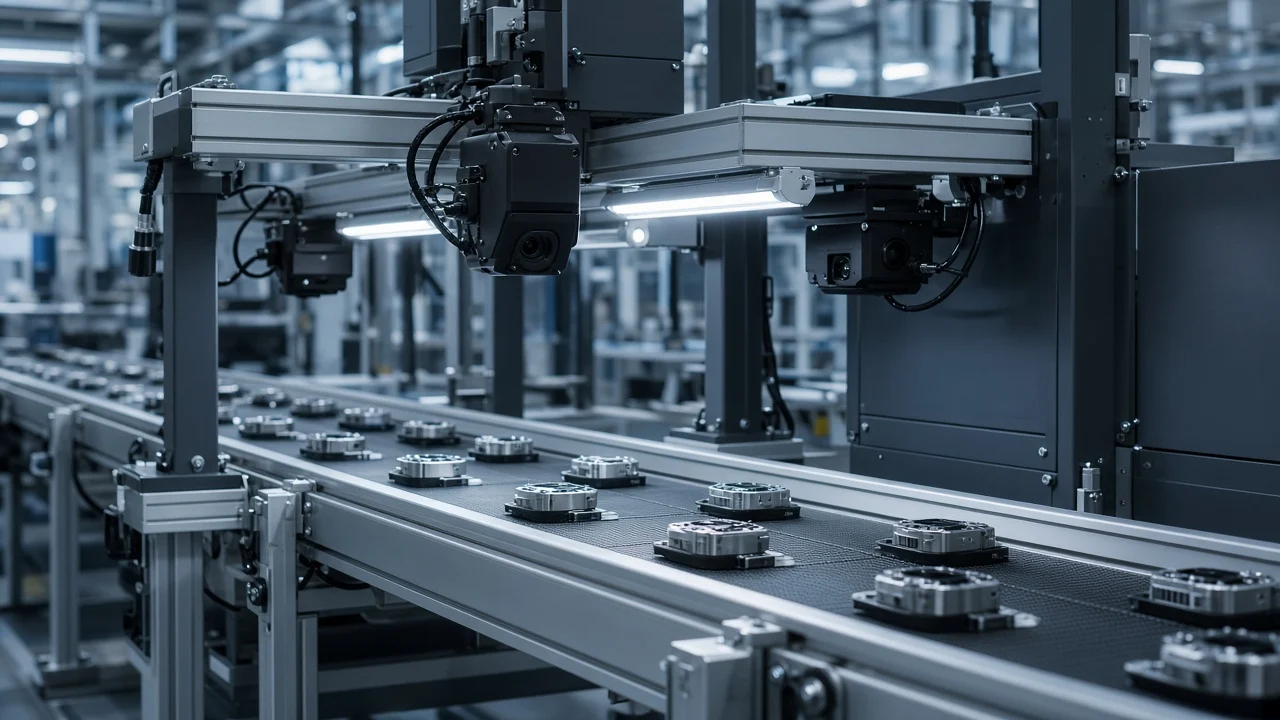
If the fault shows at the next station, it is already late.
Vision work does not end when the camera is bought. A good camera is still blind if the light is wrong.
No light, only a threshold
The algorithm tries to compensate for bad lighting. The threshold drifts every shift. The decision cannot be trusted.
The trigger misses the line
The camera looks before the part has stopped. A blurred frame passes as “no fault” — or rejects every part.
The decision does not bind to the line
The vision PC says yes or no. The line does not listen. The reject shows at the next station — or at the customer.
Approach
Light first. Threshold after.
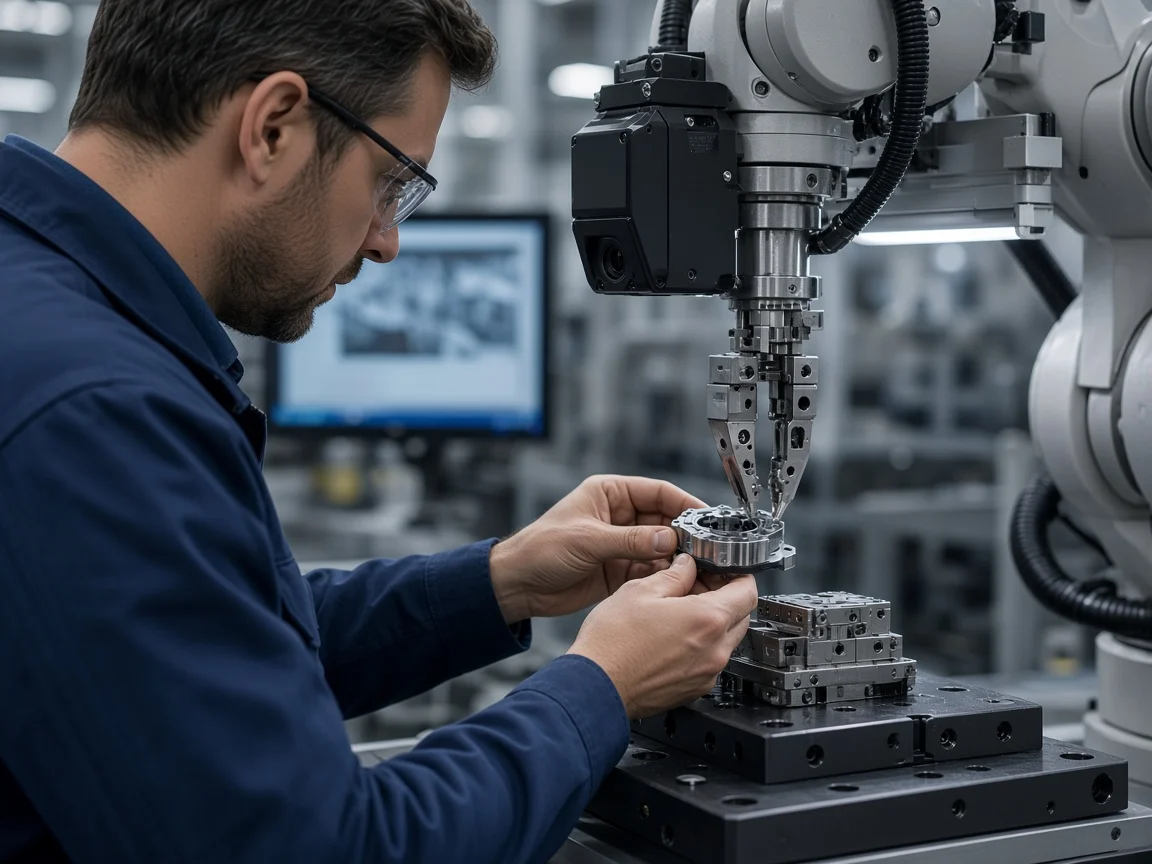
We do not build the station from the camera. Part surface, line speed, and background are read first. Lighting comes out of that reading. Threshold is discussed after the light.
The trigger syncs to an encoder or a station interlock. The vision decision goes to the PLC as a yes/no — not as software left in another world. If the cell positions, the robot waits for this decision before the path.
Scope
The decision type sets the light and the trigger.
Scope is not a camera model. What is measured, how it is lit, and who stops the line.
- YZ
Surface and defect
Scratch, stain, missing coat. Light is built to make the defect repeatable — not to inflate it.
- KN
Position and presence
Is the part there, is it in the right place. The robot or press does not close before this decision.
- KD
Code and identity
Barcode, DataMatrix, label. The read lands with the traceability record.
- KR
Pass / fail
Interlock, divert, and record at line speed. The decision is a station exit, not a reporting tool.
Process
Four locks, from light to record.
01
Light
Part, background, and defect type are read on site. Lighting is chosen before the camera.
02
Trigger
Line speed and stop point are synced. A blurred frame is closed before the threshold debate.
03
Threshold
Tolerance locks against a shift sample. “A little tighter” is discussed with the sample, not on the floor.
04
Record
Pass/fail, PLC interlock, and traceability land together. The first shift is watched together.
Application · Electronics assembly
Quality-control vision system
Challenge
Surface and position faults missed by eye showed at the next station — sometimes at the customer. There was a camera. There was no station.
Solution
A station with controlled lighting. Trigger at line speed, a locked threshold, and pass/fail to the PLC. The decision landed with a traceable record.
Industries
The same decision discipline. A different tolerance.
Pin in electronics, surface in food, code in packing. Light and threshold are built for the industry’s fault.
- Electronics
Position, pin, and assembly accuracy. The decision binds to the robot or press interlock.
- Food
Surface, fill level, label presence. Hygiene also changes the lighting choice.
- Packaging
Code reading, label, and carton integrity. The reject diverts without choking end-of-line.
Related services
All servicesServices
Talk through the vision station
Talk through the vision station against the fault that already sits on the line. Light, trigger, and threshold lock at the same table.