
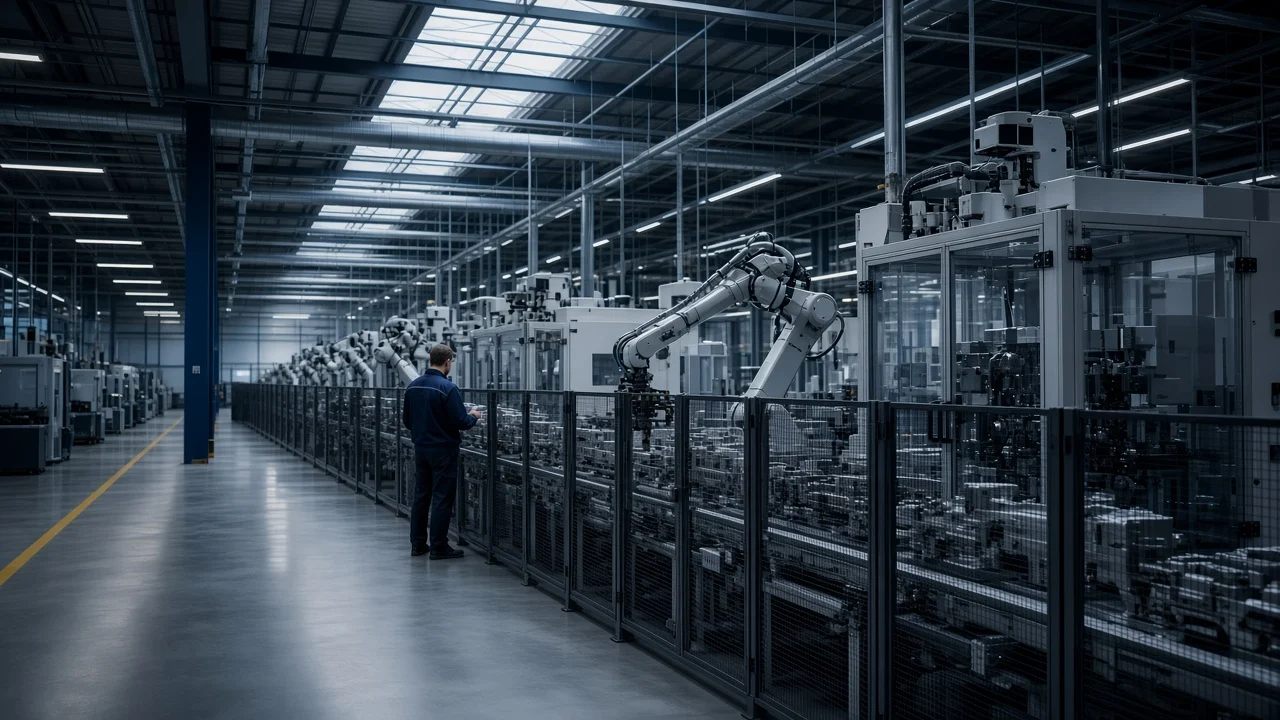
Services / Flow
The station runs.
The line still waits.
A running station is not a running line.
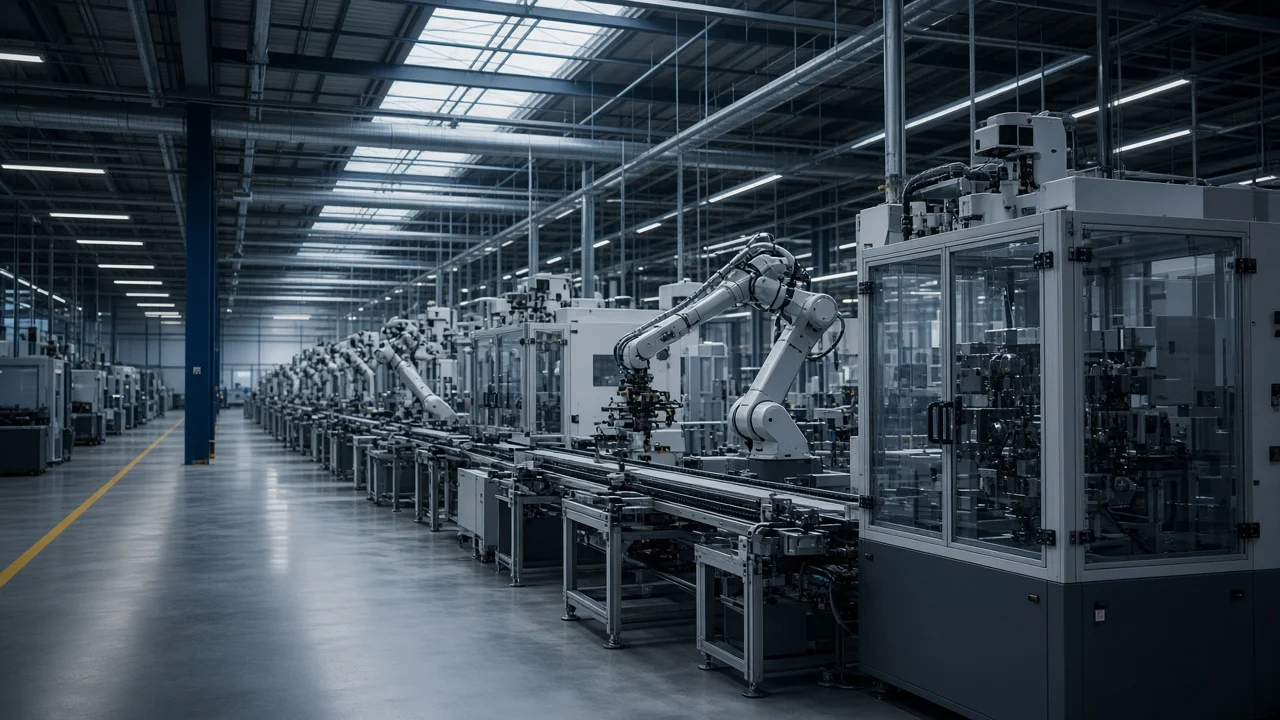
Problem
Stations that run one by one are not a flowing line.
Flow problems look like machine faults. The lock is usually in the sequence and the reset.
01
The bottleneck hides
The slowest station is the visible one. The real loss sits in waiting transfer and idle buffer.
02
The gate locks the line
When a safety gate opens, it is not only that cell that freezes. Upstream and downstream freeze too. Reset order was never written.
03
Sequence belongs to no one
Each station speaks its own PLC language. The line is left to guess the handshake in between.
Service
A running station is not a running line.
Line automation is not lining up conveyors. If transfer, station sequence, and reset logic are not built as one architecture, each station finishes its own work — and the line still stops.
SENKRA does not guess the bottleneck. We make the line measurable. Which station holds the rest, which gate interlock freezes the sequence, which reset pushes the next tray back — those are read on site.
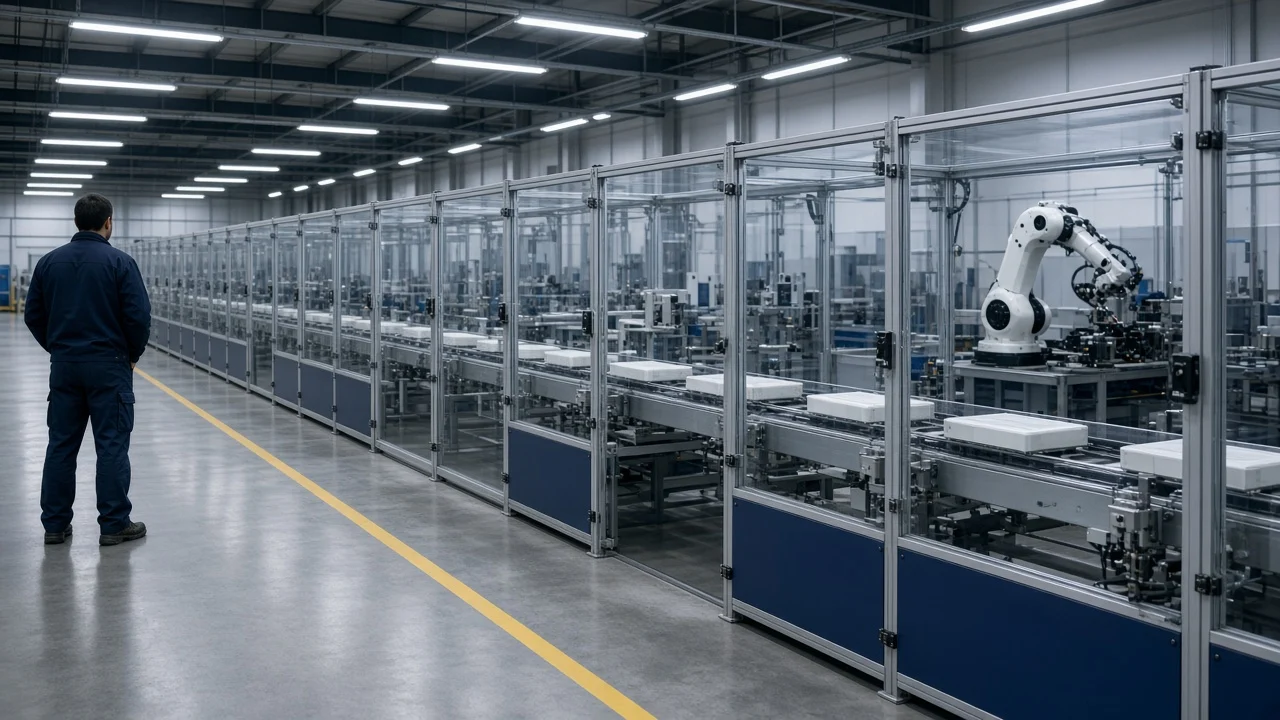
Scope
Flow is built in sequence, not station by station.
Scope is writing the line’s language. The work that binds to one interlock — from transfer to reset.
01
Transfer
Conveyor, shuttle, lift, and station entry. The part path is continuous. The stop point is deliberate.
02
Sequence
Which station releases first, which waits. Buffer and recipe change are written into the same sequence.
03
Balance
Cycle is measured. The bottleneck is marked. The work is not to make the line faster. It is to shorten the wait.
04
Interlock
Gate, light curtain, and reset. Safety is not a stranger that breaks the flow. It is part of the sequence.
Approach
We walk the line before we draw it.
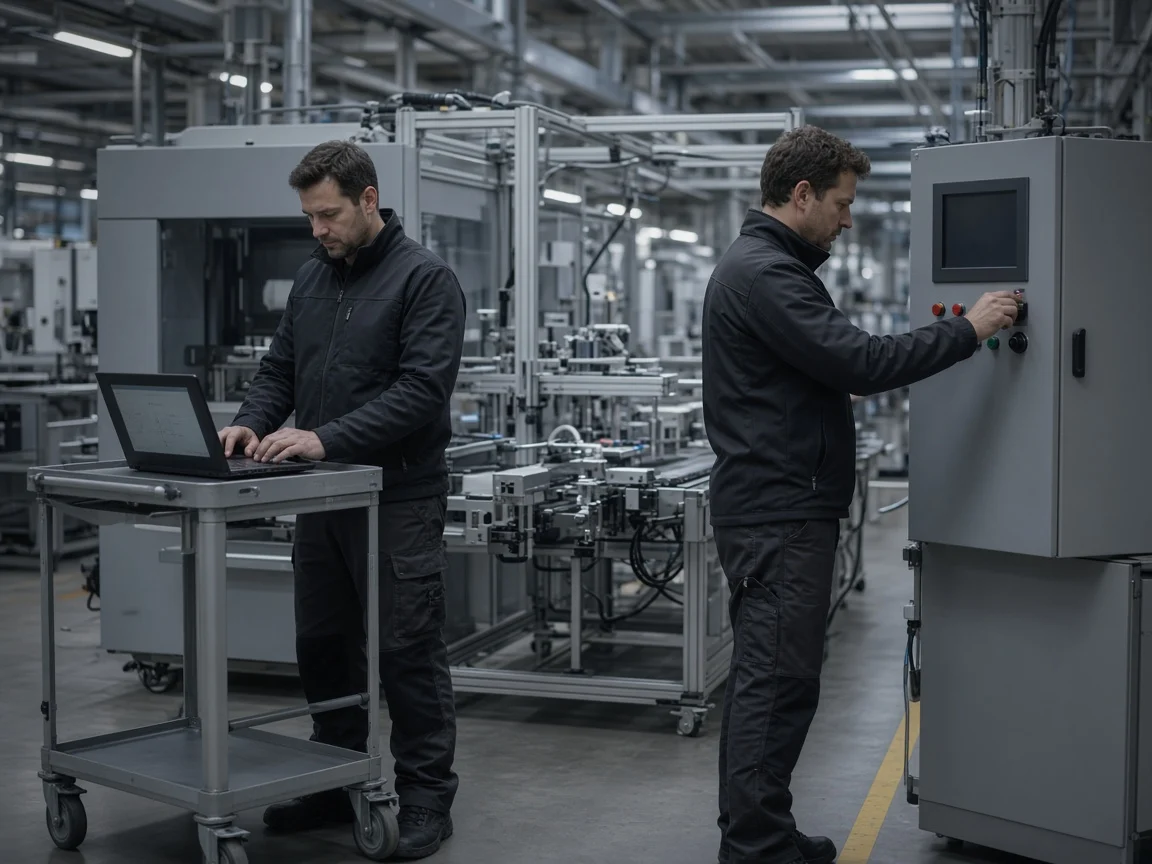
Flow is not a clean chain of arrows in CAD. Where the operator stands, the corner where the tray jams, the reset habit at shift change — those are read on site.
Then the architecture is written: which signal is whose interlock, which station cannot reset alone, which transfer does not move when empty.
Control in one language
Line software is not a separate story from the station PLCs. Tags and alarms are not draped over the flow. They come out of it.
An old line can still flow
A new line is not the only path. Existing transfer can be made readable through retrofit.
Process
Four steps, from reading to tempo.
01
Read
The existing or planned line is walked on site. Cycle, wait, and risk points are marked.
02
Sequence
Station order, buffer, and recipe change lock on one flow diagram.
03
Interlock
Safety gates, reset, and the transfer handshake are written. Fake “everything stops” logic is simplified.
04
Tempo
The line is proven first under control, then at production tempo. The bottleneck is read again inside the shift.
Industries
The same flow discipline. A different stop rule.
A hygiene interlock in food, recipe and end-of-line in packing, station order in machinery — each changes the line’s language.
- Packaging
Cartoning, label, pallet, and end-of-line transfer. When the recipe changes, sequence and stretch wrap change together.
- Food
On filling and weighing lines, a stop speaks to the cleaning window. Reset does not override the hygiene rule.
- Machinery
Binding special-machine stations into one line. Each unit keeps its own tempo. The line shares one language.
Application · Packaging
Palletizing automation
Challenge
Product piled up at the end of the shift. Pallet quality drifted shift to shift. End-of-line lagged behind the stations.
Solution
A palletizing cell bound to the end of the line. Recipe-driven pattern, automatic stretch wrap, and line transfer in the same sequence. The pallet stopped being a last job cut loose from the stations.
Related services
All servicesServices
Read the line flow together
Read the line together before hunting the bottleneck in the machine. Sequence, interlock, and reset should speak one language.