Notes · 02
Few materials
Material
Three decisions, one palette.
- Type
- Material
- Date
- Reading
- 7 min
- Related work
- Lera Evi · Pera Loft · Atölye 11
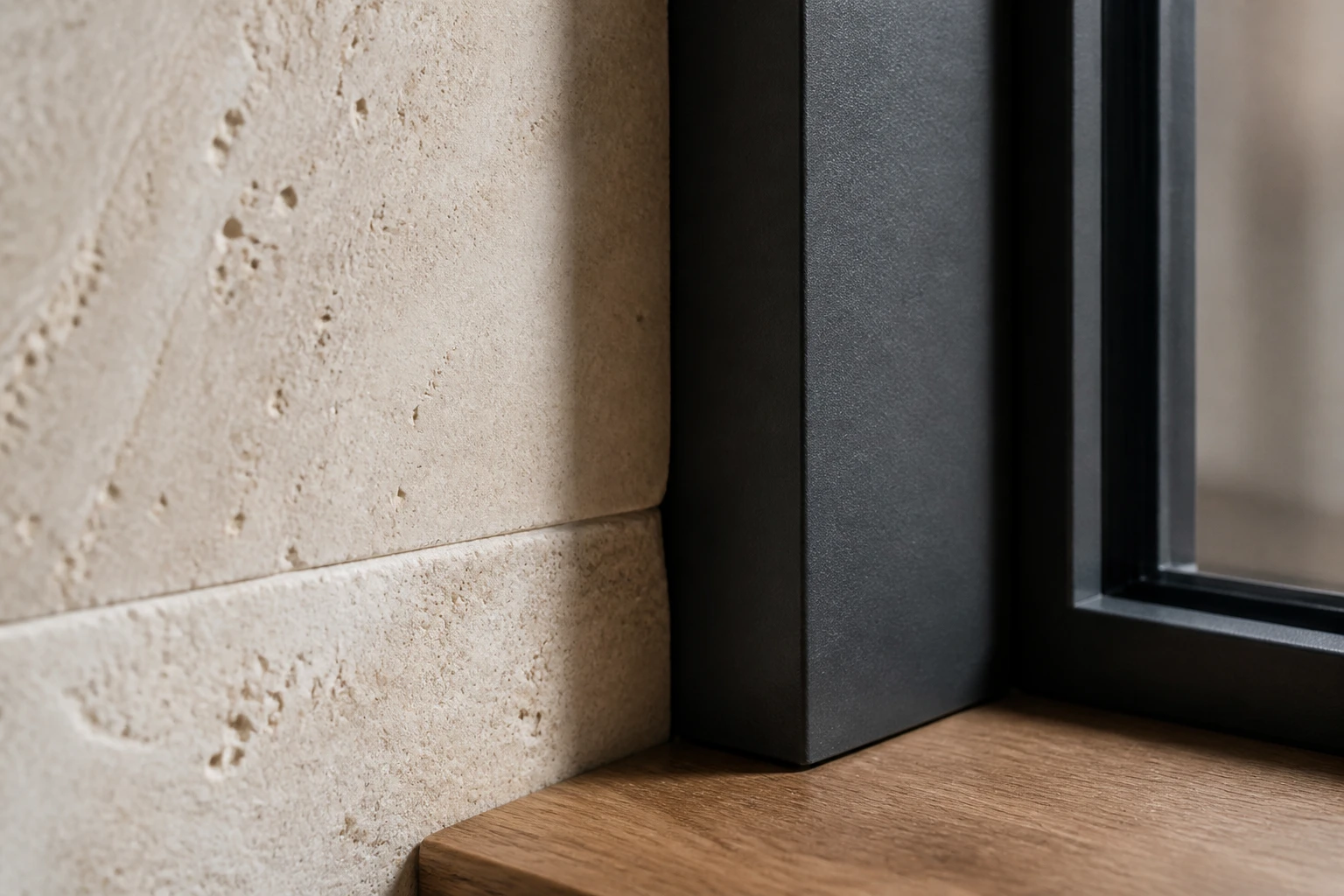
When materials are discussed, the list grows. One kind of stone, three grains of wood, two colours of metal, one texture of fabric. As the catalogue thickens, the language of the house scatters. We prefer the reverse. First three decisions: floor, vertical surface, frames. A fourth enters only when the first ones are not enough.
This reduction is the spine of interior architecture. A palette is not a style board; it is a small number of choices that determine how a house or a workplace will stand. Stone, wood and a dark frame are enough in most jobs. Brass or fabric arrives to complete the junction; not for a display.
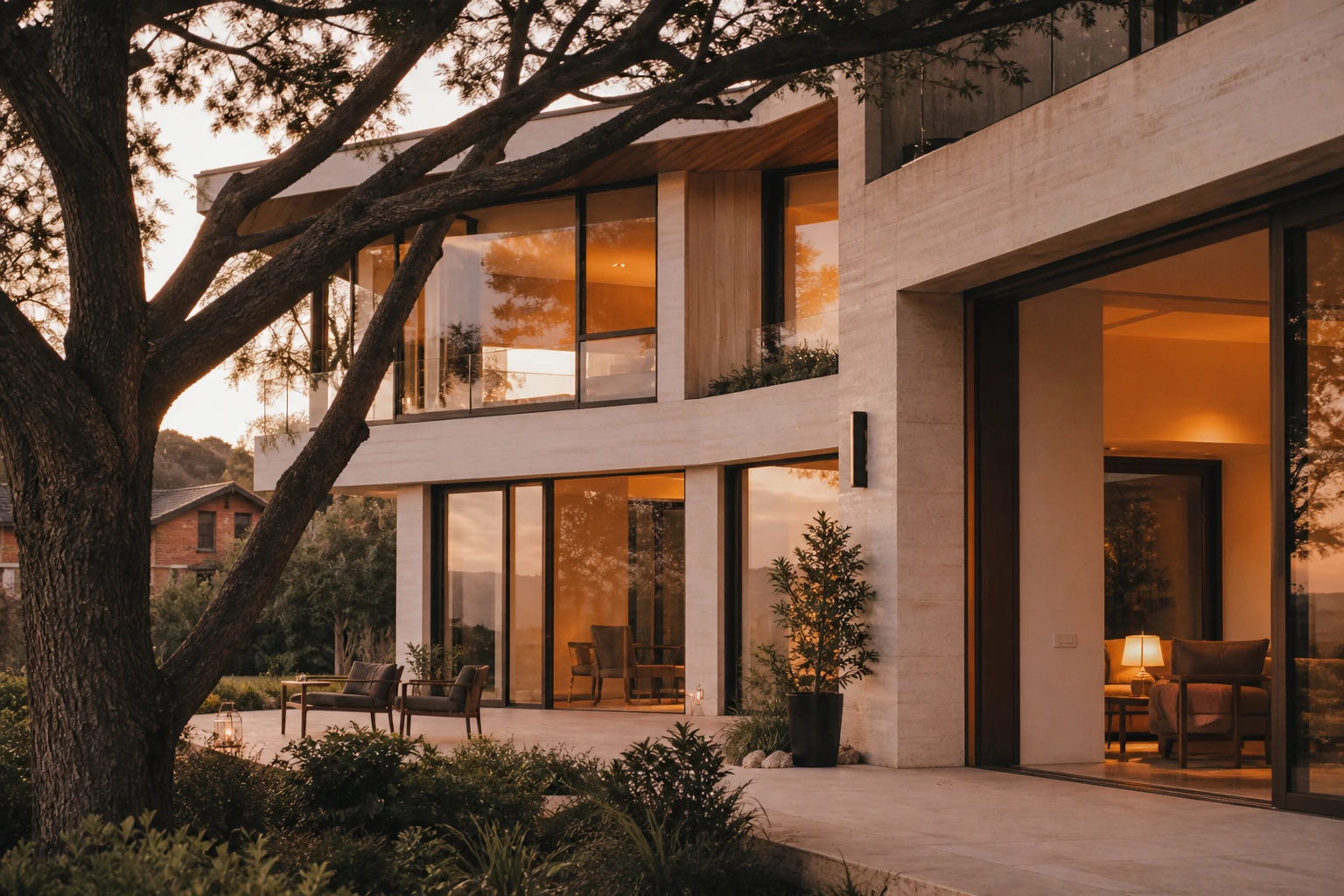
The interior palette should not break from the language on the façade. Otherwise the house stands as two separate jobs: a building outside, another shop inside. Architectural design leaves a material family while it sets the mass. The interior work is to continue that family without breaking it.
A fourth material enters when the first ones are not enough.
Lera Evi held this with open stone, oak and dark frames. Glass was the fourth element; because the plan had been set by light. A new marble, a separate metal, a glossy paint were not added. The palette built the same sentence as the façade.
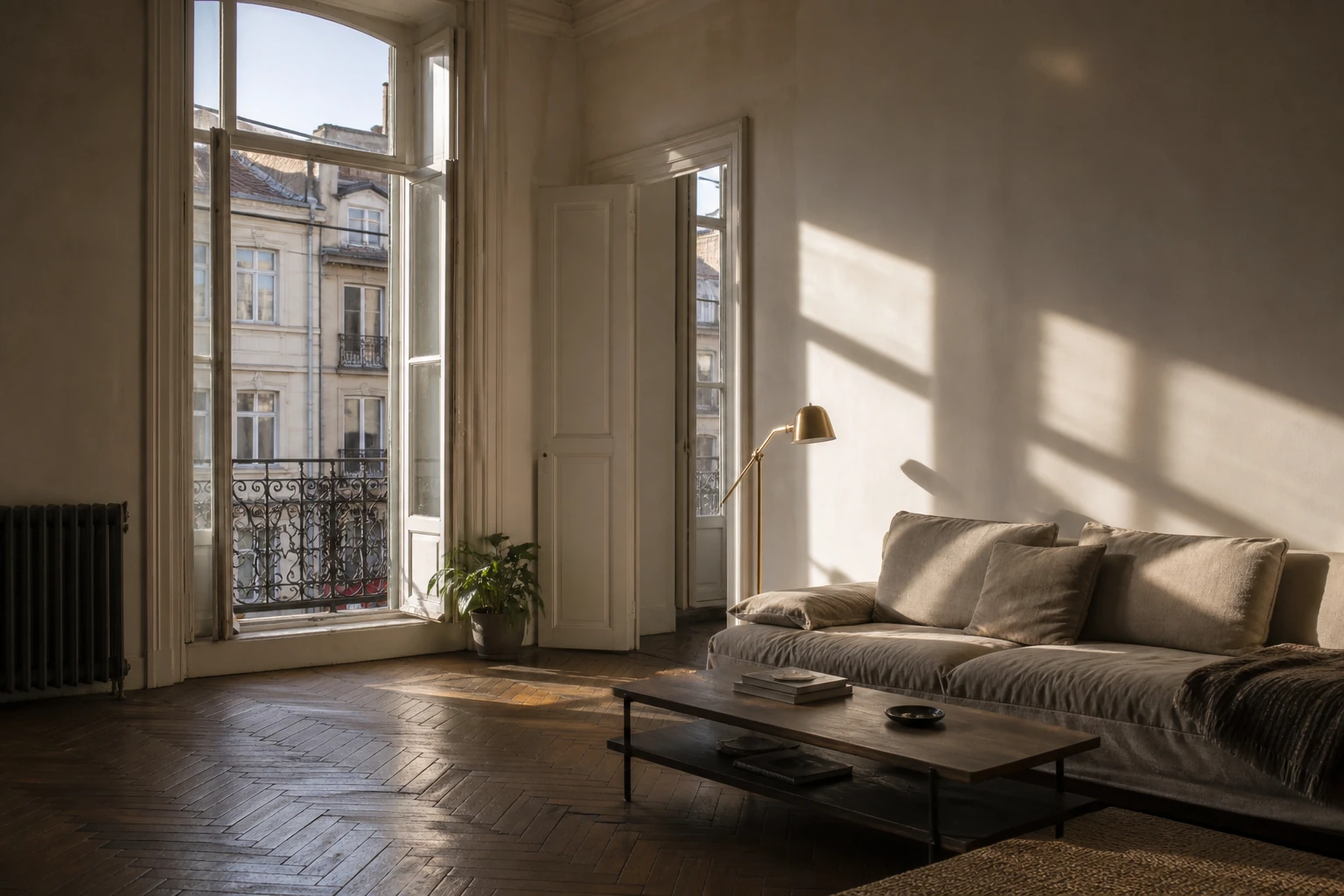
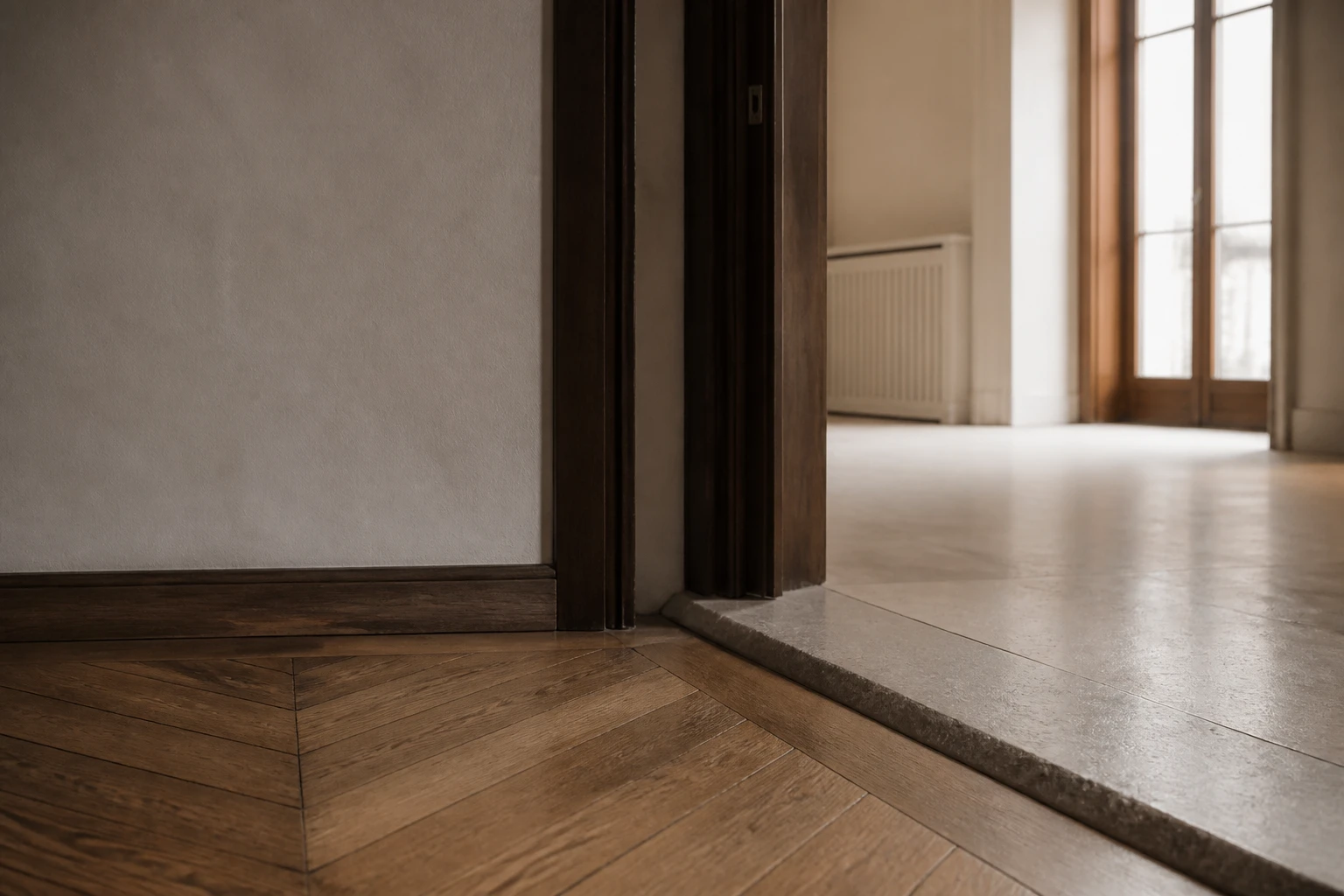
In renovation the work is more delicate. In Cihangir, Pera Loft kept the existing parquet and the high ceiling. New decisions stayed limited to lime plaster, a stone threshold and brass. No forced contrast was set between old and new. The palette became a continuation of the house’s own language.
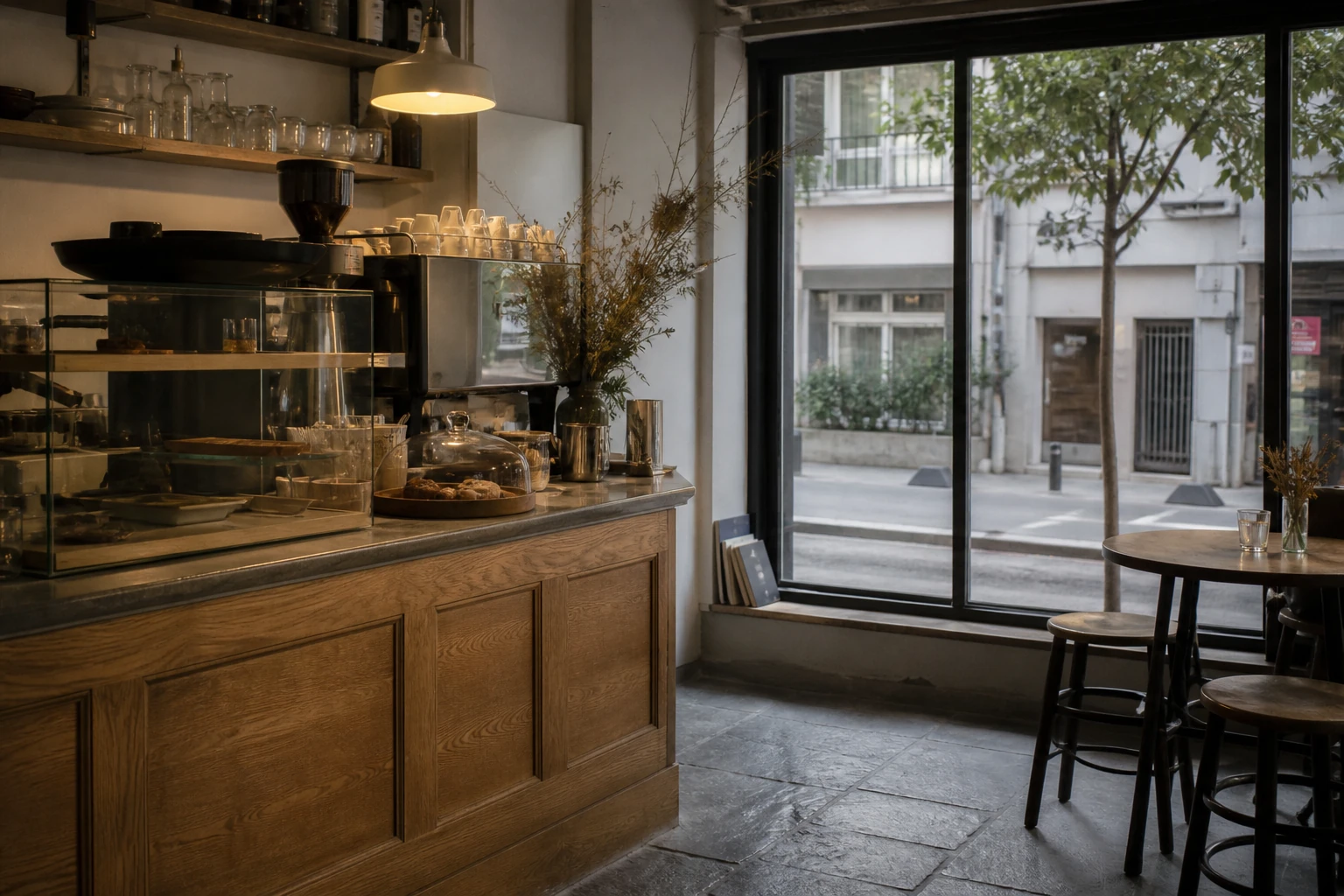
The same rule works in a commercial room. In Kadıköy, Atölye 11 stood with oak, stone and brass. Counter, light and seating came from the same decision. The aim was not to catch the street’s tempo; it was to leave a place to stay inside.
Material choice is not catalogue work. The sample sits on the table, is read in light, is held in the hand. Grain, vein and junction decide in the place a render does not show. That is why the palette closes in the office and is held in the same language during build. A small shift in tone can break the rhythm of the whole house.
To reduce is not to deprive. The same stone standing on the floor, at the threshold and on a hearth wall lets the house speak in one language. When every surface wants a separate material, the room does not grow richer; it fragments.
The mistake we often see is to give each room a separate language. The bedroom becomes a hotel, the kitchen a showroom, the hall another house. We carry the palette between rooms. What changes is use and light; what does not change is the family.
A good junction is the material showing itself. Wood begins where stone ends; a thick profile is not needed in between. Build is visible here: cut, joint, coat and paint carrying the same decision. If the palette that closed in the office scatters on site, the text has no meaning left.
Light is required when a sample is chosen. The same stone can sit cold in a north room and yellow in front of a west glass. That is why we do not lock the palette under a single showroom light. Lera Evi read the open stone in garden light. Pera Loft left the parquet in front of the existing window.
Metal is the same. Brass does not have to be a yellow accent everywhere. Atölye 11 held it at the counter and in a small light. If it spreads from door handle to lamp, from shelves to the ground of a sign, the palette inflates again.
Surfaces that are touched live longer than surfaces that are seen. A stair rail, a counter edge, a door threshold. Interior architecture here chooses the place the hand will know, not a catalogue photograph. A stone that looks soft can tire underfoot. A glossy wood tires after two winters.
Care is also part of the palette. Many materials mean many kinds of care. A small number of families keeps the tempo of the house calm. This also works during build: the craftsperson repeats the same junction and does not invent a new detail in every room.
If the façade and the interior part, the user reads it at once. Lime outside, a glossy marble inside; the house stands as two jobs. Architectural design leaves the family while it sets the mass. The interior work is to refine that family, not to change it.
Colour is also a decision of the palette. Giving each room a separate colour does the same work as increasing the number of materials. We take colour from the material’s own tone. The warmth of the stone, the grain of the wood, the matt of the frame. An extra layer of paint is often unnecessary.
When light changes, the palette also changes. The same oak sits cold in the morning and warm in the evening. That is why a decision is not locked at a single hour. Pera Loft read the parquet several times in the day. Atölye 11 held the counter in street light.
This is the place we say three decisions are enough. Lera Evi, Pera Loft and Atölye 11 are different programmes. What is shared is that the palette is kept short and that interior architecture and the site stay at the same table.