Notes · 04
Reading the existing building
Renovation
A house simplified, not erased.
- Type
- Renovation
- Date
- Reading
- 7 min
- Related work
- Sera Evi · Monument · Pera Loft
The first reflex on entering an existing building is often to erase. The ceiling is dropped, the parquet is pulled up, the wall is thinned, the courtyard is closed. A new house remains; what the old house carried is gone. We look at renovation from the other side. First a reading: where light enters, what the wall carries, where circulation stalls.
The reading comes before the trial pit. A palette is not chosen until structure, level, neighbour and existing material have been discussed. What will be kept and what will be simplified become clear after this conversation. The aim is not a forced contrast between old and new; it is an update that continues in the house’s own tempo.
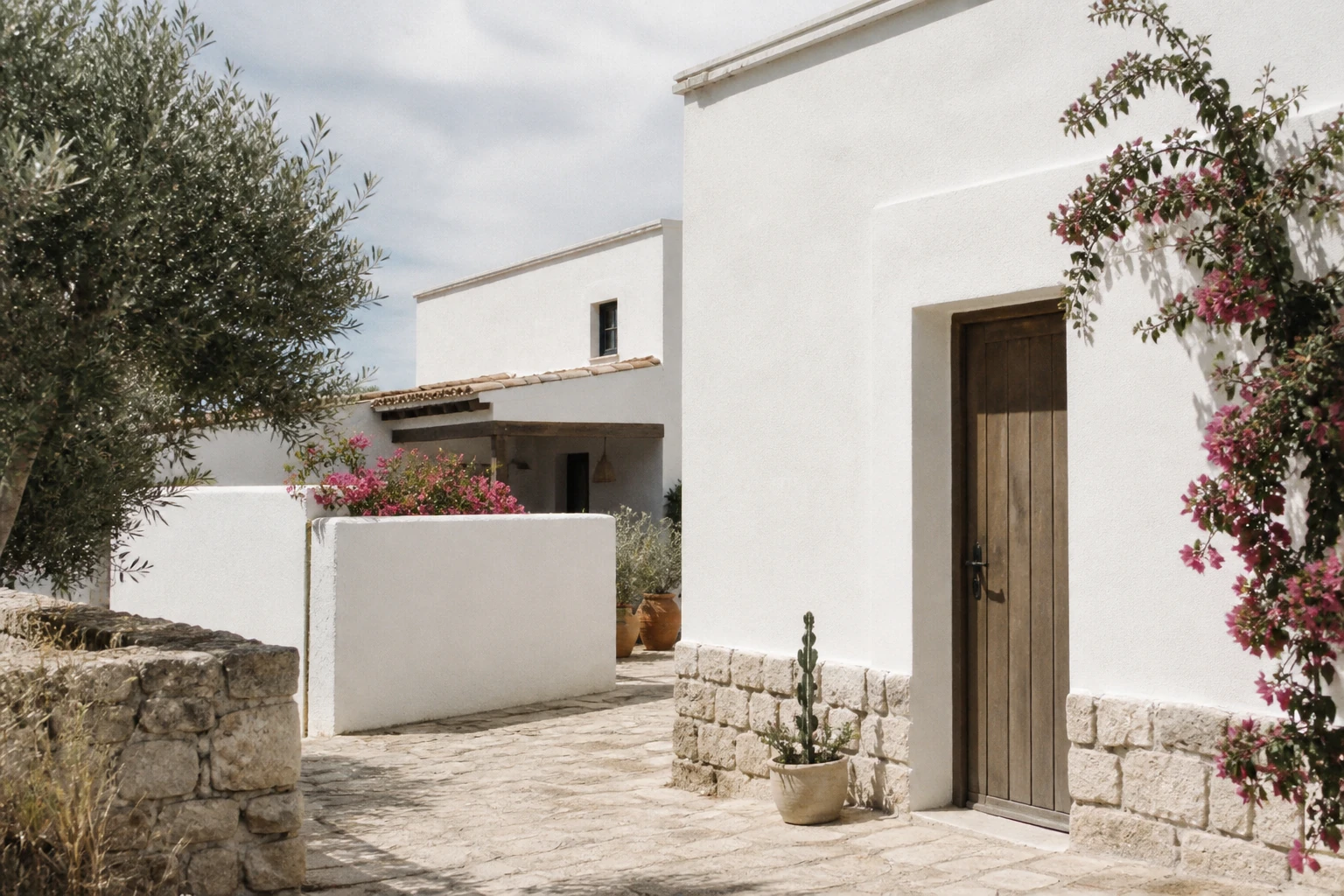
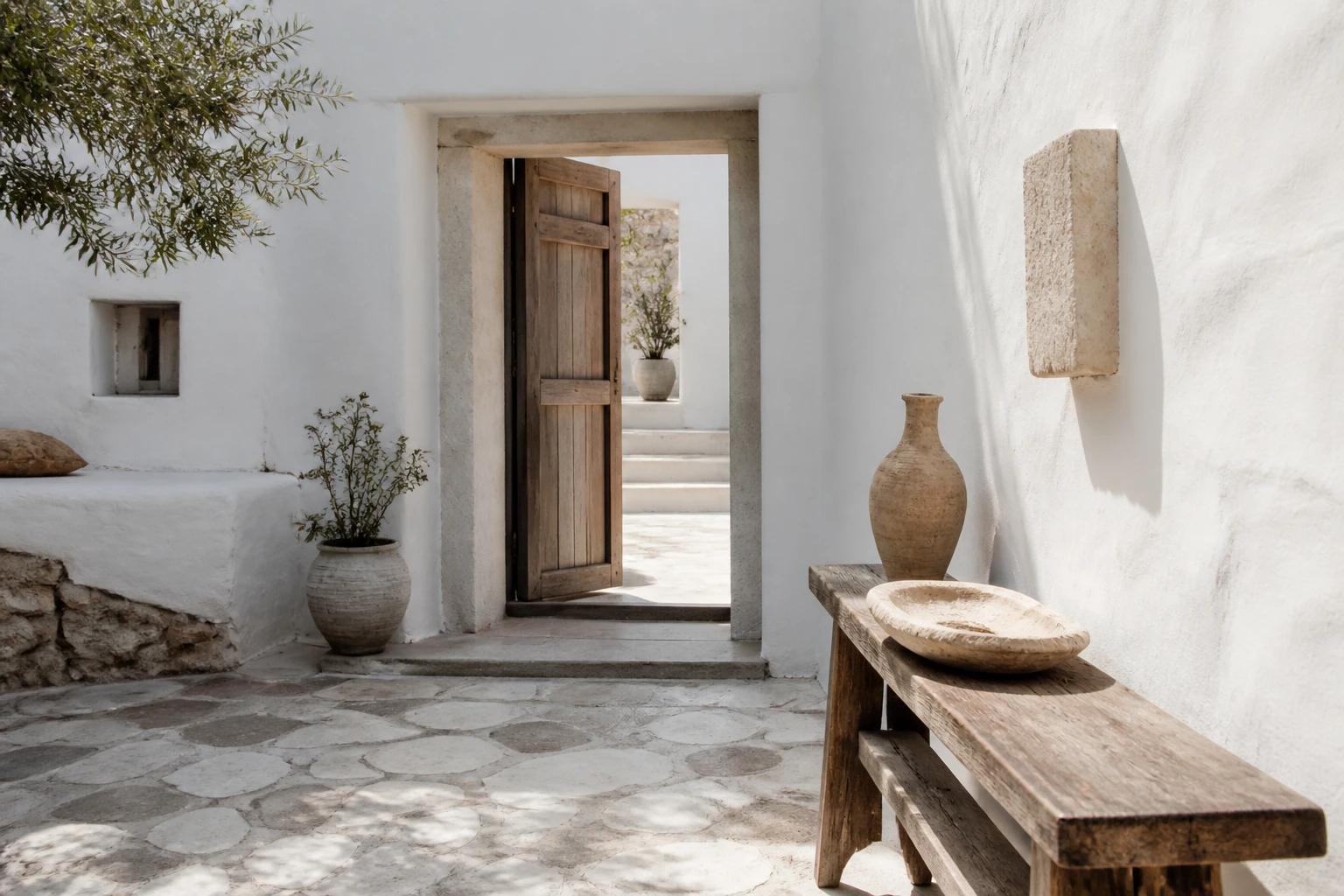
In Alaçatı, Sera Evi came from this reading. Wall thicknesses, the courtyard relation and the white plaster were kept. New additions sat without breaking the rhythm of the house. The stone floor and timber frames remained a small number of decisions carrying the house’s existing character.
Old and new do not have to be a forced contrast.
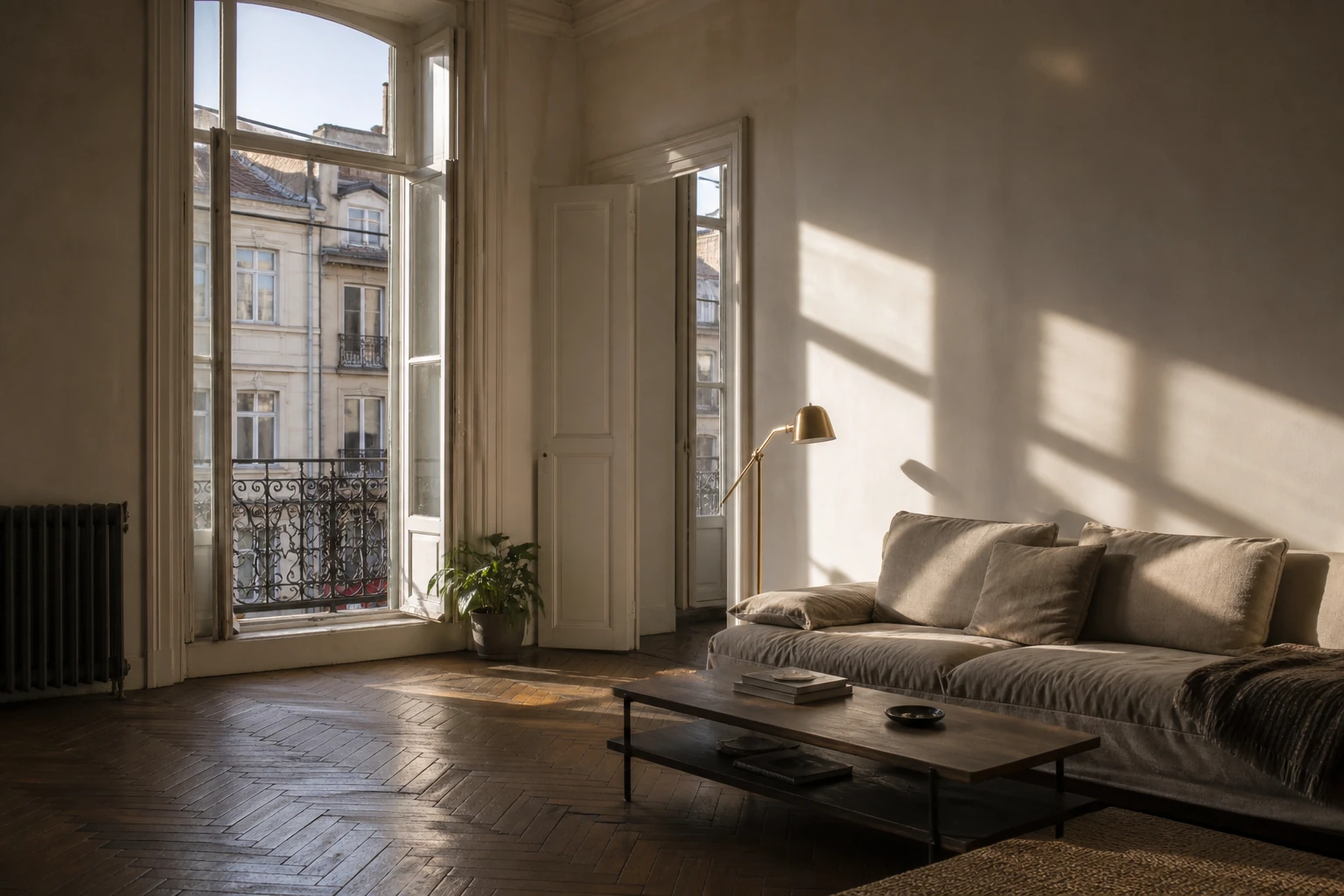
In Cihangir, Pera Loft held the high ceiling, the long windows and the existing parquet. A stone threshold and dark frames met the old floor in the same language. Interior architecture here is not building a new house; it is bringing life to the present without breaking the openings the house already carries.
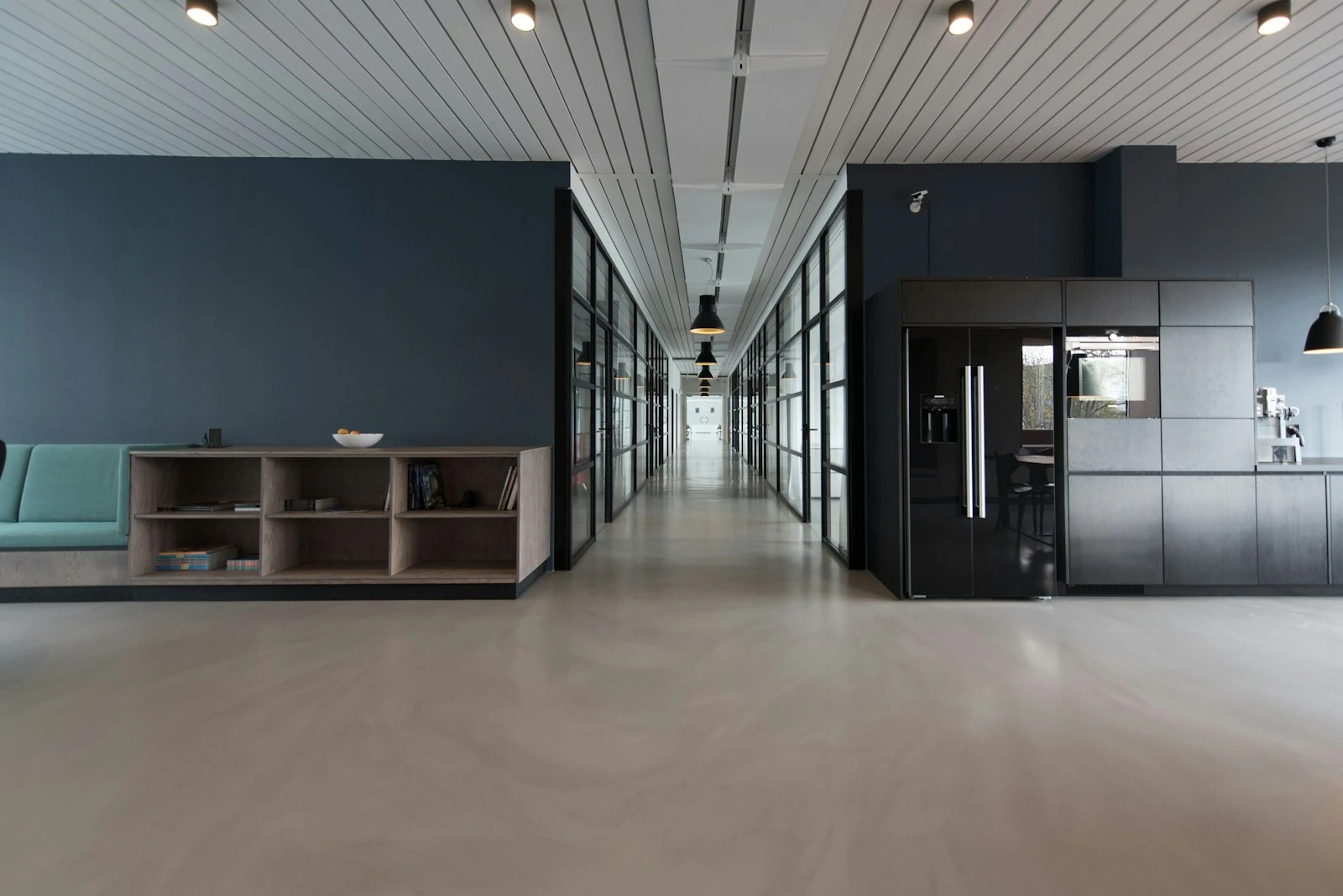
At street level the work takes another face. In Karaköy, Monument kept the existing openings and the ceiling height. The office stayed at the building’s own scale. A new identity was not added. The plan was divided into clear zones for meeting, focus and short encounters.
What the three jobs share is that renovation and the interior decision move at the same time. First the building is read; then the palette and the furniture arrive. When the reverse is done, the house stands like a display dressed over it.
The mistake we often see is to change every surface in order to “look new”. New parquet, new frames, new ceiling, new light. The building tires; the history of the house is erased in a single season. We reduce what will change. What changes are the few decisions today’s use asks for.
Part of the reading is also to understand the threshold. Door, hall, courtyard and window often set the tempo of the house. If the threshold is broken, the rhythm of the house is broken. Sera Evi held the shaded threshold. Pera Loft renewed the stone threshold but did not part it from the parquet.
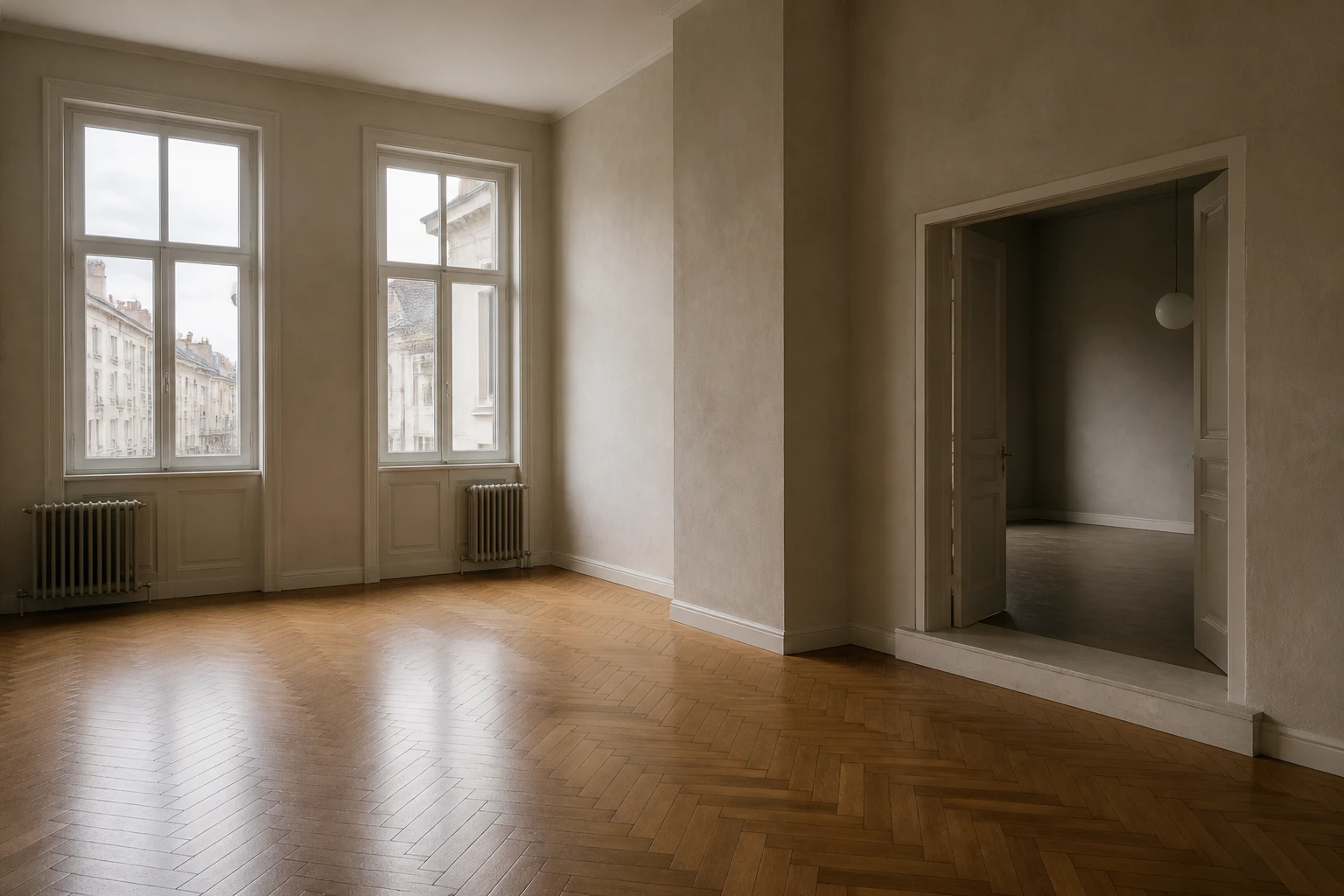
Renovation stays on paper without build. In an existing building a surprise appears: a beam, a service run, a damp. The site tests the reading from the office. If the reading is right, the surprise does not break the language of the house; it only clarifies the detail.
That is why we do not see renovation as a separate “renewal package”. Architectural reading, interior decision and site are the same sentence. Even when Monument is an office, the same rule holds: first the building, then the palette.
Services and structure are the unseen half of the reading. If a beam already stands in place, we do not have to drop the ceiling. If a flue sits in the middle of the house, writing it into the plan can be cleaner than hiding it. Renovation here is not covering the house’s fault; it is using it.
Sera Evi did not treat the thick wall as a problem. The wall carried shade and coolness. If it had been thinned, the house would have become another house. Pera Loft did not pull up the parquet. The parquet carried the time of the house. Another language was not dressed over it.
At street level the reading also includes the street. If Monument had closed the high windows, the office would not have grown quieter; it would have grown dark. The street enters; the tempo does not have to enter. Interior architecture sets this distinction at the threshold.
A new addition should not sit brighter than the existing building. A bright metal, a new marble, a thick lit ceiling turn the old face of the house into “décor”. If the palette is kept short, old and new stay in the same sentence. Build is not breaking this sentence on site either.
When the reading ends, the work does not end. The site tests the reading. If the surprise that appears breaks the language of the house, the reading is incomplete. If it does not, the detail clarifies. That is why we do not close renovation with a drawing handover.
What will be removed matters more than what will be added. Every layer taken out thins or breaks the rhythm of the house. A dropped ceiling, a cladding, a wall built later can often go. A load-bearing wall, a good parquet, a right window stay.
When use changes, the house does not have to change. Pera Loft moved into today’s life; it did not change its ceiling. Sera Evi kept its courtyard. The new programme sat in the old void. This is the quiet state of interior architecture.
Reading the existing building is not loyalty to the house’s past. It is making room for today’s use. Renovation and interior architecture make that room without breaking the light and the threshold the building already carries.