Project Planning
Nihan Koç · Project Manager
A cell quote usually starts from the robot’s reach. Payload, axes, and brand sit on the line. Gripper, fixture, safety envelope, and line sync are left for later as “we’ll talk through the detail.” The real work on the floor is there.
On the buyer side the intent is clear. Repeat assembly or machine tending should not stay manual. Cycle time should not drift shift to shift.
When purchasing tries to close that intent with a robot line item, scope stays open. A robot is a station tied to the line. Until the station is locked, the cell is not installed.
Why the quote opens from the robot line
The robot is visible. Brand, payload, and reach are easy to compare. Tool, gate, and transfer need a drawing and a floor reading. That is why the quote starts from the easy line.
The open work comes back on integration day. The gripper changes, the gate layout shifts, and if the adjacent station has no ready signal the robot holds its own cycle. The line still waits.
Three locks that often stay open on the quote
Tool and part
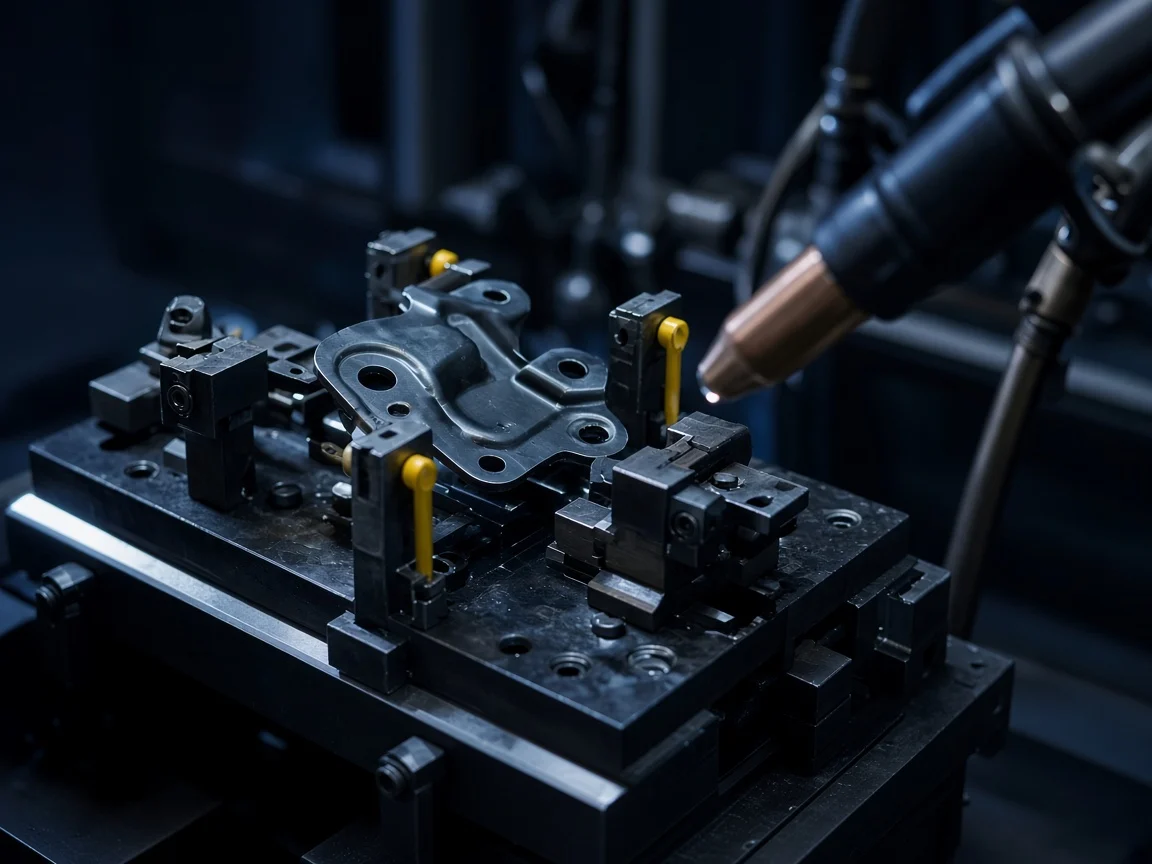
Gripper, vacuum, or mechanical gripper is chosen with part weight, surface, and drop tolerance. The sentence “a suitable gripper later” leaves the cycle on the table.
If the part family is not a single reference, the tool is not single either. If changeover time, drop position, and scrap path are not written in the same package, new work opens at FAT.
Safety envelope
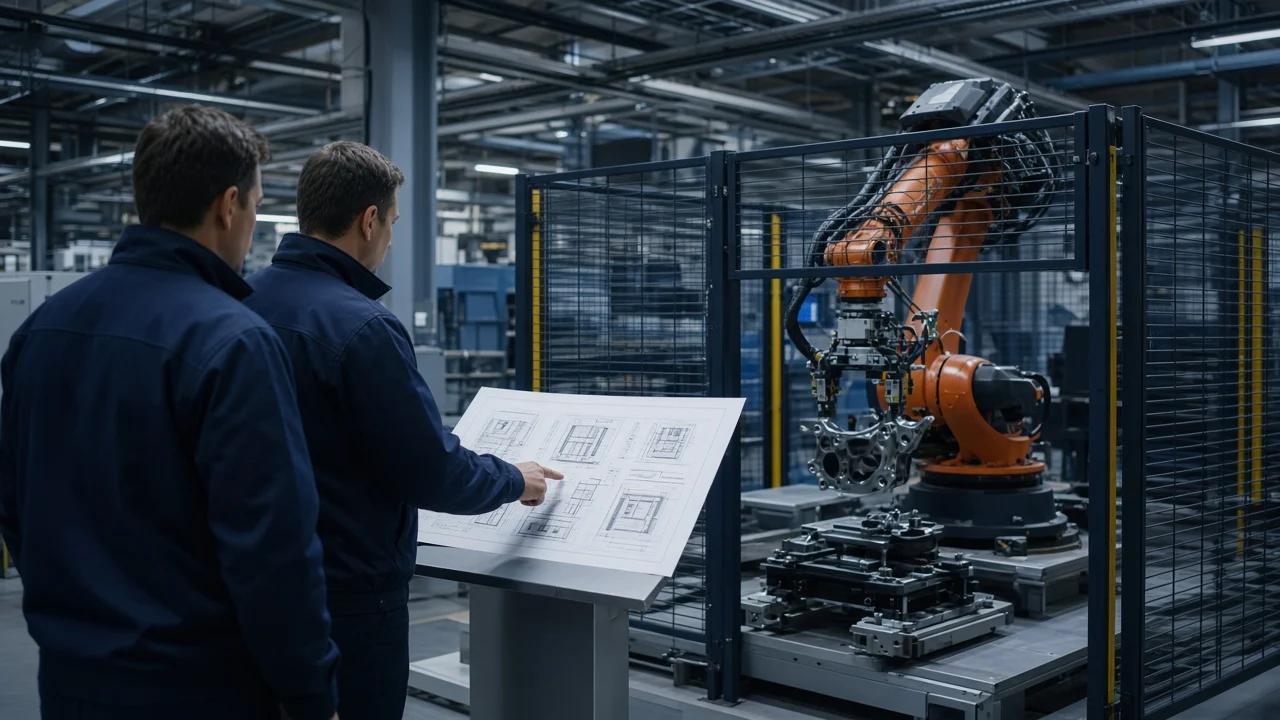
Gate, lock, light curtain, and reset belong to the same cell package. If the envelope is added later, the layout changes. Maintenance access and the stop window stretch.
Safety is not a fence placed beside the robot. If the reset sequence is not in the language the operator knows, the cell is not a handover — even if it is connected.
Line sync
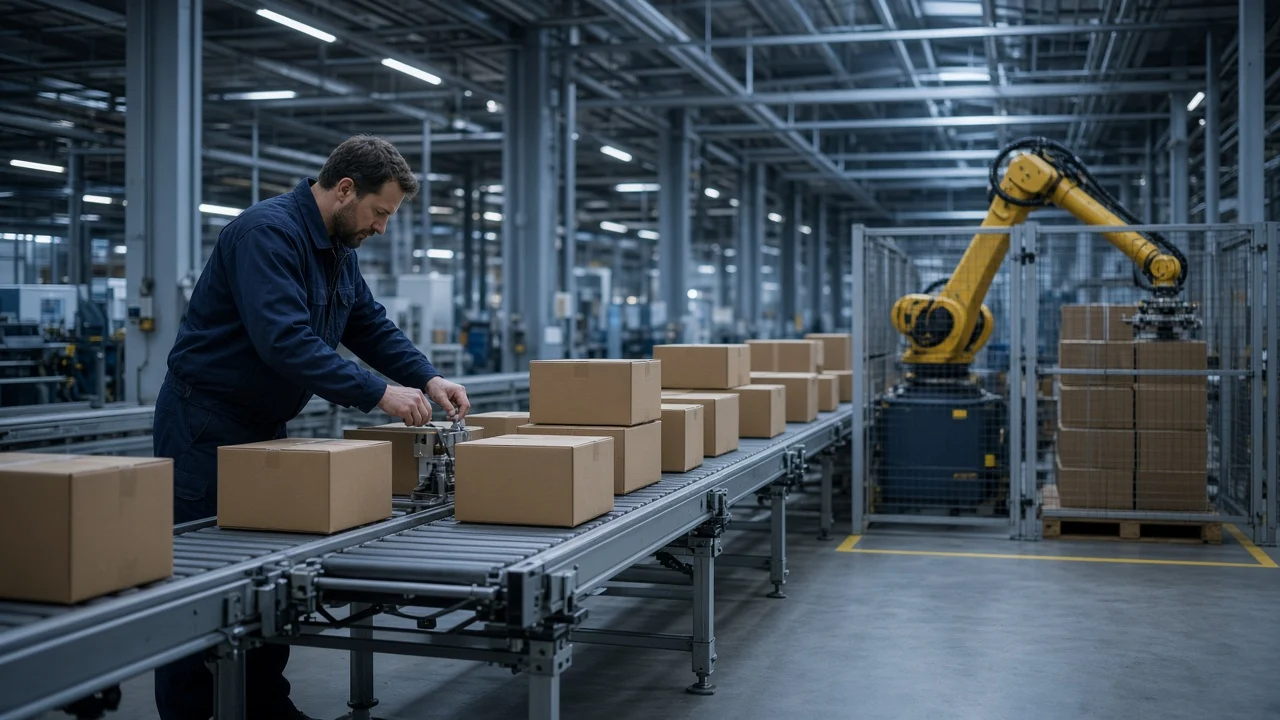
If infeed, outfeed, and the adjacent station’s ready signal are missing, the robot finishes its own work. The line still stops. A cell is not tempo on its own.
A cycle-time claim without transfer and buffer is speculation. On automotive supply this break shows early.
Parking a robot beside the line is not building a cell. The drawing does not close until path, tool, and gate lock to the same interlock.
When scope closes
The first meeting does not compare brands. It reads the work sitting on the line. Which part, which station, which stop window. Include and exclude are written on the same page.
The FAT draft opens with the quote. Handover day is not invented later. Simulation speeds the path on the table; the lock is set on the floor.
- Part, cycle, and operator habit are measured in place.
- Cell layout is drawn together with transfer and buffer.
- Safety envelope, reset, and maintenance access sit in the same package.
- Include / exclude and open items are written into the FAT draft the same day.
What is brought to first contact
Not a catalogue page. Existing cycle, part family, line speed, and which work is still manual. The reason for a stop may not be a missing robot.
If sequence and interlock are broken, the scope is a line reading, not a cell. Then transfer is discussed first. The robot line comes second.
Questions to ask at the purchasing table
- Which part family and drop tolerance was the tool chosen for?
- Gate, lock, and reset — on which drawing, in whose package?
- Which station’s ready signal do infeed and outfeed depend on?
- At FAT, which scenario is green, and which is “we’ll see on site”?
Until these four questions are answered, the quote is not scope. At SENKRA, robotic automation is not written as a payload sale. The job exists when the cell locks to the line rhythm.