Yükleniyor
Yükleniyor
Yükleniyor
Yükleniyor
Services · 01
Concentricity on shafts, bushings, and flanges is not deferred to a second setup. Live center, dual chuck, and grinding allowance are part of the process.
Service
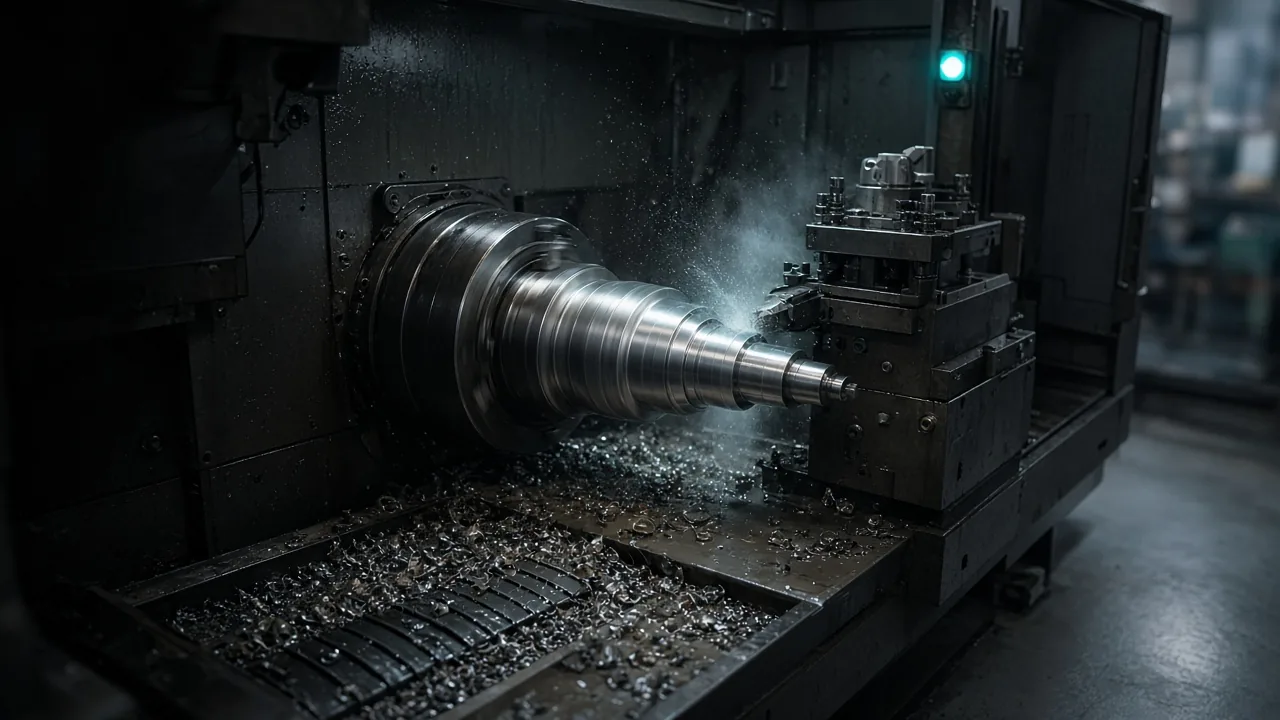
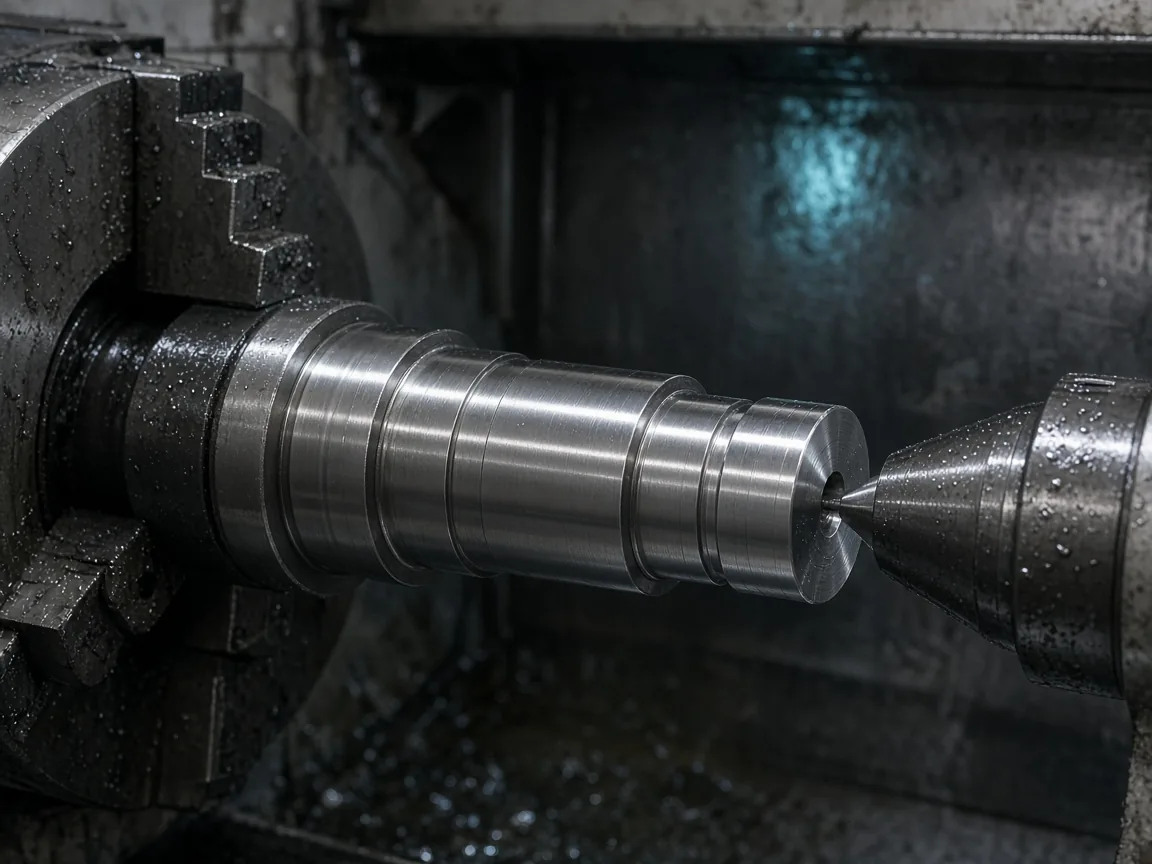
Parts with rotational symmetry move through the turning line. On shafts, bushings, and flanges, diameter steps, face surfaces, and threads are written to a single chuck reference. The goal is not more passes — it is locking the reference once.
A live center engages on long shafts; a dual chuck on short, heavy parts. Allowance for grinding is deliberately left on diameters that will go to finish grinding. That stock is not excess material — it is the next station’s entitlement.
Problem
When a part is held a second time, concentricity usually stays on the drawing. Chuck marks, face runout, and uncontrolled grinding allowance make bearing seats and seals fight at assembly. The issue is not missing machine capacity — it is rebuilding the reference at every setup.
Scope
Stepped diameters, bearing seats, and concentricity chain written in one setup.
Face flatness, bores, and bolt circles tied to the turning reference.
Threads and grooves sequenced so they do not break diameter control. Allowance is noted for the next station.
Workholding selected by length-to-diameter ratio. Runout on long shafts; crush risk on short parts.
Approach
No program is written until it is settled which surface is the chuck face and which is the center. Diameter sequence runs coarse to fine; grooves and threads go to stations that will not break the reference.
Milling for keyways and flat surfacesCritical concentricity is measured in one clamping where possible. Dual chuck opens only with runout under control.
Rough stock, grooves, and threads first; fine diameters last. Tool marks are written into delivery conditions.
Grinding or coating allowance goes on the job pack. Unwritten allowance surprises the next station.
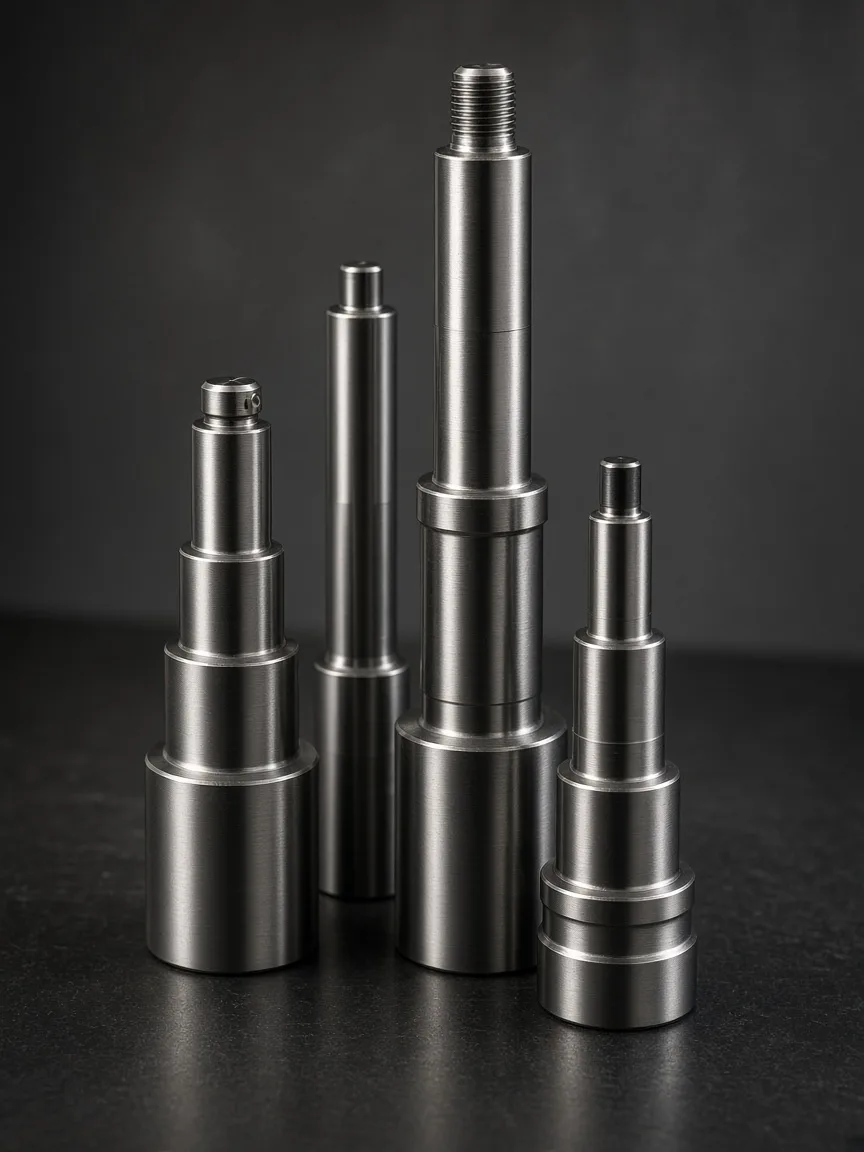
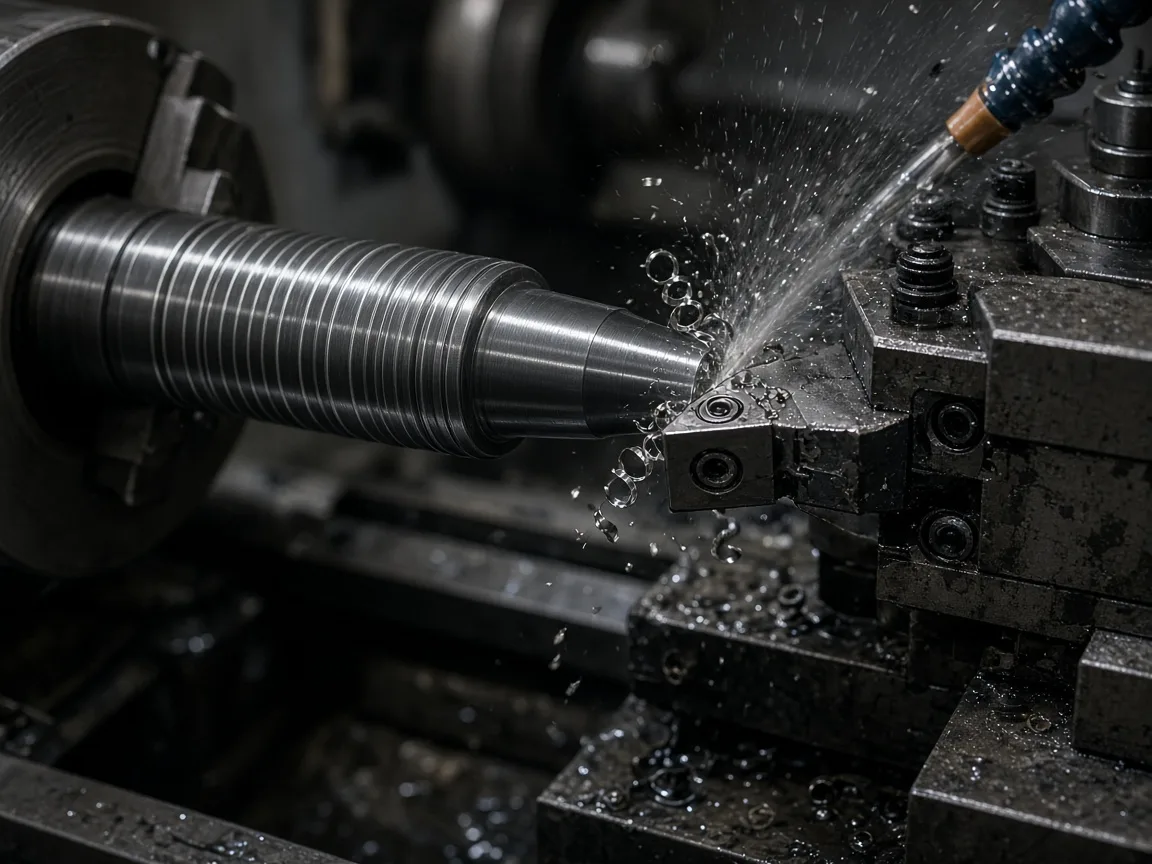
Workholding and finished shaft speak the same language.
Process
01
Drawing diameters, concentricity, threads, and allowance are clarified.
02
Chuck, center, or steady rest is defined.
03
No batch opens until runout, face, and thread are seen.
04
Dimensions and allowance notes carry to the next order.
Application
Gearbox input shaft
A stepped input shaft was machined for a machine builder. Grinding allowance was left on bearing diameters; the keyway was opened at the milling station while preserving the turning reference. After first-article approval, the same card moved into series production.
Industries
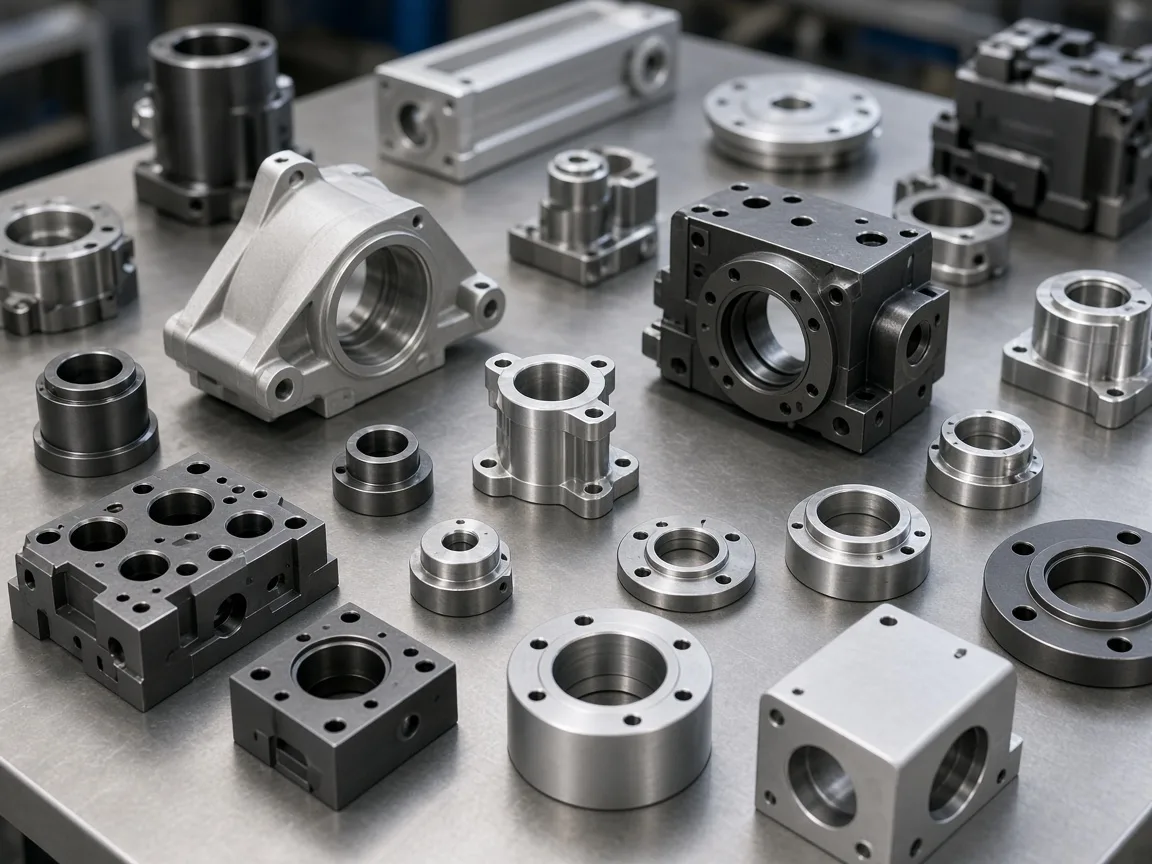
Turning looks at geometry before industry. The same diameter discipline runs in different assembly contexts.
CNC Turning rarely runs alone. Geometry and quantity open the adjacent line.
If the diameter chain, material, and quantity are clear, we define workholding and grinding allowance upfront.